

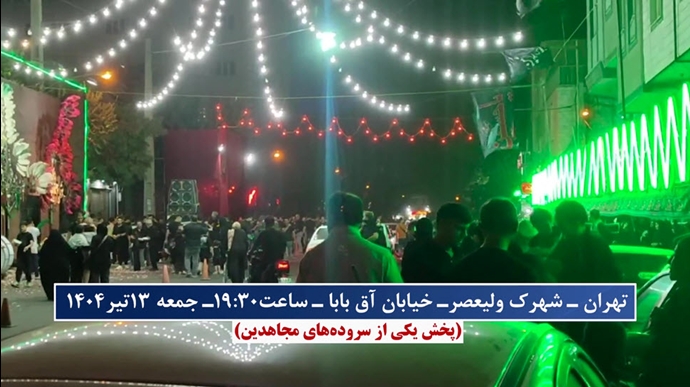

Ashura, one of the most sacred periods in Shi’a Islam, commemorates the martyrdom of Imam Hussein, who rose against the corrupt and tyrannical Caliph Yazid. For decades, the ruling clerical regime in Iran has weaponized this occasion for its own propaganda, casting itself as the modern-day embodiment of justice while labeling all opposition as the forces of Yazid. This year, however, that narrative is being systematically dismantled from within.
In a bold and coordinated campaign across Iran, the Resistance Units of the People’s Mojahedin Organization of Iran (PMOI/MEK) are reclaiming the true, rebellious spirit of Ashura and turning it directly against the regime and its Supreme Leader, Ali Khamenei, whom they call the “Yazid of our time.”
A nationwide campaign of defiance
The activities demonstrate a widespread and organized network of opposition that the regime has failed to stamp out. On Saturday, July 5, 2025, Resistance Units carried out 57 separate acts of resistance in cities across the country, including Tehran, Karaj, Qom, Tabriz, Isfahan, Shiraz, Rasht, Sari, Bandar Abbas, Zahedan, and Yazd. Using tactics like graffiti, posting placards, and distributing leaflets, these activists ensured the message of defiance was seen and heard throughout Iran, transforming a state-controlled day of mourning into a nationwide protest.
The message: “Khamenei is today’s Yazid”
The slogans used by the Resistance Units directly subvert the regime’s narrative by equating its founder and current leader with historical and religious tyrants. In public spaces, walls were emblazoned with powerful slogans such as, “The Yazidi government will be overthrown,” and “The message of Hussein’s movement: Death to Khamenei, Curses on Khomeini.”
On the preceding day, Friday, July 4, activists used loudspeakers in public areas to broadcast these messages. In cities like Tehran and Langarud, cries of “The path of Hussein in Iran is the path of the Mojahedin” and “The Yazidi government will be overthrown, overthrown” echoed through city squares and markets, directly challenging the regime’s legitimacy on its own claimed turf.
The regime’s fear becomes public
The clerical regime, despite its vast apparatus of suppression, is showing clear signs of alarm. On July 2, the Mehr News Agency, which is affiliated with the regime’s notorious Ministry of Intelligence, published a report revealing its frustration with the campaign. The state-run outlet complained that the PMOI’s new mission for its internal network was to “purchase small loudspeakers” to broadcast protest slogans. It warned these activities were designed to “marginalize the voice of national unity,” exposing the regime’s fear that the opposition’s message is resonating more with the public than the hollow propaganda of its new president, Masoud Pezeshkian.
This public admission underscores the effectiveness of the Resistance Units. The regime recognizes that these acts of defiance are not isolated incidents but part of a coherent strategy to break the wall of fear and suffocate its propaganda machine.