

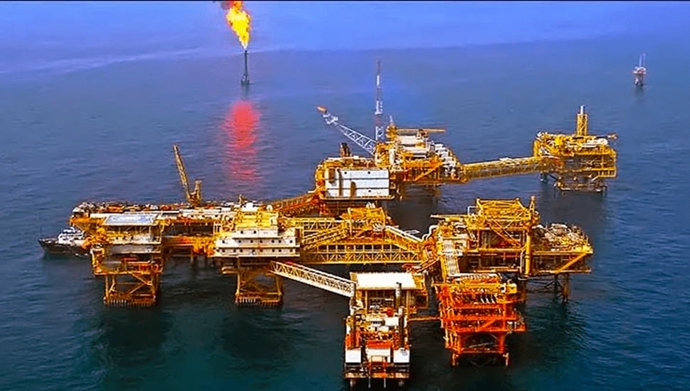

Due to its geographical position and massive oil and gas reserves, Iran is one of the key energy players in the world. Iran holds 10% of global oil reserves and 18% of the world’s natural gas reserves. Forty-two percent of Iran’s gas reserves are shared with Saudi Arabia, Kuwait, Azerbaijan, Turkmenistan, and Qatar, while 14% of its oil reserves are shared with Saudi Arabia, Azerbaijan, the UAE, and Iraq.
On September 1, 2022, Iran Think Tanks website wrote, “In more detail, Iran possesses 30 shared hydrocarbon fields, including both oil and gas, with Iraq, Saudi Arabia, Kuwait, Qatar, the UAE, Oman, and Turkmenistan. These include 13 fields in the Persian Gulf, two in the Caspian Sea, and 15 on land. South Pars, the world’s largest gas field, and the giant Azadegan oil field are among the prominent fields in this list.”
Shared Fields: Lost Opportunities
One of Iran’s most important shared fields is the South Pars gas field, which is shared with Qatar. This field, the largest gas field in the world, supplies nearly 70% of Iran’s gas production. The declining pressure in the Iranian section of this field has sounded a serious alarm for the country’s energy future. Meanwhile, Qatar, with extensive investment and the use of advanced technologies, has managed to exploit a significant portion of this field’s capacity.
In other shared oil fields, such as the Arash field, the situation is even more dire. Saudi Arabia and Kuwait are rapidly advancing in this field. Similarly, in the West Karun fields, Iraq has reached exploitation by signing major contracts with international companies the peak of shared resource.
Bureaucratic Processes and Delays in Issuing Permits
One of the key factors contributing to the success of neighboring countries in developing shared fields is active energy diplomacy. The religious fascism ruling Iran has failed to establish bilateral, peaceful, and neighborly relations with neighboring countries.
According to Erfan Afazeli, Secretary General of the Federation of the Oil Industry, one of the main reasons for Iran’s backwardness is the complexity of bureaucratic processes and the lengthy time required to issue permits.
Energy expert Farzin Savadkouhi believes that Iran’s backwardness in developing shared fields is the direct result of the regime’s incorrect policies.
Modern Technologies and Technical Knowledge
One of the key factors in the development of shared fields is the use of advanced technologies and technical knowledge. Qatar, through investments in pressure-boosting technologies, has managed the pressure decline in the South Pars field.
It should be noted that these delays stem from the policies of the regime. The regime’s priority has always been advancing the drone and missile industry and striving to acquire nuclear weapons.
“Red Alert and Emergency Conditions”
The lack of development in shared fields has serious consequences for Iran’s economy. The reduction in oil and gas revenues, aside from directly impacting the national budget, exacerbates economic and social crises. Moreover, the loss of shared resources to neighboring countries weakens Iran’s position in the global energy market.
The continuation of the current situation will only harm future generations and squander golden opportunities to exploit Iran’s vast energy resources.
On December 23, Jahan-e Sanat news website quoted Savadkouhi as saying, “There is no doubt that the development of shared fields should be prioritized because the current state of energy in the country is a red alert. We are in an emergency… The more this issue is delayed, the greater the harm to future generations.”
Considering the above, is there any solution to save Iran, its national resources, and the fate of future generations other than overthrowing this anti-Iranian regime?