


The fall of the Assad dictatorship in Syria, as one of the most critical regional pillars of the Iranian regime, has triggered a political earthquake in the Middle East.
This is a fact even acknowledged by Ahmad Khatami, a member of the regime’s Guardian Council and temporary Friday prayer leader of Tehran. He called on the leaders of the regime’s proxy forces in Iraq to “remain vigilant and cautious” and “not be deceived by America’s false promises.” Khatami demanded that “the feet of Takfiri terrorists be broken right there in Syria.”
Khatami said, “Uninformed writers, careless writers, don’t dishearten the people by saying resistance is gone. Where has resistance gone? Resistance remains and will continue until America is driven out of the region” (Source: Fararu news website, December 17).
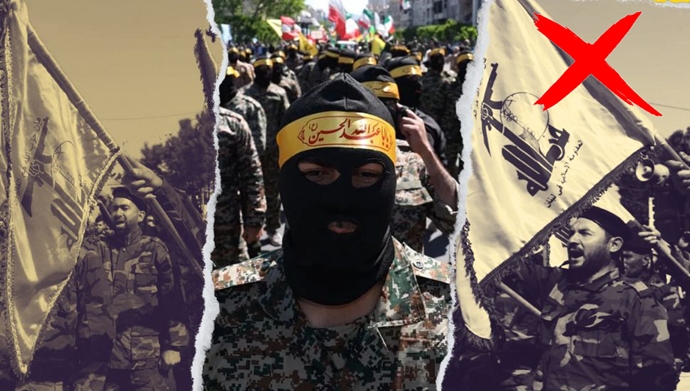
For Iran’s regime, the godfather of fundamentalism and terrorism, the fall of the despised Assad dynasty represented the collapse of a primary pillar of the so-called “Axis of Resistance” and a key tool for advancing its expansionist strategies. This fall signifies not only the end of a regional stronghold but also the beginning of a domino effect, leading to the collapse of other groups and players dependent on the Iranian regime. The weakness of the Islamic Revolutionary Guard Corps (IRGC) and its proxy forces in maintaining Bashar al-Assad’s rule demonstrated that these structures are not only lacking the necessary motivation and capabilities but are also extremely vulnerable to political and military developments.
With the fall of Syria’s dictator, Popular Mobilization Forces (PMF) (Hashd al-Shaabi), Tehran’s most prominent proxy force in Iraq, now faces internal and external pressures. The retreat of Falih al-Fayyadh, the leader of the PMF, regarding developments in Syria reflects the depth of this crisis and an effort to redefine the group’s position within Iraq’s political and military structure.
On December 2, the official IRNA news agency reported, “The PMF Media Directorate announced that Iraq has sent reinforcements, including PMF and army forces, to the shared border with Syria in the western region of the country.”
Later, realizing the dire situation, they humiliatingly withdrew this claim. According to Rooz Plus news website, “Falih al-Fayyadh, head of the PMF organization, strongly denied the deployment of PMF forces into Syrian territory.”
This statement by Falih al-Fayyadh is noteworthy: “What is happening in Syria has a direct impact on Iraq’s national security.” (Source: Rooz Plus, December 2, 2024).
He is implying that developments in Syria will have a domino effect on Iraq.
On December 6, IRNA quoted Nouri al-Maliki, former Prime Minister of Iraq, as saying, “The developments in Syria mark the beginning of a new project in the region.”
Challenges Facing the Regime’s Proxy Forces in Iraq
The PMF, modeled after Iran’s Revolutionary Guard Basij and ostensibly established to combat ISIS, quickly became a tool of religious fascism. Rather than focusing on counterterrorism, it transformed into Iran’s military arm for expanding influence in Iraq and the region. However, Assad’s fall and the failure of Iran’s regional strategies indicate that the group’s time is nearing its end.
The PMF and Iran-backed proxy forces in Iraq now face two major challenges:
- Increased Domestic Pressures: Many political and social groups in Iraq view these forces as the main cause of instability and corruption. These grievances have intensified after Assad’s fall, as many believe the forces no longer have a justification for their existence.
- Strategic Weakness of the Guardianship System: With the weakening of the IRGC and the loss of regional bases, the religious fascism’s support for its proxy forces is no longer as robust as it once was.
Regarding this, Al-Arab newspaper in London wrote:
“The United States is trying to maximize its advantage from Hezbollah’s defeat in Lebanon and the fall of Bashar al-Assad’s regime, pressuring [Mohammad] al-Sudani’s government to disband the PMF.”
Al-Sharq al-Awsat quoted an advisor to Iraq’s prime minister as saying:
“Iraq cannot remain the sword of the Resistance Axis after Assad’s fall and Hezbollah’s weakening in Lebanon.”
End of the Era of Proxy Groups
It is worth noting that the regime Supreme Leader Ali Khamenei once boasted grandly, saying:
“Do not lose sight of the vast geography of the Resistance; do not lose the transnational perspective… This extension of strategic depth is sometimes more essential than the most crucial necessities of the country.” (Source: Khamenei’s website, October 2, 2019).
The fall of Syria’s dictator is a turning point in Middle Eastern regional dynamics. This event not only signals the failure of the Iranian regime’s expansionist policies but also marks the beginning of the end for its proxy groups in the region.