

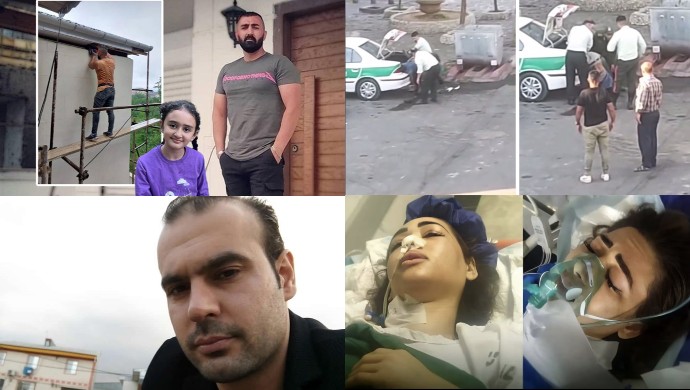

Recent images of the brutal behavior of the Iranian regime’s suppressive forces have shaken Iranian society in recent days. These crimes are not “exceptions” or isolated incidents but rather “the norm” and countless occurrences under the rule of the mullahs.
Incidentally, this happens shortly after the brutal massacre of PMOI members and supporters in the 1980s has been registered as atrocity crimes and genocide in a new report by the UN Special Rapporteur on the human rights situation in Iran.
The UN Special Rapporteur, in defining the massacres of the 1980s, used the term “atrocity crimes” alongside “genocide” and “crimes against humanity,” a description that equally applies to the recent atrocities.
The term “atrocity” is insufficient to describe these crimes, as the repetition of these atrocities and the multiplications of agents with such levels of cruelty are necessary for the preservation of the mullahs’ regime and can be understood within this logic.
The logic of preserving the regime, which regime founder Ruhollah Khomeini defined as the regime’s “most essential obligation,” is not only prevalent in domestic repression and policy but also extends to foreign policy and the export of fundamentalism and terrorism. Over time, as the infection of the “preservation of the regime” policy has become global, as has been explained by various people inside Iran and abroad.
Heinous crimes, such as the murder of Mohammad Mirmousavi under torture in Lahijan, the suppression of street protesters during the 2022 uprising and the November 2019 protests, or the downing of a Ukrainian airliner in 2020, all illustrate the logic of preserving the regime. This is why the regime will never want or be able to hold such criminals accountable but rather encourages them.
If in 1988, Khomeini issued the order to massacre all steadfast PMOI members and willingly accepted the international registration of genocide and eternal disgrace, it was for the preservation of the regime, because he saw the political and social force of the PMOI as a threat to the regime’s existence.
At that time, Hossein-Ali Montazeri, the heir-apparent of Khomeini, who was far superior to Khamenei and Akbar Hashemi Rafsanjani, addressed the members of the Death Committee and Khomeini himself, stating that this great crime would make the regime hated by the people and the world would condemn us. But Khomeini’s response in a letter to Montazeri was as follows:
“You will hand over this country and the beloved Islamic Revolution of the Muslim people of Iran to the liberals and through them to the Mojahedin after me, so you have lost the qualification and legitimacy to lead the future of the state.”
This is the stark logic of “preserving the system” under the rule of the Supreme Leader, which has plunged Iranian society into such misery that they see their liberation and the achievement of freedom and prosperity tied to the overthrow of this brutal clerical regime. It won’t be long before this freedom is realized by the Resistance Units.