

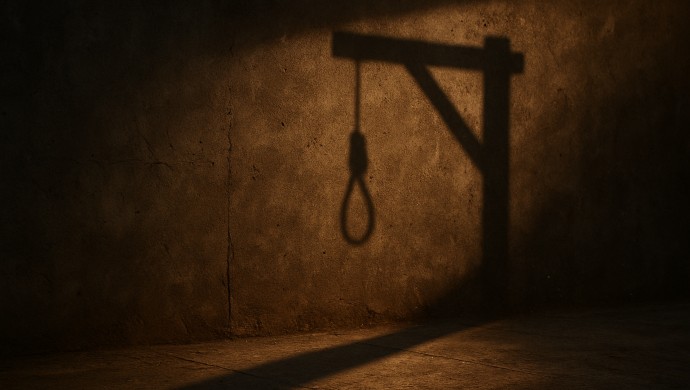

On April 1, 2026, Mohammad Mohaddessin, Chair of the National Council of Resistance of Iran (NCRI) Foreign Affairs Committee, held an urgent press conference in Paris to address a dangerous new wave of political executions in Iran. Over a bloody two-day period on March 30 and 31, 2026, the Iranian regime executed four members of the People’s Mojahedin Organization of Iran (PMOI/MEK): Mohammad Taghavi, 59; Akbar Daneshvarkar, 60; Babak Alipour, 34; and Pouya Ghobadi, 33.
These rapid, consecutive executions are not a projection of the regime’s strength, but an act of sheer desperation. As Mohaddessin outlined, the ruling clerics are deeply terrified of a growing organized resistance and the looming threat of another nationwide uprising. Operating under the shadow of external conflicts, the state is rushing to physically eliminate its most capable adversaries.
Iran Regime’s Latest Killing Spree of Dissidents
Online Briefing
by @Mohaddessin, NCRI’s Foreign Affairs Committee Chairhttps://t.co/VCxwvyz042— People's Mojahedin Organization of Iran (PMOI/MEK) (@Mojahedineng) April 1, 2026
The victims and the mockery of justice
The regime routinely attempts to brand political dissidents as “terrorists” to justify its crimes, but the executed men were highly educated professionals who dedicated their lives to a free Iran. Taghavi was an architect, Daneshvarkar a civil engineer, Alipour a law graduate, and Ghobadi an electrical engineer. Following their arrests in late 2023 and early 2024, they were subjected to months of severe physical and psychological torture in Ward 209 of Evin Prison.
Their judicial process was a complete mockery of due process, presided over by the notorious criminal judge Iman Afshari in Branch 26 of Tehran’s Revolutionary Court. During a retrial on November 16, 2025, Afshari blatantly ignored defense lawyers’ requests that the clients be tried together, instead holding separate hearings that lasted only a few minutes each.
The core motive: Panic over resistance and future uprisings
During the press conference, Mohaddessin raised a critical question: why were these prisoners executed now, after two and a half years of imprisonment, in the midst of an external war?
“Because more than any external conflict, the regime leadership is extremely concerned about the domestic situation and the possibility of the outbreak of another uprising,” Mohaddessin stated.
In its fabricated charges, the regime’s own judiciary inadvertently admitted the profound effectiveness of these activists, acknowledging that they participated in uprisings, targeted repression centers using launchers, were militarily self-sufficient, and actively fought to overthrow the state.
Mohaddessin highlighted that the PMOI’s Resistance Units are now active across all 31 provinces, morphing into a liberation army. Over the past year alone, these units executed 4,092 anti-repression operations. A major turning point occurred on February 23, 2026, when 250 PMOI fighters launched a bold operation targeting Ali Khamenei’s heavily guarded headquarters in the heart of Tehran.
A looming humanitarian crisis: Warning of a new 1988 massacre
The international community must view these executions not as isolated events, but as a severe warning. Mohaddessin cautioned that this current wave “may be a prelude to a massacre of political prisoners, similar to 1988,” when the regime used the end of the Iran-Iraq war to mass-execute PMOI members.
Today, the regime is exploiting the fog of war, the massive nationwide uprisings of December 2025 to January 2026, and the domestic chaos following the death of supreme leader Ali Khamenei in a February 28 airstrike to quietly eliminate its opposition.
The cruelty is escalating rapidly behind bars. On the night of March 29, as Taghavi and Daneshvarkar were transferred for execution, anti-riot guards violently raided Ward 4 of Ghezel Hesar prison. Guards brutally beat the political prisoners, transferred at least 19 to solitary confinement, and entirely cut off their communications.
Beyond the four already executed, the lives of many others hang in the balance. The death sentences of 15 other individuals have been confirmed by the Supreme Court. Two men from the exact same case—Abolhassan Montazer, 66, who suffers from severe heart, lung, and kidney diseases, and Vahid Bani Amerian, 33—remain on death row in imminent danger.
The path forward: Policy recommendations and a democratic alternative
During the press conference, Mohaddessin laid out specific policy demands for the global community to uphold its obligations:
- The closure of Iranian regime embassies and the expulsion of the regime’s terrorist diplomats and agents.
- Recognition of the NCRI’s Provisional Government.
- Recognition of the right of the Iranian people and the Resistance to confront the IRGC and overthrow the regime.
The Iranian Resistance offers a viable, democratic alternative. On February 28, based on Mrs. Maryam Rajavi’s Ten-Point Plan, the NCRI announced a provisional government aimed at transferring sovereignty to the Iranian people and holding free elections within six months of the regime’s fall.
Regardless of how its current crises conclude, the regime will emerge significantly weaker and more vulnerable to an explosive society. It is time for world leaders to side with the Iranian people’s fight for a democratic, non-nuclear republic—one that will serve as a decisive factor for peace and stability in the region.