


The conflict between Iran and Israel entered a new phase on its tenth day, Sunday, June 22, as the United States launched direct military strikes against Iran’s primary nuclear facilities.
Iran’s regime vowed retaliation and international leaders called urgently for de-escalation, while continued attacks were reported on both sides.
The U.S. attack on Iran’s nuclear facilities
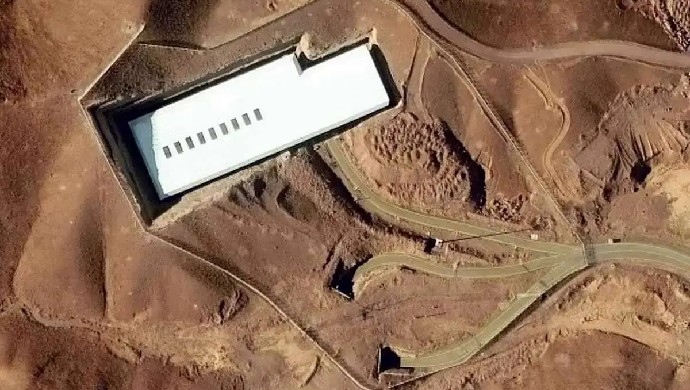
In a televised address from the White House, U.S. President Donald Trump announced that American forces had conducted strikes on Iran’s three principal nuclear sites: Natanz, Isfahan, and Fordow. He called the operation a “spectacular military success,” claiming Iran’s key uranium enrichment facilities “have been completely and totally obliterated” (Reuters, Axios). Trump warned Iran that its future held “either peace or tragedy” and that many other targets could be hit if Tehran did not agree to peace talks quickly (Reuters).
The Pentagon provided further details on the scale of the operation. General Dan Caine, Chairman of the Joint Chiefs of Staff, stated that seven B-2 bombers flew for 18 hours to drop 14 bunker-buster bombs on the heavily fortified, underground Fordow facility (Reuters). In total, the U.S. launched 75 precision-guided munitions, including over two dozen Tomahawk missiles, utilizing more than 125 military aircraft (Reuters).
Despite the intensity of the attack, U.S. Defense Secretary Pete Hegseth clarified that the mission’s objective was not regime change. “The president authorized a precision operation to neutralize the threats to our national interests posed by the Iranian nuclear program,” Hegseth told reporters, adding that Washington had sent private messages to Tehran encouraging negotiation (Reuters).
An Israeli official confirmed that the Trump administration had notified Israel in advance of the strikes, and President Trump spoke with Prime Minister Benjamin Netanyahu after the operation was complete (Axios).
Iran’s official response and damage assessment
The Iranian regime responded with swift condemnation and threats of retaliation. Foreign Minister Abbas Araghchi called the U.S. strikes an “outrageous” and “grave violation” of the UN Charter and the Non-Proliferation Treaty (NPT), stating that Iran “reserves all options to defend its sovereignty, interest, and people” (Reuters, Abbas Araghchi on X).
The United States, a permanent member of the United Nations Security Council, has committed a grave violation of the UN Charter, international law and the NPT by attacking Iran's peaceful nuclear installations.
The events this morning are outrageous and will have everlasting…
— Seyed Abbas Araghchi (@araghchi) June 22, 2025
Iran’s Atomic Energy Organization declared that the “savage” attacks were carried out against its sites in Fordow, Natanz, and Isfahan, but vowed that the development of its “national industry” would not be stopped (Mehr News Agency).
An Iranian official confirmed to Tasnim News Agency that part of the Fordow site was attacked, while Saberin News reported that U.S. bombers struck the entrance to the Fordow site at 2:10 AM, though the explosions were not felt in the nearby city of Qom (Reuters, Saberin News).
However, regime officials downplayed the impact. Mohammad Manan Raisi, a lawmaker for Qom, told Fars News Agency that the Fordow facility was not seriously damaged (Reuters), and a state broadcast official claimed the sites had been evacuated and all enriched uranium moved to safe locations prior to the attack (Reuters, Tasnim News Agency).
The Islamic Revolutionary Guard Corps (IRGC) issued a statement promising a “regrettable response,” warning that U.S. bases in the region are now a vulnerability. Hossein Shariatmadari, the representative of Supreme Leader Ali Khamenei in the Kayhan newspaper, called for an immediate missile strike on the U.S. naval fleet in Bahrain and the closure of the Strait of Hormuz to Western ships (Chand Sanieh Telegram channel). Regime President Masoud Pezeshkian stated that Iran would do “whatever we can” to prevent such “bullying” (State Television).
Ongoing hostilities between Iran and Israel
The U.S. strikes occurred amid an already intense, ongoing conflict between Iran and Israel.
Iran’s attacks on Israel:
Iran’s retaliatory fire against Israel appeared to intensify overnight. According to Israel’s health ministry, 86 people were injured (Reuters). The IRGC announced its nineteenth wave of drone and missile attacks, with its spokesperson claiming that 14 strategic and military centers in Haifa and Tel Aviv were targeted (Fars News Agency, Chand Sanieh Telegram channel).
The IRGC later said its latest attack involved 40 missiles, including, for the first time in the campaign, a Kheybar Shekan ballistic missile (Reuters, Student News Network). Alarms were also sounded in the Golan Heights following Iranian drone infiltration (Al Arabiya).
Israel’s attacks on Iran:
Israel continued its own campaign inside Iran. Israeli media reported a large fire in the city of Shiraz following Israeli airstrikes (Al Arabiya). Explosions and air defense activity were reported in Tehran, Tabriz, Mashhad, and Qom (Al Arabiya, Chand Sanieh).
The regime’s Crisis Management Headquarters in Qom province reported that four people were killed by projectiles hitting the Mostafa Khomeini military barracks (ISNA, Qom Province Crisis Management Spokesperson).
The IRGC’s public relations office in Tabriz also announced that four were killed and three injured in an attack on one of its training centers (IRGC Tabriz Public Relations). Later on Sunday, strikes were reported on the Sadoughi military barracks and a power plant in Yazd province (Chand Sanieh).
Meanwhile, the conflict continued to affect daily life for ordinary Iranians. The internet monitoring organization NetBlocks reported that the regime’s internet shutdown was entering its fourth day, leaving the country “largely offline” and impacting the public’s ability to communicate and access information.
⚠️ Update: #Iran's internet shutdown is entering its fourth day, with the country remaining largely offline despite a slight restoration in connectivity; at 72 hours, diminished telecoms continue to impact the public's ability to stay informed and in touch with loved ones ⏱️ pic.twitter.com/H1ZyZpfwmm
— NetBlocks (@netblocks) June 22, 2025
International reactions and diplomatic calls
The American attack prompted immediate concern from world leaders and international bodies.
Now Khamenei must go
The #Iranian people welcome the end of the war and seek peace and freedom
Khamenei is responsible for an unpatriotic project that, in addition to costing countless lives, has cost the Iranian people at least two trillion dollars—and now, it has all gone up… pic.twitter.com/u310w3JVpG— Maryam Rajavi (@Maryam_Rajavi) June 22, 2025
Maryam Rajavi, the President-elect of the National Council of Resistance of Iran (NCRI), said in a statement: “Now Khamenei must go.” She added, “Khamenei is responsible for an unpatriotic project that, in addition to costing countless lives, has cost the Iranian people at least two trillion dollars—and now, it has all gone up in smoke.” She reiterated her long-standing call for the “Third Option: No to appeasement, no to war—yes to regime change… by the Iranian people and the Iranian Resistance.”
UN Secretary-General Antonio Guterres described the strikes as a “dangerous escalation in a region already on the edge” (Reuters).
Rafael Grossi, Director General of the International Atomic Energy Agency (IAEA), announced he was convening an emergency meeting of the IAEA Board of Governors for the following day.
In light of the urgent situation in Iran, I am convening an emergency meeting of the @IAEAorg Board of Governors for tomorrow.
— Rafael Mariano Grossi (@rafaelmgrossi) June 22, 2025
European leaders were united in their calls for restraint. European Council President Antonio Costa said he was “deeply alarmed” and stressed that “diplomacy remains the only way.”
Deeply alarmed by the news arriving from the Middle East.
I call on all parties to show restraint and respect for international law and nuclear safety.
Diplomacy remains the only way to bring peace and security to the Middle East region. Too many civilians will once again be…
— António Costa (@eucopresident) June 22, 2025
EU foreign policy chief Kaja Kallas urged all sides to “step back” and prevent further escalation, reiterating that Iran must not be allowed to develop a nuclear weapon.
Iran must not be allowed to develop a nuclear weapon, as it would be a threat to international security.
I urge all sides to step back, return to the negotiating table and prevent further escalation.
EU Foreign Ministers will discuss the situation tomorrow.
— Kaja Kallas (@kajakallas) June 22, 2025
German Chancellor Friedrich Merz called upon Iran to negotiate a peaceful resolution (DW), while French Foreign Minister Jean-Noël Barrot expressed France’s concern and its conviction that a negotiated solution is the only way forward.
La France a pris connaissance avec préoccupation des frappes menées cette nuit par les Etats-Unis d’Amérique contre trois sites du programme nucléaire iranien.
Elle n’a participé ni à ces frappes ni à leur planification.
Elle exhorte les parties à la retenue pour éviter toute…
— Jean-Noël Barrot (@jnbarrot) June 22, 2025