

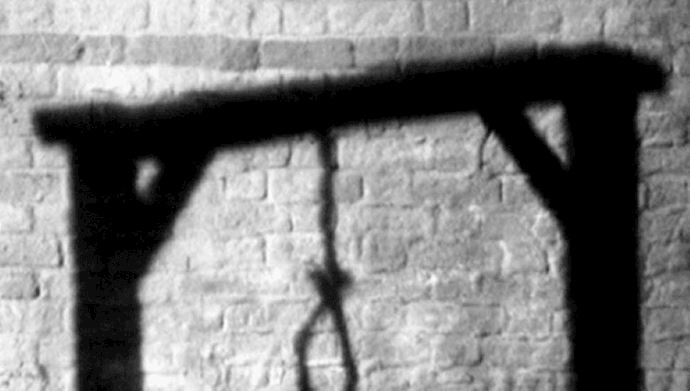

In a powerful article published in Ouest France, ten prominent French personalities, including philosopher Élisabeth Badinter, lawyer Dominique Attias, and former senator Ingrid Betancourt, have issued a plea to President Emmanuel Macron to take decisive action against the escalating wave of executions in Iran. With 850 executions recorded since the beginning of the year, the article highlights the urgency of ending the silent international complicity surrounding these human rights violations.
The authors write, “Iran continues to stain the pages of contemporary history by spilling the blood of its people, in a deafening international silence.” They emphasize that the scale of executions places Iran at the forefront of global capital punishment per capita. “This chilling figure is not a mere statistic,” the article states. “It reflects shattered lives, erased stories, but also the names of heroes who will forever be remembered.”
Targeting Political Opponents
The report highlights the cases of six men sentenced to death for their association with opposition group the People’s Mojahedin Organization of Iran (PMOI). These individuals include Mohammad Taghavi, 58, imprisoned in previous decades; Ali Akbar Daneshvarkar, 57, a civil engineer; Babak Alipour, 33, a law graduate; Vahid Bani-Amerian, 32, with a master’s in management; Pouya Ghobadi, 32, an electrical engineer; and Abolhassan Montazer, 65, an architect with chronic illnesses. Their so-called crime, the authors explain, is nothing more than “a crime of opinion,” with their political activities condemned as “belonging to an organization fighting for democracy and freedom against a repressive dictatorship.”
The article argues that these sentences are part of a larger crackdown: “These verdicts are not isolated.” Three more activists, Behrouz Ehsani, Mehdi Hassani, and Mohammad Javad Vafai, have been awaiting execution for months. Similarly, six young protesters from Tehran’s Ekbatan neighborhood face execution for participating in demonstrations following the 2022 death of Jina Mahsa Amini. Additionally, the article highlights the plight of two Kurdish female activists, Varisheh Moradi and Pakhshan Azizi, who remain on death row. The authors lament, “The list is long and includes many opponents from the Baluchi minority.”
A Legacy of Silence
The signatories argue that international inaction has emboldened the Iranian regime, drawing parallels to past atrocities. “Perhaps if the international community had reacted to the massacres of the 1980s,” when thousands of political prisoners, including PMOI members, were executed, “the regime would not act so brazenly today.” The 1988 executions, they note, have been described as “genocide” by the United Nations’ Special Rapporteur on Human Rights in Iran.
Pressure and Fear Within the Regime
The article underscores the Iranian regime’s fragility, suggesting that its intensified repression stems from fear of growing internal resistance. “These six recent sentences reflect the regime’s relentless crackdown on the PMOI,” the authors write, “but also the fear of a regime on the brink, aware that internal resistance is growing despite persecution and disinformation.” The growing protests, they argue, indicate “a population exhausted by injustice and oppression.”
The article also points to signs of the regime’s vulnerability. The release of a prominent Iranian rapper, albeit on bail, was celebrated as a victory brought about by international media attention. The authors stress that the regime fears global scrutiny: “The regime has shown in other cases that it fears international opinion.” Despite this, they criticize the global media for often prioritizing sensationalism over critical issues, such as Iran’s ongoing executions. “Too often, the tyranny of buzz buries the gravity of such issues.”
Urgent Action Required
The authors call for immediate international intervention to save lives. They reference the courage of Iranian prisoners, many of whom are currently on hunger strikes across 25 prisons to protest the inhumane death sentences. “Their courage calls for international solidarity,” the article declares. France, the authors argue, has a unique role to play as “a land of human rights and the abolition of the death penalty.” They insist that President Macron must act before it is too late.
The authors point to a growing domestic movement in France against the executions. “The call launched by 700 mayors of France, demanding the end of this barbarity and the abolition of the death penalty in Iran, resonates with force.” This movement underscores the moral responsibility of France to stand against human rights violations and send a strong message to the Iranian regime. “France must make it clear that the era of impunity for human rights violations is over.”
The article concludes with a powerful call to action: “This battle is a matter of universal values. Freedom and human dignity cannot be sacrificed on the altar of interests.” The authors urge France to condition its diplomatic and economic relations with Iran on the immediate cessation of executions. Furthermore, they recommend that France push for the prosecution of Iranian officials before international courts, as suggested in the latest UN report. “By acting firmly, France will prove that it remains faithful to its values.”