


Executions and torment continue unabated in Iran’s prisons. So far, the regime has executed at least 154 people in the tenure of its new president Masoud Pezeshkian, who assumed office in late July and is being touted by many regime proponents as a moderate.
On the cusp of the anniversary of the 2022 nationwide uprising, the regime has resorted to a new wave of executions to prevent a popular revolt. On Monday, September 9, six prisoners were hanged at Zahedan Central Prison. On September 1, five prisoners were executed in Kahnuj, Hamadan, Shiraz, and Neyshabur. On August 30 and 31, two prisoners were hanged in Zanjan and Mahabad.
On August 28, the regime hanged five people in Dastgerd Prison in Isfahan and in Khorramabad.
At the same time, the conditions in Iran’s prisons continue to deteriorate as regime officials neglect the most basic needs of prisoners. On September 6, prisoners at Karaj Central Prison were poisoned due to contaminated drinking water, suffering from stomach pain, vomiting, and dizziness. While prisoners urgently needed drinking water and medical attention, prison authorities abandoned them, neglecting to provide water, medication, or doctors.
Other reports indicate that a flu-like virus has recently spread in the women’s ward of Evin Prison, infecting a large number of female political prisoners. The condition of some prisoners with underlying diseases has been reported as critical.
Regime authorities are denying the prisoners basic medical care and are not even taking measures to prevent the further spread of the virus.
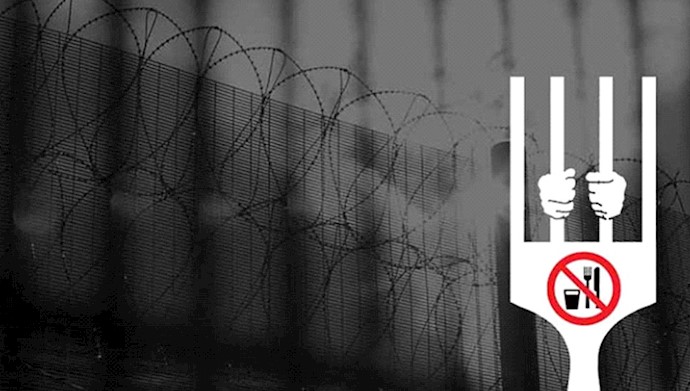
In response to the regime’s growing repressive measures and executions, political prisoners in 21 prisons across Iran went on hunger strike on September 10 to mark the 33rd week of the “No to Executions on Tuesdays” campaign.
The participating prisons in this round of the campaign include Evin (women’s ward, wards 4 and 6), Ghezel Hesar (units 3 and 4), Karaj Central Prison, Greater Tehran Prison, Khorramabad Prison, Shiraz Military Prison, Bam Prison, Isfahan’s Asadabad Prison, Mashhad Prison, Rasht’s Lakan Priso, Qaem Shahr Prison, Ardabil Prison, Tabriz Prison, Urmia Prison, Khoy Prison, Naqadeh Prison, Salmas Prison, Saqqez Prison, Baneh Prison, Marivan Prison, and Kamyaran Prison.
The participating prisoners condemned the death sentences and recent arbitrary arrests, as well as the threats made against prisoners involved in the “No to Executions on Tuesdays” campaign in Urmia prison by Peyman Khanzadeh, the prison warden, and Nader Azarnia, the head of prison security. They emphasized the continuation of the campaign until the complete abolition of the death penalty and again called on all prisoners across the country to join the campaign.
The statement by the prisoners involved in the “No to Executions on Tuesdays” campaign reads in part: “According to published reports, several people have been killed under torture in prisons in the month of September, and at least 29 people have been executed so far this month.”
The statement by the striking prisoners added: “These repressive actions were described as atrocity crimes’ in the recent report by [former UN Special Rapporteur on the human rights situation in Iran] Javaid Rehman.” This report paves the way for the accountability and prosecution of those responsible for these crimes.
The striking prisoners also emphasized: “The corrupt and irreparable structure of the regime is incapable of responding to the demands of various social groups. Protests by workers, retirees, nurses, teachers, women, and students are ongoing, and they support the slogans against executions and the ‘No to Executions on Tuesdays’ campaign.”
The participants in the “No to Executions on Tuesdays” campaign, in their statement, called for a visit by the new UN Special Rapporteur on the human rights situation in Iran, Mrs. Mai Sato, to Iran’s prisons, including visits to political prisoners and prisoners who have been silently sentenced to death.
In a statement, the National Council of Resistance of Iran (NCRI) urged the UN High Commissioner for Human Rights, the UN Human Rights Council, the Special Rapporteur on the situation of human rights in Iran, as well as the European Union and its member states, to take immediate action to halt the surge of executions and repression in Iran and to save the lives of those on death row. “Maintaining political and economic relations with the regime that carries out executions and instills terror disregards universal human rights principles and should be contingent on the cessation of executions and torture in Iran,” the NCRI warned.