

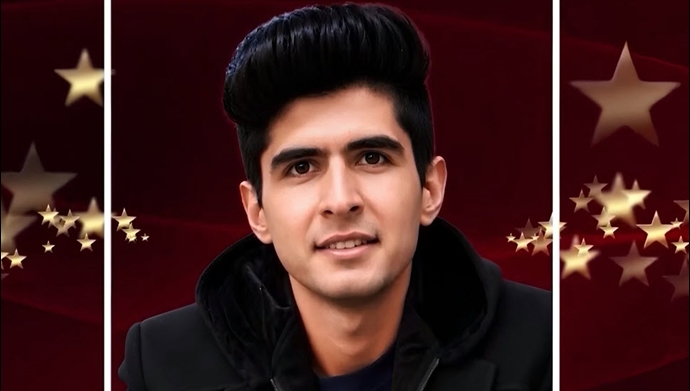

Forty days after the Iranian regime executed PMOI member Mehdi Khanaki, his name returned to the streets of Iran.
On August 31, 2026, Resistance activists in Tehran, Karaj, and Rasht placed wreaths and flower baskets bearing Khanaki’s photograph to commemorate him. The messages accompanying the flowers spoke not only of mourning, but also of remembrance and continuity.
In Tehran, one message said Khanaki would never be forgotten and that his name remained in the hearts of his comrades. Another described his name as a symbol of “kindness and courage.” In Karaj, where Khanaki had been arrested and imprisoned, a message read: “Your memory is honored, your name eternal, your path continues.” In Rasht, activists wrote that although he was gone, his kindness and memories would remain with them.
August 31—Iran
On the 40th of the execution of PMOI/MEK martyr Mehdi Khanaki, Resistance Units in different cities honored his memory pledged to continue his path and struggle. https://t.co/1r26vbZyxb pic.twitter.com/vBzcnUc1x8— People's Mojahedin Organization of Iran (PMOI/MEK) (@Mojahedineng) September 1, 2026
The tributes came as new accounts from Khanaki’s former cellmates shed further light on the months between his arrest and execution—months in which, according to those accounts, he endured solitary confinement and intense pressure while refusing to renounce the political convictions for which he had been arrested.
From the January uprising to the gallows
Khanaki was a young law graduate and member of the People’s Mojahedin Organization of Iran (PMOI/MEK). Security forces had been pursuing him following the nationwide protests of January 2026. He was arrested in Karaj on February 10.
The regime’s Revolutionary Court in Karaj subsequently sentenced him to death and confiscation of his property on charges of membership in the PMOI and active participation in the January uprising. The regime’s judiciary also alleged that weapons, ammunition, explosive remote controls and other materials had been seized from him and claimed that some of the weapons had been used during the January unrest.
Khanaki was subjected to severe physical and psychological torture during his imprisonment. The Iranian Resistance had raised his case with the UN Special Rapporteur and international human rights organizations on March 1, warning that his life was in danger.
At dawn on July 22, 2026, just over five months after his arrest, the regime executed Mehdi Khanaki.
New accounts from inside prison
The accounts published on the fortieth day of Mehdi Khanaki’s execution provide new details about his conduct during imprisonment and trial.
One former cellmate said Khanaki was tried in Branch 2 of the Revolutionary Court in Karaj before regime judge Mehdi Shahsavari. According to the account, Khanaki confronted the court without showing remorse and shouted, “Hail to Maryam and Massoud Rajavi.” The prisoner recalled that Khanaki’s declaration broke through the atmosphere of intimidation in the courtroom.
Another former cellmate said the trial came after months of solitary confinement and intense pressure. “Mehdi endured all the torture,” he recalled, adding that Khanaki’s defiance in court upset the authorities’ expectations. The prisoner wrote that Khanaki demonstrated that “a PMOI hero never kneels.”
According to the same testimony, security and prison officials repeatedly approached Khanaki, using both threats and inducements in an attempt to make him renounce his beliefs. At one point, they reportedly told him, “If you write a letter of repentance, we’ll release you.”
Khanaki refused to recant.
The new testimonies suggest that the confrontation between Khanaki and the regime did not end with his arrest. According to those who shared prison with him, months of solitary confinement and pressure failed to make him abandon the political convictions that had led to his arrest. Instead, they remembered his courtroom appearance as a final public assertion of those convictions before his execution.
Discipline and faith inside a few square meters
The smallest details in the accounts of Mehdi Khanaki’s imprisonment provide some of the clearest insights into how he lived through his final months.
One former cellmate said Khanaki spent almost all of his final four or five months in solitary confinement at Karaj Central Prison. Yet, according to those who were imprisoned with him, he imposed structure on the few square meters available to him rather than allowing confinement to dictate his days.
One prisoner recalled that Khanaki walked about 1,500 meters every day inside his limited space and had a specific plan for every hour. Prayer and exercise were regular parts of that routine. Fellow prisoners also said that during his detention he went on a hunger strike lasting approximately one week, first at the security police detention center and then in prison.
Another cellmate recalled the moment Khanaki discovered that a fellow PMOI supporter was being held with him. He immediately asked whether the prisoner was a member of the PMOI. When the answer was yes, the prisoner remembered Khanaki’s face lighting up as he said, “Thank God I’m not alone.”
The same prisoner said Khanaki was fully aware of the fate that probably awaited him. Despite knowing that he faced execution, he remained humble and committed to his faith, and, according to the account, never abandoned his prayers.
Shortly before his death, Khanaki reportedly told his cellmate: “I’m going and I’ll be executed. But give my greetings to the others.”
Other former detainees offered similar recollections. One described Khanaki as exceptionally kind while remaining steadfast in his beliefs. Another prisoner, who had encountered him at the security police detention center in Karaj, remembered him as strong, energetic and firm in his position. He said Khanaki prayed and exercised regularly and calmly spoke about the likelihood that he would be executed.
According to these testimonies, the death sentence did not diminish Khanaki’s morale. His fellow prisoners recalled that his confidence and energy remained so striking that people who learned he was awaiting execution were surprised by his composure. Taken together, the accounts portray discipline, faith and concern for his fellow prisoners as central features of how Khanaki confronted his final months.
A character remembered for both resolve and kindness
The prison testimonies add an important dimension to Mehdi Khanaki’s story. They do not portray steadfastness and personal warmth as opposites.
Those who said they spent time with him repeatedly remembered two characteristics together: his uncompromising attitude toward the regime and his kindness toward fellow prisoners.
This helps explain the language that appeared alongside his photograph forty days after his execution.
In Tehran, Resistance activists described his name as a symbol of kindness and courage. In Rasht, they emphasized the kindness and memories he had left behind. The tributes therefore echo characteristics independently emphasized throughout the collected testimonies of his fellow prisoners.
“Your path continues”
There is particular significance in one of the locations where the fortieth-day tributes appeared.
Karaj was where Khanaki was arrested on February 10. It was where he was imprisoned, where his trial was held, and where, according to his former cellmates, he spent much of his final months in solitary confinement.
Forty days after his execution, Karaj was also where Resistance activists placed his photograph among flowers and left a simple message: “Your memory is honored, your name eternal, your path continues.”
The regime could execute Mehdi Khanaki, but it could not determine what would happen to his memory afterward. The accounts now emerging from prison and the tributes carried out on August 31 show that his story has become part of the memory of a resistance movement that continues inside Iran.