

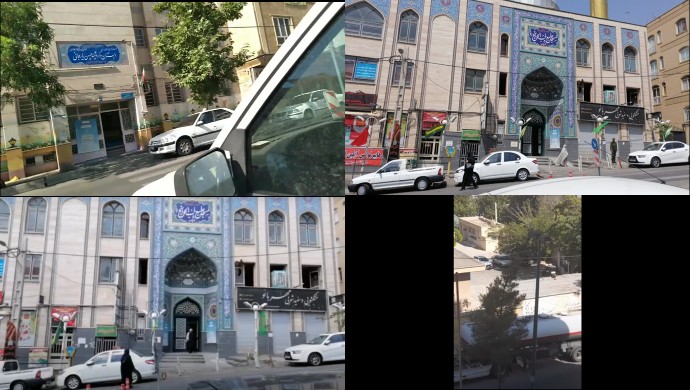

Iran’s regime held its premature presidential election on June 28 to choose the successor to Ebrahim Raisi, who died in a helicopter crash on May 19. The regime has been campaigning profusely to convince people to vote in the election.
But reports indicate that the people have not paid heed to the regime’s propaganda efforts and are refusing to show up at the polling stations.
The presidential elections are being held on the heels of a parliamentary elections in March, which was met with massive boycott by the Iranian people. According to reports by the network of PMOI, voter turnout in the March elections was less than 10%.
In fear of another massive boycott, regime supreme leader Ali Khamenei said on the morning of June 28, “The participation of the people and increase in voter turnout is an absolution necessity for the Islamic Republic. The people should not hesitate in voting…. The people should take voting in this political test seriously and participate.”
Nonetheless, reports gathered by PMOI activists across the country show that polling stations are mostly empty since voting started early in the morning.
9:00 am CET:
Reports from Chalus, Isfahan, and Bojnurd indicate that multiple polling stations were empty. In Tehran’s crowded Narmak district, polling stations were empty at 8:00 am local time.
A TV report from the regime’s Tasmin News Agency shows an empty polling station at Isfahan’s Naghsh-e Jahan Square, which is one of the most crowded areas of the city. Only employees and journalists are present at the scene.
9:30 am CET
More reports indicate near-empty polling stations in different parts of Isfahan, Tabriz, Ali Abad Katul (Golestan province), Chalus, Amol, Kermanshah, Gatvand (Khuzestan), Tehran, Rafsanjan, Mashhad, and Marvdasht.
June 28—Isfahan, central #Iran
Empty polling station at Fatemieh Mosque, Qezlbash "Joshghani" St, as Iran's people boycott the regime's sham elections.pic.twitter.com/Bsabhy29KF— People's Mojahedin Organization of Iran (PMOI/MEK) (@Mojahedineng) June 28, 2024
According to the regime’s own officials, more than 220,000 security forces will be on duty on Friday, about 190,000 of whom will be present at voting stations. At one of the voting stations in Kerman, dozens of IRGC vehicles had been parked while citizens did not show up for voting.
Meanwhile, the people have already cast their votes in the elections in previous days by setting fire to propaganda posters of the regime’s supreme leader and presidential candidates. The people have been expressing in different ways that their only vote is regime change.
11:00 am CET
More reports coming from inside Iran indicate that the boycott of the sham elections continues as people refrain from voting. Images and videos from Isfahan, Arak, Amol, Karaj, Mashhad, Tehran, and Kerman show empty polls and very few voters at around 10 am local time.
In some locations, regime authorities have chosen polling stations and their entrances in ways that make it difficult for outside observers to monitor traffic and report on the conditions. The regime is thus trying to cover up the fact that people are not voting in the election.
1:30 pm CET
More reports from Iran’s cities indicate a mass boycott of the sham presidential elections.
A PMOI activist in Mahshahr, southwest Iran, said, “No one has come to vote at the polling station in the most crowded section of the city at 9:00 am.”
Reporters in Ahvaz, Hamedan, Rasht, Mashhad, Pakdasht (Tehran), Amol, Bojnurd, Meshginshahr, and Rafsanjan sent videos showing empty polling stations at different hours. In some cases, the activists even entered the stations despite security risks and recorded videos that showed no one or very few people coming out to vote.
“They’ve made fools of themselves,” one of the activists from Rezvanshahr said as he reported empty polling stations.
2:00 pm CET
A PMOI activist reporting from one of the polling stations in Ahvaz said, “There is only a criminal Basij member sitting here. No one is voting. It isn’t time for elections, it’s time for a revolution. Death to Khamenei, hail to Rajavi”
In Delijan, a school that was turned into a polling station was completely empty, with no one coming to vote.
In Hamedan, polling stations were empty at 10:00 am local time.
“The people have boycotted this farcical election,” an activist reporting from an empty polling station in Isfahan said. “Our vote is regime change.”
In order to stir hope and encourage people to vote, former regime president Mohammad Khatami attended one of the polling stations to cast his ballot. The regime’s media widely publicized his attendance, given that he had refrained from voting in the previous election. Khatami, who branded himself as the leader of the so-called “reformist” movement, aims to give the impression that there is a chance of achieving change by voting in the election.
However, the people of Iran have made it clear that have put all regime factions in their rear-view mirror with the slogan, “Reformists, principlists, the game is over.”
Former Iranian regime president Mohammad Khatami casting his ballot in the sham election. The regime’s media widely publicized his attendance to stir hope and encourage people to vote.
But the people have made it clear that their vote is regime change.pic.twitter.com/TKXv4JLDW7— People's Mojahedin Organization of Iran (PMOI/MEK) (@Mojahedineng) June 28, 2024
2:30 pm CET
According to reports from inside Iran, the regime is forcing prisoners in Dastgerd Prison in Isfahan, Saqqez Prison, Evin Prison, Ghezel Hesar Prison, Zahedan Central Prison, and several other prisons to vote under threat and pressure.
The deputy warden of Dastgerd Prison in Isfahan forced prisoners to participate in the election, stating that anyone who did not vote would not be granted furlough. He also compelled prisoners to tell their families to participate in the election.
In Saqqez prison, open-prison inmates were told they would be marked as absent if they did not show up at the voting booths, and if they did not go to vote with their families, they would be marked as absent as well.
In Evin prison, prisoners with financial charges (such as dowry, checks, promissory notes, etc.) were forced to vote. They were told that if they did not vote, they would be deprived of leave and other benefits.
In Ghezel Hesar Prison, the regime brought ballot boxes to all wards of this prison to force prisoners to vote. Despite this, a very small percentage of prisoners voted. The prisoners were threatened that if they did not vote, they would be sent to overcrowded halls with poor sanitation and insufficient food, where they would have to sleep on the floor.
Open-prison inmates and prisoners who are on leave were informed that they must show up to vote and that if they did not, they would not be granted leave for a while.
In Zahedan Central Prison, in the section for ordinary crime prisoners, all the ballots were pre-filled, and prisoners were only brought to give their fingerprints. This means that without the person’s consent or even knowing who they were voting for, their votes were pre-written.
Open-prison inmates were also told that they did not need their identification cards or national ID cards to vote.
3:30 pm CET
Reports from the PMOI Social Headquarters inside the country from polling stations in 173 cities across 31 provinces indicate that as of noon on Friday, the polling stations were sparsely attended.
Isa Zarepour, the regime’s Minister of Communications and Information Technology, announced at 10:38 AM today that as of that moment, which is two and a half hours after the start of voting, one million votes had been cast, which is about 1.6% of eligible voters.
June 28—Karaj, northern #Iran
Empty polling stations on the regime's election day. Despite the regime's pleads, the people are refusing to vote as they have made it clear that their vote is regime change. pic.twitter.com/XNK2qr5uAG— People's Mojahedin Organization of Iran (PMOI/MEK) (@Mojahedineng) June 28, 2024
In Tehran, most polling stations were empty. By 10:30 AM, no one had come to vote at the Hazrat Zainab Mosque polling station. At the Imam Hassan Girls’ Elementary School polling station, only two people had come to vote; at the Hasheminejad Elementary School polling station, three people; and at the Modares Technical School polling station, four people. No one had come to vote at the Major Hossein Narmak Elementary School polling station. By 12:30 PM, there were no voters at the polling station on Vali Asr Street. In the districts of Farmanieh, Qeytarieh, and Shariati Street, mobile polling stations roamed the streets, but no one came to vote. The regime brought in Basij militia and plainclothes agents to some polling stations where foreign reporters are present.
June 28—Yazd, central #Iran
Empty polling station on the regime's election day. Despite the regime's pleads, the people are refusing to vote as they have made it clear that their vote is regime change.pic.twitter.com/vUxlfGir6p— People's Mojahedin Organization of Iran (PMOI/MEK) (@Mojahedineng) June 28, 2024
Since this morning, repressive forces were stationed in most parts of Tehran, and motorcycle patrols are active. According to a previous report by the PMOI Social Headquarters, more than 43,000 security forces were deployed in Tehran alone for the elections. On Azadi Street, around the Towhid station, nine vehicles of the regime’s repressive agencies were stationed, all armed with Kalashnikovs, pistols, batons, and sprays.
In Isfahan, only IRGC and Basij agents were present at the Sepahan Shahr Mosque polling station. The Mahmoudieh Mosque polling station in Isfahan was also empty. In Isfahan, the families of Basij members and IRGC guards were being transported by private cars to various polling stations to vote. In Kerman, most polling stations were empty, and by 10:00 AM, only a few Basij members were present in front of each polling station.
In Shahrekord, from the night before, the regime’s mobile TV units were stationed at the Emamzadeh Masoom shrine to show the people coming for pilgrimage on Friday as a line of voters.
In Chabahar, people refrained from attending polling stations, underlining their desire for regime change.
June 28—Chabahar, southeast #Iran
Residents of Chabahar join the national boycott of the regime's presidential elections by refraining to cast their votes.pic.twitter.com/DPh14pyKyW— People's Mojahedin Organization of Iran (PMOI/MEK) (@Mojahedineng) June 28, 2024
4:30 pm CET
By 2 PM local time, PMOI activists visited 2,260 polling stations in 180 cities across 31 provinces.
In Shahdad, Kerman province, which has a population of 8,000, only 68 people voted at the Masjid Al-Rasul polling station. Meanwhile, Basij forces were seen to forcibly bring people to the polling station.
In Shahriar, a busload of people was brought to the women’s Basij base. They were brought from other locations, and after voting, they were taken to other polling stations.
In, Shahreza, Isfahan province, regime agents were visiting homes with ballot boxes. It has been reported that most people do not open their doors.
In Qom, dozens of polling stations were closed due to lack of voter turnout. At some locations, only a few voters showed up.
June 28—#Iran
Empty polling stations in Najaf Abad, Tehran, Urmia. Despite the regime's extensive efforts to bring people out to vote, the presidential election has been met with a mass boycott.pic.twitter.com/usTpwjsght— People's Mojahedin Organization of Iran (PMOI/MEK) (@Mojahedineng) June 28, 2024
In Semnan, at 1:45 PM, 8 to 9 elderly men and women were brought to vote at the Sayyed Al-Shohada Mosque polling station. A few young Basij members, police officers, and some girls also came to vote.
In Mahdasht, Marvdasht and Rasht, activists reported that polling stations were mostly empty in the afternoon, when regime analysts had projected that turnout would be the strongest.
In Mashhad, there were very few voters at the polling stations. Similar reports were sent from other cities, including Isfahan, Sarab, Sari, Yazd, and other cities.
Reports from Behbahan indicate that anyone holding a camera in the street is stopped by security agents, preventing any filming.
A PMOI activist in Tehran’s Naziabad district said that due to very low turnout, many polling stations were closed or empty.
“They’ve closed the polling station because it is humiliating for them,” one reporter from Tehran said.
“I’ve been monitoring this polling station since the morning and it has been empty all the time,” another reporter said. “Death to the dictator. Our vote is Maryam Rajavi.”
June 28—Tehran, #Iran
Reports from different parts of the city show empty polling stations. Some stations were closed because of the humiliating boycott of the regime's sham elections.pic.twitter.com/UbvfglfwdH— People's Mojahedin Organization of Iran (PMOI/MEK) (@Mojahedineng) June 28, 2024
6:30 pm CET
Reports received from polling stations in 219 cities across 31 provinces of the country as of 16:00 Iran time indicate that despite eight hours having passed since the start of voting, the stations remain empty, with many polling places having only a handful of voters or no visitors at all.
For example, in Tehran, at polling stations in Yaft Abad, Shahrak Azadi, 13 Aban, Hadith Girls’ High School, Araki Street in Nazi Abad, Imam Hassan Mosque, and Haj Hossein Maktabi School, the number of participants was minimal, and even in the hours following Friday prayers, when the regime officials expected more turnout, there was no significant increase.
June 28—Tehran, #Iran
Security forces deployed to Seyyed Khandan bridge to prevent possible protests during the regime's sham presidential election.pic.twitter.com/EhTGYqKhNP— People's Mojahedin Organization of Iran (PMOI/MEK) (@Mojahedineng) June 28, 2024
The polling stations in Qom were unprecedentedly deserted. Six hours of observations in 84 polling stations showed that in 34 stations, there were no voters at all; in four stations, only one voter; in three stations, two voters; in eight stations, three voters; in 13 stations, five voters; in nine stations, six voters; in five stations, seven voters; in two stations, eight voters; in four stations, nine voters; and in one station, ten voters.
Repressive forces are widely present in the streets. At the Moniriyeh metro station in Tehran, a police task force with 10 motorcycles and one car was stationed, stopping anyone with a camera and preventing them from filming.
Abdollah Haji Sadeghi, Khamenei’s representative in the Islamic Revolutionary Guard Corps (IRGC), said: “For the presidency, we must elect someone who believes in the Resistance Front… We cannot ignore Gaza and Lebanon, and we cannot refrain from enmity with Israel and the United States” (Etemad Online, June 28, 2024).
June 28—#Iran
Empty polling stations in Jifort, Tehran, Tonekabon, Parand, Bukan, Torbat-e Jam and Tabriz. Despite the regime's extensive efforts to bring people out to vote, the presidential election has been met with a mass boycott.pic.twitter.com/ftExoCwtjT— People's Mojahedin Organization of Iran (PMOI/MEK) (@Mojahedineng) June 28, 2024
Mrs. Maryam Rajavi, the president-elect of the National Council of Resistance of Iran (NCRI), congratulated the people of Iran on their strong response to the regime and the mass boycott of the sham presidential election, describing it as “a decisive rejection of the ruling religious tyranny, signaling the impending victory of a free Iran under a democratic republic. It is a resounding No to dictatorship and a decisive vote by the Iranian people for the regime’s overthrow.”
“The nationwide boycott of the sham elections, coupled with the activities of Resistance Units across our occupied homeland against the usurpation of our people’s sovereignty, signals the lethal impact of Ebrahim Raisi’s death on Khamenei’s crisis-riddled regime,” she said. “These developments expose the regime’s scandalous attempts to stage-manage a high turnout.”
The nationwide boycott of the sham elections, coupled with the activities of Resistance Units across our occupied homeland against the usurpation of our people’s sovereignty, signals the lethal impact of Ebrahim Raisi’s death on Khamenei’s crisis-riddled regime. These…
— Maryam Rajavi (@Maryam_Rajavi) June 28, 2024
9:00 pm CET
Reports received from 237 cities in 31 provinces by 6 PM indicate a lackluster turnout for the sham election across the country. Due to the public’s indifference towards this event, the Ministry of Interior extended the voting time nationwide until 8 PM, even though it was officially supposed to end at 6 PM.
The nationwide boycott of the election was such that even the Hosseinieh Ershad polling station in Tehran, usually used to show foreign journalists, was empty. A municipal bus with five men and five women Basij members parked in front of Pars Hospital in Tehran, and some of them entered the hospital, threatening patients and staff to vote, but almost all of them refused to vote.
June 28—Rasht, northern #Iran
One of the most crowded parts of the city is empty as people refuse to come out and vote in the regime's sham presidential election.pic.twitter.com/lRSq7psmn3— People's Mojahedin Organization of Iran (PMOI/MEK) (@Mojahedineng) June 28, 2024
In Tabriz, at the Ali Nasab Hospital, a ballot box was taken to patients’ rooms by three officers who threatened them to vote, but no one agreed to vote.
In Karaj, at the Masjed Azam polling station, only a few people came to vote during the eight hours of voting.
In Nikshahr, Sistan and Baluchestan province, regime agents took ballot boxes to the funeral of two fuel porters who had been killed by suppressive forces the previous day. The angry people attacked the agents, forcing them to flee.
In Chabahar, most polling stations were empty, and no one went to vote at the Masjed Towhid polling station in Konarak, Sistan and Baluchestan province.
June 28—#Iran
More footage of empty polling stations in different cities as people continue to boycott the regime's sham presidential election.pic.twitter.com/GHJebRPeyx— People's Mojahedin Organization of Iran (PMOI/MEK) (@Mojahedineng) June 28, 2024
The people of Dehgolan village prevented ballot boxes from entering the village, clashing with the regime’s agents and damaging their vehicles. In Taybad, high-school students with larger physiques were brought in to vote even though they were not elligible.
In Taybad prison, four types of clothing were prepared for 130 prisoners, and they were taken to different polling stations in different clothes to vote for Saeed Jalili without any identification documents. Prisoners on leave were forcibly summoned and taken to the Musabn Jafar Mosque polling station to vote.