

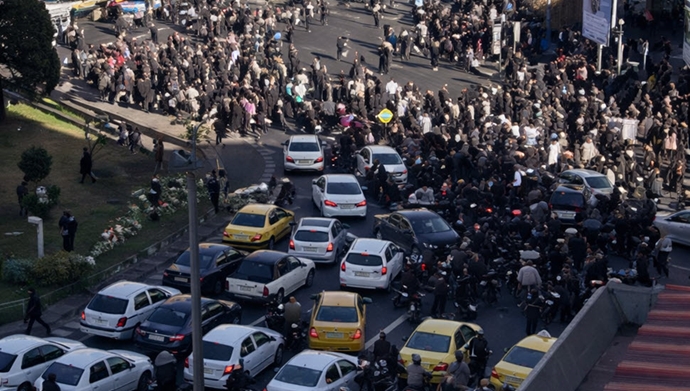

Live report | Thursday, January 1, 2026
The nationwide uprising in Iran, fueled by a catastrophic economic collapse and decades of systemic corruption, entered its fifth consecutive day on January 1, 2026. What began on December 28 as a protest by Tehran’s Grand Bazaar merchants against the freefall of the national currency has now evolved into a broad-based challenge to the clerical regime’s survival. The movement has seen a historic shift as all sectors of society have turned against the regime.
On the fourth day of the uprising, December 31, 2025, the situation reached a boiling point. Strikes paralyzed markets in dozens of cities, including Isfahan, Shiraz, and Kermanshah. In Fasa, Fars Province, the confrontation turned bloody as security forces opened fire on protesters who had stormed the governorate building. In a sign of the regime’s growing panic, supreme leader Ali Khamenei appointed IRGC Brigadier General Ahmad Vahidi, a notorious figure wanted internationally for terrorism, as Deputy Commander of the IRGC to oversee the suppression of the Iranian people.
In the fifth, the momentum continues to build. Early reports from Tehran indicate that the strikes have expanded to the city’s vital food distribution hubs, while the regime has intensified its crackdown on the student movement and cut internet access in restive provinces to stifle the fire of rebellion.
Day five roundup: Protesters seize regime buildings and force security forces to retreat amid nationwide strikes
On January 1, 2026, the fifth day of the national uprising marked a qualitative shift from street protests to intense urban resistance. Despite the regime’s transition to using live ammunition and implementing localized internet blackouts, the Iranian people have begun seizing government buildings and forcing suppressive units to retreat in several key cities. As night fell, the uprising expanded to more cities and protesters moved from defensive tactics to besieging and occupying security bases.
Key highlights for today:
- Seizure and siege of regime centers: The resistance has escalated dramatically in western Iran.
- In Lordegan, protesters withstood live ammunition to occupy several regime buildings.
- In Azna, demonstrators occupied a security force base and set fire to a repression vehicle.
- In Farsan, locals surrounded a base of the paramilitary Basij force, effectively laying siege to the suppressive apparatus.
- Qom joins the uprising: In a massive blow to the regime, the city of Qom rose in protest. Demonstrators clashed with security forces and forced them to flee. Slogans of “Mullahs must get lost” were heard in the streets, signaling a total rejection of the theocracy from within its traditional power base.
- Security forces overpowered and forced to retreat: In multiple cities, the sheer will of the public forced armed agents to withdraw. In Marvdasht and Kavar, protesters fought back against live fire and tear gas, forcing security units to retreat and blocking roads with fire. In Hamedan, a lone youth was filmed blocking the advance of security vehicles, inspiring the crowd to stand firm.
- Tehran’s fruit market chants “Death to Khamenei”: At the capital’s central wholesale market (Meidan Tarebar), the strike has held firm. Demonstrators resisted repeated assaults and chanted “Death to Khamenei,” challenging the Supreme Leader’s authority from one of Tehran’s vital economic hubs.
- Defiance of live fire in nightly rallies: As darkness fell, the regime deployed lethal force in Assad Abad and Eslamabad-e Gharb, opening fire on protesters. However, the people refused to disperse, continuing their rallies and chanting anti-regime slogans. Nightly protests also erupted in Gohardasht (Karaj), Dehloran, Khorramabad, and Shahin Shahr.
- Kermanshah’s 100% strike and internet blackout: The commercial heart of Kermanshah saw a total shutdown. Major markets including Kish, Gol, and Zeytoon are in full strike. To hide the scale of the unrest, the regime implemented a total internet blackout in the region for several hours.
- Violent raid on Beheshti University: Under the cover of darkness, security forces raided the dormitories of Beheshti University, arresting several female students. This assault underscores the regime’s fear of the growing alliance between the striking bazaar and the defiant student movement.
- Broadening economic boycott: Beyond Tehran and Isfahan, strikes have paralyzed the Furniture Market in Hamedan and the vital southern port of Bandar Ganaveh, where merchants have vowed to keep shutters down “until further notice.”
January 1—Tehran, Iran
Melli (Beheshti) University
Security forces attacked students’ dormitory after midnight.
Students resisted to prevent their classmates from being arrested.
Security forces reportedly abducted students in their raid.
At least one student hospitalized after… pic.twitter.com/MZWs8mnpMr— People's Mojahedin Organization of Iran (PMOI/MEK) (@Mojahedineng) January 1, 2026
Economic Context:
The uprising remains driven by the absolute collapse of the Iranian Rial, which plummeted to 1.45 million rials per US dollar by late 2025. With food prices soaring by 72% and annual inflation exceeding 42%, the Iranian people have made it clear through their slogans—such as “Poverty, corruption, high prices, we’re going for regime change”—that they no longer view the current government as capable or legitimate.
Update—19:30 CET
As night falls on the fifth day of the uprising, the protests have transformed into widespread nightly rallies across the country. The defiance has spread to the heart of the clerical establishment, while in western Iran, protesters have shifted from defensive tactics to taking over regime positions.
Qom Joins the Uprising: “Mullahs Must Get Lost”
In a significant blow to the regime’s ideological legitimacy, the city of Qom has risen in protest. Demonstrators clashed with security forces dispatched to quell the unrest. Remarkably, footage shows the people forcing the repressive forces to flee after the agents opened fire on civilians. The chants in Qom, including “Mullahs must get lost,” signal a complete rejection of the theocracy from within its own power base.
Protesters in Qom forced security forces to flee after they attacked demonstrations and opened fire on civilians.#IranProtests pic.twitter.com/MyFNTSGqdv
— People's Mojahedin Organization of Iran (PMOI/MEK) (@Mojahedineng) January 1, 2026
Bases Occupied and Surrounded in Western Iran
The intensity of the conflict has escalated dramatically in western provinces, where the youth are now directly targeting the regime’s security infrastructure:
- Azna: Protesters successfully occupied a base belonging to the security forces and set fire to a vehicle used by the repressive units.
- Farsan: Locals rallied late into the night, surrounding a base of the paramilitary Basij force, signaling a shift from protest to active siege.
- Darreh Shahr: Demonstrators were filmed tearing down posters of Supreme Leader Ali Khamenei, symbolically dismantling the regime’s authority.
January 1—Azna, western Iran
Protesters occupied a base of security forces and set fire to a vehicle of the regime's repressive forces.#IranProtests pic.twitter.com/dtN2RkI6JD— People's Mojahedin Organization of Iran (PMOI/MEK) (@Mojahedineng) January 1, 2026
Live Fire and Intense Clashes
The regime continues to respond with lethal force, but the public remains undeterred:
- Assad Abad (Hamedan) & Eslamabad-e Gharb: Security forces opened fire on protesters in both cities. Despite the use of live ammunition, locals stood their ground, fought back, and continued chanting anti-regime slogans.
- Harsin: Protesters faced volleys of pellet guns and tear gas but continued their rally.
- Hamedan: Despite an internet blackout intended to hide the crackdown, protests resumed. In a display of immense bravery, a youth was filmed standing directly in the path of security vehicles to halt their advance.
January 1—Harsin, western Iran
Locals held anti-regime protests despite being attacked by security forces, who fired at them with pellet guns and teargas.#IranProtests pic.twitter.com/LQs89wyYHj— People's Mojahedin Organization of Iran (PMOI/MEK) (@Mojahedineng) January 1, 2026
Nationwide Slogans: “Death to Khamenei”
From Dehloran in the west to Marvdasht in the south, the chant of “Death to Khamenei” echoes through the streets. In Gohardasht (Karaj), near Tehran, a large rally chanted “Down with the dictator” as security forces attempted to disperse them. In Khorramabad and Shahin Shahr, citizens have defied special anti-riot units to maintain their nightly presence in the streets.
January 1—Dehloran, western Iran
Locals hold anti-regime protest rallies and chant, "Down with Khamenei!"#IranProtests pic.twitter.com/SPQca3l8h3— People's Mojahedin Organization of Iran (PMOI/MEK) (@Mojahedineng) January 1, 2026
Update—16:30 CET
As the afternoon of the fifth day unfolds, the nationwide uprising has escalated into intense urban warfare in several provinces. The regime has moved beyond tear gas, using live ammunition against unarmed civilians, while protesters have begun to seize government buildings and force security units to retreat. The slogans have also sharpened, directly targeting Supreme Leader Ali Khamenei.
Lordegan: Protesters occupy regime buildings amid live fire
The situation in Lordegan, western Iran, has become critical. Heavily armed security forces opened fire on demonstrators with live ammunition, leading to reported casualties among civilians. Despite the lethal force, the people of Lordegan continued their resistance, successfully occupying several regime buildings. Footage from the city shows a scene of intense confrontation as the public refuses to back down in the face of the regime’s bullets.
More footage of intense situation in Lordegan as security forces try to stop anti-regime protests through force and bullets and demonstrators continue to resist. Locals report that there are casualties as security forces directly opened fire on civilians.#IranProtests pic.twitter.com/V5ITSfrThY
— People's Mojahedin Organization of Iran (PMOI/MEK) (@Mojahedineng) January 1, 2026
Tehran: “Death to Khamenei” at the central market
In the capital, the strike and protest at the Meydan Tarebar (Fruit and Vegetable Market) have persisted throughout the day. Despite repeated assaults by security forces, protesters maintained their positions. The nature of the protest has become explicitly political, with crowds chanting “Death to Khamenei,” demonstrating that the crisis has moved far beyond economic grievances to a demand for the end of the clerical dictatorship.
January 1—Tehran, Iran
Protests continue at Meydan Tarebar (Fruit and Vegetable Market) and protesters stand their ground despite attacks by security forces. Protesters chant, "Down with Khamenei!" #IranProtests pic.twitter.com/eFjm1X8kf0— People's Mojahedin Organization of Iran (PMOI/MEK) (@Mojahedineng) January 1, 2026
Marvdasht and Kavar: Security forces forced to retreat
In Fars Province, the regime’s suppressive apparatus faced significant setbacks:
- Marvdasht: Security forces opened fire on a large crowd of marchers. The protesters bravely fought back, forcing the armed agents to retreat. In the ensuing chaos, demonstrators set fire to a vehicle belonging to the repressive forces while chanting, “This is the year of blood, Seyyed Ali [Khamenei] will be overthrown!”
- Kavar: As the sun began to set, locals held a major rally. When security forces attempted to disperse the crowd, protesters resisted and forced them to flee the area. Roads were blocked with fire to prevent the entry of reinforcements.
January 1—Marvdasht, southern Iran
Security forces attacked protesters and opened fire on the crowd, trying to disperse their rally. The people stood their ground and bravely fought back, forcing security forces to retreat. Demonstrators set fire to a vehicle of the repressive… pic.twitter.com/yaFCmKU2tv— People's Mojahedin Organization of Iran (PMOI/MEK) (@Mojahedineng) January 1, 2026
Kermanshah: Total shutdown and internet blackout
Field reports from Kermanshah indicate a 100% strike in the commercial heart of the city, stretching from Freedom Square to the Ojaq Intersection. Major commercial hubs, including the Kish, Gol, Zeytoon, and Vali-e Asr passages, have shuttered. In a desperate attempt to regain control, security forces reportedly forced shops on Kashikari Street to close. The regime also implemented a total internet blackout for several hours to stifle the coordination of the protests.
Lorestan and Hamedan: Escalating clashes and arrests
- Nurabad (Lorestan): Protesters used stones and their bare hands to resist security forces using firearms. A vehicle belonging to the security agents was destroyed by the crowd.
- Kuhdasht: The regime’s prosecutor announced the arrest of 20 citizens following last night’s clashes. The Deputy Governor of Lorestan claimed that one Basij member was killed and 13 others were wounded during the unrest in Kuhdasht, highlighting the intensity of the nighttime resistance.
- Hamedan: Merchants in the city’s Furniture Market joined the strike, blocking roads and chanting against the regime’s “inefficient officials.”
January 1—Nurabad (Lorestan Province), western Iran
Protesters destroy a vehicle belonging to security agents tasked with suppressing demonstrations.#IranProtests pic.twitter.com/r2an3LptG9— People's Mojahedin Organization of Iran (PMOI/MEK) (@Mojahedineng) January 1, 2026
Bandar Ganaveh:
The vital southern port market remains in a state of full shutdown for the fifth consecutive day, protesting the systemic corruption and repressive policies that have destroyed the livelihoods of the Iranian people.
Update 11:30 CET
As the fifth day of the nationwide uprising progresses, reports from across Iran indicate a significant intensification of both the bazaar strikes and street confrontations.
Marvdasht, Southern Iran: “The Year of Blood”
In Marvdasht, Fars Province, the strike has entered its fifth day with shops remaining completely shuttered. Large crowds took to the streets in mass demonstrations, chanting slogans that target the heart of the clerical establishment. Protesters were recorded chanting, “This is the year of blood, Seyyed Ali [Khamenei] will be overthrown,” signaling a transition from economic grievances to a call for total regime change.
More footage of mass protests in Marvdasht. Protesters chanting, "This is the year of blood, Seyyed Ali (Khamenei) will be overthrown."#IranProtests pic.twitter.com/rCbofmQ2CO
— People's Mojahedin Organization of Iran (PMOI/MEK) (@Mojahedineng) January 1, 2026
Tehran: Clashes at the Fruit and Vegetable Market
Following the early morning strike at Tehran’s central Fruit and Vegetable Market (Meidan Tarebar), the situation has turned volatile. Security forces, desperate to prevent the disruption of the capital’s food supply chain, deployed tear gas to disperse the crowds. However, reports and video footage show defiant demonstrators standing their ground and resisting the suppressive forces, refusing to end their protest against the disastrous economic conditions.
January 1—Tehran, Iran
Demonstrators at the Fruit and Vegetable Market (Meidan Tarebar) resist against security forces dispatched to quell protest against disastrous economic conditions and regime policies that are destroying people's livelihoods.#IranProtests #IranRevolution pic.twitter.com/8RFmfHVQv2— People's Mojahedin Organization of Iran (PMOI/MEK) (@Mojahedineng) January 1, 2026
Kermanshah: Widespread Protests and Internet Blackout
The city of Kermanshah has become a major flashpoint today. Widespread protests have broken out in multiple sectors of the city. A massive wave of demonstrators began moving from the Silo Intersection (Chahar-rah Silo), fanning out in four directions toward Ojaq Intersection, Modarres Street, and Pump Gazoil Street. In a familiar move to stifle the flow of information and prevent the coordination of the uprising, the regime has reportedly cut off internet access in the area.
Lordegan and Isfahan: Resistance and Economic Paralysis
- Lordegan (Western Iran): Protesters returned to the streets for the fifth consecutive day. Despite being attacked with tear gas shortly after gathering, the people of Lordegan have maintained their presence and continue to resist security forces.
- Isfahan: The economic paralysis continues as the Ibn Sina Fabric Market joined the strike. Reports confirm a “full strike” in this sector, adding to the growing list of commercial hubs that have ceased operations in defiance of the regime.
Security forces attacked protesters and fired teargas shortly after demonstrations began.#IranProtests pic.twitter.com/nuPHTrRz0N
— People's Mojahedin Organization of Iran (PMOI/MEK) (@Mojahedineng) January 1, 2026