

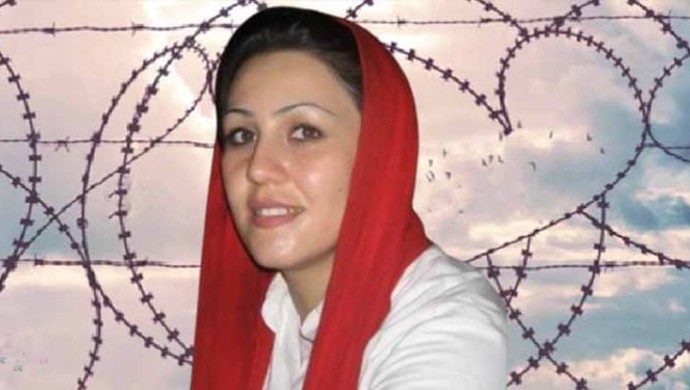

On April 8, 2026, the Iranian regime released Maryam Akbari Monfared, one of the country’s longest-serving female political prisoners, after she endured an agonizing 17 years behind bars. Arrested in Tehran during the nationwide protests of December 2009, Akbari Monfared, a mother of three young children, was subjected to immense psychological and physical torment. Throughout her 17-year incarceration—which spanned Evin, Semnan, and Qarchak prisons—she was systematically denied a single day of medical leave or furlough, even during the COVID-19 pandemic.
Her prolonged detention stands as a glaring testament to the regime’s blatant disregard for basic human rights and its own judicial codes. According to the regime’s own laws, Akbari Monfared should have been freed in 2019 after serving 10 years of her initial 15-year sentence, or at the absolute latest, three years ago. Instead, her case became emblematic of the regime’s sheer cruelty and its relentless determination to suppress dissent.
The true “crime” of seeking accountability
While the Iranian judiciary initially sentenced Akbari Monfared to 15 years in prison on fabricated charges of rioting, acting against national security, propaganda against the state, and “moharebeh” (enmity against God) through alleged membership in the People’s Mojahedin Organization of Iran (PMOI/MEK), her true “crime” since 2013 has been seeking justice for her murdered family members.
Her family has paid the ultimate price for their political beliefs. Three of her brothers and one sister were executed by the regime for their involvement with the PMOI. Alireza Akbari Monfared was executed in 1981, Gholamreza was tortured to death in 1985, and her siblings Abdolreza and Roghiyeh were hanged in the summer of 1988 during the mass execution of over 30,000 political prisoners who remained steadfast in their beliefs.
Akbari Monfared displayed immense courage when she filed an official complaint from inside prison in October 2016, demanding accountability for her siblings’ executions. As UN Special Rapporteur Javaid Rehman highlighted in his July 2024 report on atrocity crimes in Iran, her pursuit of justice led to intensified retaliation.
A weaponized judiciary and fabricated charges
Unable to break her spirit, the Iranian regime resorted to weaponizing its judiciary to prolong her suffering. In January 2024, as her 15-year sentence was nearing its completion, the Ministry of Intelligence orchestrated a new fabricated case against her. Following show trials in Semnan and Evin, she was arraigned on absurd new charges, including “propaganda against the state,” “assembly and collusion against national security,” “spreading falsehoods,” “insulting the Supreme Leader,” and “inciting the public to disrupt public order.”
Consequently, she received an additional three-year prison sentence, alongside internal exile and the confiscation of her property. In a particularly cruel move in July 2024, the regime’s judiciary issued a ruling to formally confiscate the assets of Maryam and her family as direct punishment for her unyielding pursuit of justice. This transparent use of financial, psychological, and physical pressure illustrates the regime’s broader strategy to coerce political prisoners into submission.
A broader pattern of repression and a call to action
Maryam Akbari Monfared’s 17-year ordeal is not an isolated incident but a reflection of a systematic, nationwide campaign by the Iranian regime to crush political dissent.
While Akbari Monfared has finally stepped out of the regime’s dungeons, thousands remain trapped. The Women’s Committee of the National Council of Resistance of Iran (NCRI) has urgently renewed its calls to international bodies defending women’s rights. The international community must take immediate, binding action to stop the inhumane treatment of Iran’s political prisoners and secure the freedom of all those who remain unjustly incarcerated, especially women.