

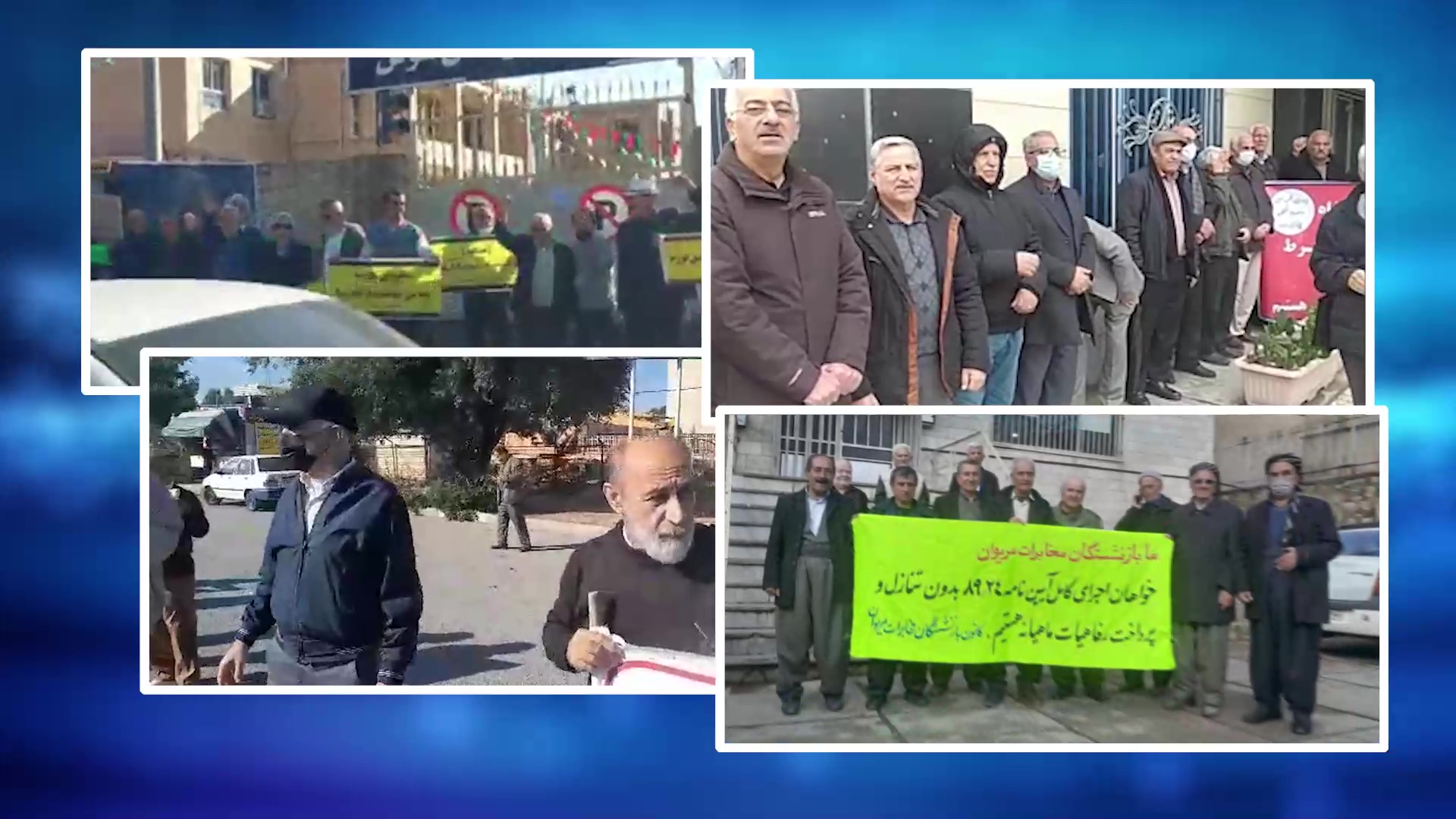

The third week of January began with protests by retirees who, as in previous weeks, took to the streets across the country to raise their voices against injustice and oppression. Throughout this week, numerous cities in Iran witnessed demonstrations by men and women from various segments of society, demanding their basic rights. Protesters chanted slogans such as “Our rights can only be achieved on the streets.”
Cities such as Shush, Ahvaz, Tehran, Isfahan, Shiraz, Ilam, Kermanshah, Sanandaj, Chaharmahal and Bakhtiari, and others saw significant participation by retirees from various sectors. They chanted slogans like “Such injustice! A nation has never seen this!” and “No humiliation, no disgrace—shame on this justice!” demanding their plundered rights from corrupt officials.
In Shush, retirees protested low wages and inflation, chanting, “We will not live under oppression; we will sacrifice our lives for freedom.” Similarly, in Ahvaz, retirees gathered in front of the Social Security Organization, denouncing poverty, inflation, and inadequate wages. Their slogans included, “No humiliation, no disgrace—shame on this justice!”
In Kermanshah, retirees raised their voices with the slogan, “Retirees, rise up against oppression and discrimination.” In Tehran, recently retired educators protested the non-payment of 60% of their end-of-service bonuses, which remained unpaid 16 months after their retirement. They chanted, “Our livelihood is in the dragon’s mouth,” and “Educators are awake and despise discrimination.”
Beyond these cities, retirees in Isfahan, Ilam, Sanandaj, Shiraz, and Chaharmahal and Bakhtiari also staged protests. Workers of the Chooka factory in Rezvanshahr, previously demonstrating against unpaid wages, continued their protests at the factory gates.
On Sunday, January 12, applicants of a housing project in Tabriz protested in front of the project site over the non-delivery of their fully paid residential units. The applicants, mainly educators, had completed payments in 2021, but the construction company delayed the project and imposed additional costs, forcing them to bear escalating expenses.
In Meymand, residents held a massive protest against the regime’s fraudulent attempt to seize city land under the pretense of religious endowment. Protesters chanted, “We will die, but will not accept disgrace,” and resisted security forces’ attempts to disrupt the gathering.
Additionally, applicants of the National Housing Plan in Qazvin continued their protests against corruption and mismanagement in the project.
On Monday, January 13, laid-off workers from the Arghavan Gostar Petrochemical Company in Ilam protested in front of the National Petrochemical Company over their uncertain employment situation. Days later, on January 15, villagers in Ilam rallied at the entrance of a cement factory to condemn extreme pollution. Protesters highlighted the factory’s role in causing diseases, infertility, and birth defects in the local population.
In Sanandaj, civil activists protested on January 15 against the execution sentence of political prisoner Pakhshan Azizi. Demonstrators carried placards demanding the immediate revocation of the criminal ruling.
On Tuesday, January 14, residents of Qeshm Island protested the regime’s sale of a beach to its affiliates. Carrying placards stating, “Selling beaches is a betrayal to future generations,” they denounced the regime’s betrayal of national assets.
This week’s protests reflect the Iranian people’s enduring struggle for justice, human rights, and dignity in the face of the clerical regime’s oppression and corruption. As the voices of discontent grow louder across the nation, the resilience and unity of the protesters remain a powerful testament to their determination for change.