

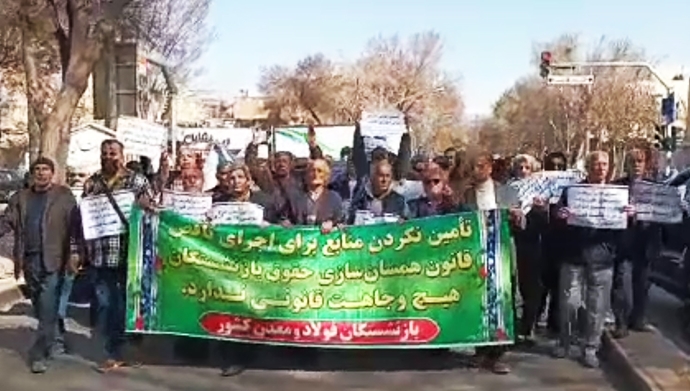

On Sunday, March 3, several Iranian cities witnessed a new wave of protests led by retirees, nurses, and workers from various sectors. These demonstrations come as economic pressures intensify, inflation soars, and the government continues to ignore public demands. Meanwhile, the Iranian regime persists in spending the country’s wealth on foreign interventions, funding terrorist groups, and pursuing nuclear adventures, leaving citizens to suffer under worsening living conditions.
More footage of the protest rally by nurses and staff at Arya Hospital in Ahvaz, demanding higher wages and other basic needs.#IranProtestspic.twitter.com/5qJtGpuPro
— People's Mojahedin Organization of Iran (PMOI/MEK) (@Mojahedineng) March 2, 2025
In Ahvaz, southwest Iran, nurses and staff at Arya Hospital continued their strike for a second consecutive day, as officials refused to address their demands for better working conditions and fair wages. The city also saw protests by pensioners of the Social Security Organization, who resumed their demonstrations against declining pensions and the rising cost of living. Protesters chanted: “They plundered Iran and destroyed our lives”, expressing outrage at the regime’s policies that squander national resources on external conflicts rather than addressing domestic crises.
In Isfahan, central Iran, retirees from the steel and mining sectors took to the streets once again, demanding pension increases and improved access to basic services, which have been systematically neglected.
March 2—Isfahan, central Iran
Retirees of the steel and mining industry resume rallies to protest low pensions and lack of access to basic services for decent living conditions.#IranProtestspic.twitter.com/4Mw4y839bN— People's Mojahedin Organization of Iran (PMOI/MEK) (@Mojahedineng) March 2, 2025
In Tehran, the Social Security Organization retirees continued their rallies, urging the government to raise pensions and improve essential services that have become increasingly inadequate in the face of rising inflation.
Meanwhile, in Shush and Ahvaz, southwest Iran, pensioners and former workers of the Social Security Organization staged another protest, decrying low wages, skyrocketing inflation, and the government’s economic failures that have driven millions into poverty.
March 2—Ahvaz, southwest Iran
Pensioners of the Social Security Organization resume protest rallies as the government ignores their demands for higher pensions.
"They plundered Iran and destroyed our lives," protesters chant.#IranProtestspic.twitter.com/5DxHwakQVB— People's Mojahedin Organization of Iran (PMOI/MEK) (@Mojahedineng) March 2, 2025
Spending on Terrorism Instead of Economic Recovery
While these protests intensify, the Iranian regime continues to drain national wealth on funding militias across the region and exporting terrorism rather than investing in the country’s economic recovery. Moreover, its relentless pursuit of nuclear ambitions has led to further international sanctions, exacerbating the nation’s financial crisis. With inflation reaching record levels and the Iranian rial plummeting against the dollar, even basic necessities are becoming unaffordable for the majority of the population.
As economic hardship worsens and the regime persists in its corruption and mismanagement, signs are emerging that protests could escalate into large-scale uprisings, similar to those in 2019 and 2022. Those nationwide movements were marked by widespread anger against the regime’s repression and economic failures. With no genuine solutions in sight, public frustration is reaching a breaking point, increasing the likelihood of mass unrest in the near future.