

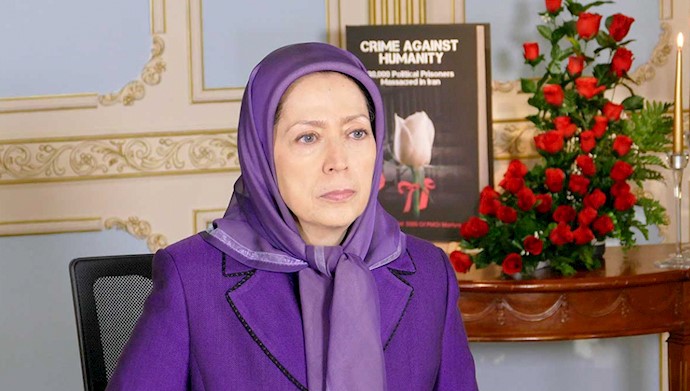

August 2, 2018 – “Khomeini wished to remove every single trace of them so that nothing would remain of their graves and even of their names. But they were neither forgotten nor silenced,” Mrs. Maryam Rajavi, president-elect of the National Council of Resistance of Iran, said in a statement on the 30th anniversary of the massacre of political prisoners in Iran.
In summer 1988, Ruhollah Khomeini, then-leader of the clerical regime ruling Iran, issued a fatwa to purge all the prisons of the country from political prisoners affiliated with the People’s Mojahedin (PMOI/MEK). In the months that followed, the Iranian regime executed more than 30,000 prisoners simply for not repenting their ties with the MEK. A large number of those prisoners had been initially arrested for actions that aren’t even considered criminal offenses, such as reading the MEK’s newspaper. Many had finished their sentences and were lingering in prison long after they should have been released.
Mrs. Rajavi said that while Khomeini’s goal was to kill all resistance against his regime by wiping out the opposition, the result has been the opposite. “They were neither forgotten nor silenced. To the contrary, they rose up again from fameless towns and cities, from Izeh, Doroud, Ghahdarijan, Touyserkan, Baneh, Kazerun and Chabahar, to fuel the flames of the uprising in December/January and spread the protests all across the country,” Mrs. Rajavi said, referring to the nationwide protests that have spread across Iran since the turn of the year.
While economic woes have been the main trigger of the ongoing protests, demonstrators across the country are united in their beliefs that the source of all of Iran’s problems is the ruling mullahs and only regime change will fix the situation. Chants of “Death to the dictator,” “Death to Khamenei” and “Death to Rouhani” have become very popular among demonstrators. Protesters are also rejecting any chance of reform from within the regime by calling out against all rivaling factions in the regime.
Mrs. Rajavi said that the sacrifice of the victims of the 1988 massacre can be seen today in the protests and slogans in the streets of Iran’s cities. “The nationwide uprising persisting today is the continuation of their blood-drenched perseverance,” her statement reads.
Calling for justice for the victims of the 1988 massacre
Mrs. Rajavi also underlined the need to hold the perpetrators of the mass executions to account. “Calling for justice for the victims of the 1988 massacre is one of the most important political demands of the Iranian people from the mullahs’ regime,” she said, adding that the crime was so heinous that even many of the regime’s own officials don’t dare defend it.
She also denounced the regime for trying to wipe traces of the crime by destroying the mass, unmarked graves where the executed prisoners were buried.
Many of the perpetrators and orchestrators of the 1988 massacre still hold positions of power in the Iranian regime. “The majority of those involved in this carnage, from both factions, are holding top positions in the regime. Over the past 30 years, except for a 4-year period, the Ministry of Justice has been directed by members of the Death Committees,” Mrs. Rajavi said.
Death Committees were small groups of clerics appointed by the highest authorities in the regime, which went to different cities in Iran to try and decide the fate of prisoners. In very prompt trials, the Committee asked each prisoner about their political affiliations. Those who refused to denounce the MEK were sent to the gallows. Mostafa Pourmohamadi, one of the members of the main Death Committees who sealed the fate of thousands of prisoners in the Evin and Gohardasht prisons, previously served as Minister of Justice under Hassan Rouhani, the self-proclaimed “moderate” president of the Iranian regime.
While several international human rights bodies have described the 1988 executions as a crime against humanity, there haven’t been enough efforts to hold its perpetrators to account. “One of the most treacherous features of the policy of appeasement over the past three decades has been turning a blind eye on the massacre of political prisoners which was a crime against humanity and the worst political crime after the Second World War,” Mrs. Rajavi said. “To rectify the damages caused by this disastrous policy, the UN Security Council must refer the case of the 1988 massacre to the International Criminal Court and prepare for the prosecution of the Iranian regime leaders and those responsible for the massacre.”
Read the full statement here.
Message by Maryam Rajavi for the 30th Anniversary of the Massacre of 30,000 Red Roses of Freedom