

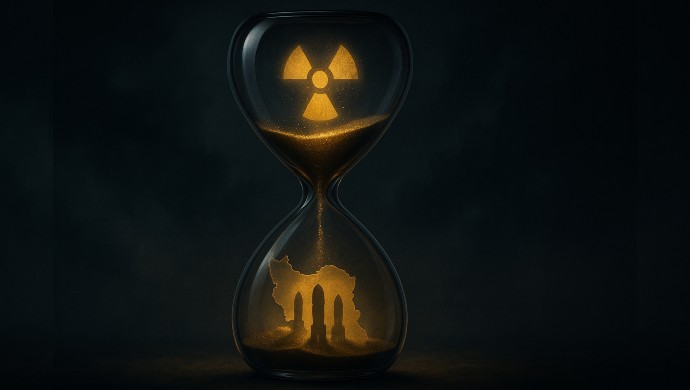

The international community’s decade-long experiment in appeasing the clerical regime in Iran has come to its inevitable conclusion. As of 00:00 GMT on Sunday, September 28, all six UN Security Council resolutions targeting the regime’s illicit nuclear program have been fully reimposed, marking a resounding diplomatic failure for Tehran and a victory for international security. The snapback of sanctions is not a failure of diplomacy, but the direct consequence of a duplicitous regime that never had any intention of honoring its commitments.
This decisive action followed the overwhelming defeat of a last-ditch effort by Russia and China to delay the sanctions. Their proposal was soundly rejected in the UN Security Council, securing only four votes in favor, with nine nations voting against it. This outcome lays bare the regime’s isolation on the world stage and confirms what the Iranian Resistance has warned for decades: the mullahs’ nuclear ambitions cannot be contained through concessions, only through firm and unwavering pressure.
A history of squandered opportunities
The road to snapback was paved with the regime’s intransigence. The European powers (E3)—France, Germany, and the United Kingdom—exhausted every diplomatic avenue to bring Tehran back into compliance. They engaged in months of talks and even offered a final, generous proposal in July 2025: a temporary, six-month delay on sanctions in exchange for the regime restoring access for UN nuclear inspectors, addressing its dangerous stockpile of highly enriched uranium, and engaging in direct talks with the U.S.
The regime flatly rejected these “fair and achievable” measures. Instead of engaging seriously, Tehran dispatched its foreign minister, Abbas Araghchi, to the UN to perform hollow theatrics, accusing the West of having “buried” diplomacy. This cynical blame game came after his own regime systematically slammed the door on every opportunity for a peaceful resolution, proving once again its bad faith.
The mask slips: a regime bent on acquiring the bomb
The E3’s decision to trigger the snapback was not a choice but a necessity, driven by alarming evidence of the regime’s nuclear escalation. According to a joint E3 statement, Iran’s stockpile of enriched uranium is now an astonishing 48 times the limit set by the 2015 nuclear deal. This includes 10 “Significant Quantities” of High Enriched Uranium (HEU)—material for which there is “no credible civilian justification whatsoever.” No other non-nuclear-weapon state engages in enrichment at such levels.
The regime’s true intentions were laid bare by its own Supreme Leader, Ali Khamenei. On September 23, 2025, he brazenly boasted, “We began enrichment over 30 years ago… we enriched up to 60%, which is a very high and very good level… we didn’t and won’t give in.” This admission confirms that the regime used the sanctions relief from the 2015 deal not to help the Iranian people—whose economic conditions have severely worsened with the rial plummeting to a new low of 1.123 million per U.S. dollar—but to pour billions into repression, terrorism, and its clandestine bomb-making program.
The resistance’s foresight: a consistent warning against appeasement
This entire saga is a powerful vindication of the Iranian Resistance’s long-standing position. It was the National Council of Resistance of Iran (NCRI) that first exposed the regime’s secret nuclear facilities at Natanz and Arak in August 2002, alerting the world to the mullahs’ deception. Had it not been for the 133 revelations by the Resistance over the past 34 years, the religious fascism ruling Iran would have been armed with a nuclear bomb long ago.
On July 14, 2015, immediately following the signing of the JCPOA, the NCRI’s President-elect, Mrs. Maryam Rajavi, warned that the deal was built on a foundation of unwarranted concessions. She stated that if the world powers had “shown firmness, the Iranian regime would have had no choice but to fully retreat and permanently abandon its efforts to acquire nuclear weapons.” Today, her words ring truer than ever.
The only viable solution: regime change
The reimposition of UN sanctions is a crucial and necessary step to curb the regime’s threat to global peace. However, sanctions alone are not the final solution. The clerical regime has proven, time and again, that it is irreformable and fundamentally incapable of acting as a responsible member of the international community.
As Mrs. Rajavi has unequivocally stated, “the final solution is regime change by the Iranian people.” The international community must now look beyond containment and embrace this ultimate truth. The path to a peaceful, non-nuclear Iran does not run through foreign wars, appeasement, or futile negotiations with a terrorist-sponsoring dictatorship. It runs through the streets of Iran, with the millions of Iranians who yearn for freedom. The world must stand with them and recognize the right of the Iranian people and their organized Resistance to overthrow this regime of terror and massacre and establish a democratic republic.