

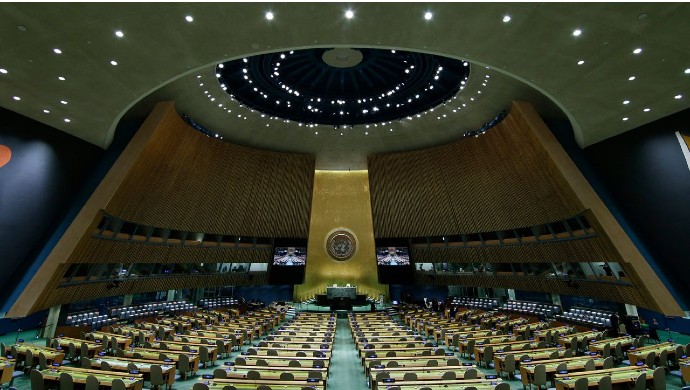

On Wednesday, November 20, the United Nations General Assembly adopted its 71st resolution condemning Iran’s regime for widespread and ongoing human rights violations.
The resolution, adopted by a majority of 77 votes in favor and 28 against, “condemns in the strongest terms the alarming increase in the application of the death penalty,” including the ongoing execution of women—which has reached its highest level since 2013—the execution of minors, and the use of executions as a means of political suppression.
The adoption of the 71st resolution condemning the clerical regime underscores the barbarity and inhumanity of this medieval regime, which holds the world record for executions per capita. Torture, stoning, and flogging are officially sanctioned and institutionalized practices under this regime.
With over 70 resolutions condemning this brutal regime, two key points must not be overlooked:
The first point is that international condemnation of the deceptive clerical regime—despite a world where the dark policy of appeasement tramples human rights, democratic principles, and human values in favor of lucrative trade deals—has been achieved largely through the sacrifices of the martyrs of the resistance, the suffering and torture of resilient prisoners, and the unwavering dedication of political prisoners.
The second crucial point is that global exposure of the regime’s crimes against humanity—including presenting these issues to relevant UN bodies and decades of effort culminating in dozens of resolutions—was made possible by the tireless efforts of the Iranian Resistance and its supporters. These efforts encompassed organizing protests, raising global awareness, and consistently providing evidence and witness testimony of the regime’s atrocities.
The first resolution condemning the regime at the highest international level was achieved in December 1985 when Dr. Kazem Rajavi traveled to New York with ample evidence and witnesses. In the preceding months and years, he tirelessly worked to secure the regime’s condemnation at the European headquarters of the United Nations, specifically in the then Human Rights Commission and its subcommittees. Dr. Rajavi was later assassinated in Geneva by regime-dispatched terrorists and is remembered as the “Great Martyr of Human Rights.” He aptly declared, “We write the history of human rights with our own blood.”
Mrs. Maryam Rajavi, the president-elect of the National Council of Resistance of Iran (NCRI), while welcoming the 71st resolution condemning the clerical regime, which “highlighted a glimpse of the regime’s crimes,” emphasized that the accelerating and worsening violations of human rights and the clerical regime’s disregard for UN resolutions “amplifies the need to refer the dossier on the clerical regime’s crimes to the United Nations Security Council.” She stated that in the four months since the new regime president took office, more than 500 prisoners have been executed, reflecting an approximately 80 percent rise in the number of execution relative to the same period during Ebrahim Raisi’s tenure.
Welcoming the adoption of the 71st @UN resolution by the Third Committee of the General Assembly, which condemns the clerical regime’s grave and systematic #HumanRights violations, it is crucial to emphasize that the escalating abuses and the ruling religious fascism’s blatant… pic.twitter.com/nxIuVFmN7W
— Maryam Rajavi (@Maryam_Rajavi) November 20, 2024