

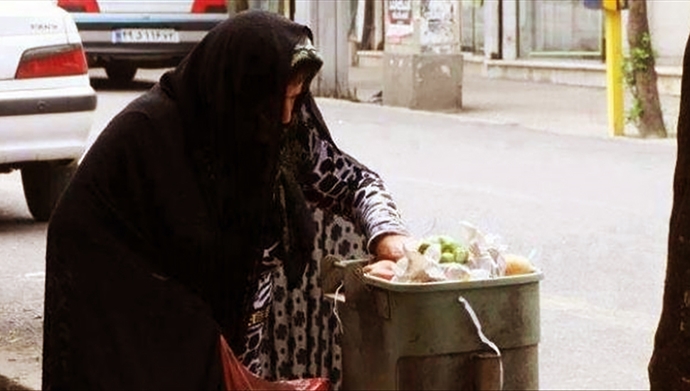

The economic crisis faced by the Iranian people is deepening day by day. The regime’s military expenditure has increased significantly, while its revenue, primarily derived from selling crude oil, is declining.
Tax ceilings have been raised to their maximum potential, leading to severe social backlash. This is happening amidst continuous protests by various social groups and professions.
One example is the workers from Gachsaran Oil and Gas Exploitation Company, as well as retirees from the steel and mining sectors of Isfahan, who have been protesting their poor work and living conditions regularly in recent weeks.
In this situation, the regime’s only apparent solution is to further increase the prices of essential goods. A key tactic is using the pretext of “global price alignment,” implying that goods like wheat or gasoline should be sold at prices comparable to those in the West.
Mohammad Reza Aref, the deputy to regime President Masoud Pezeshkian, paved the way for price hikes by stating, “Some price increases are global, and we have no choice but to adjust prices.”
However, a government-affiliated expert released statistics showing that over 80% of Iranian households have fallen below the global poverty line. This is despite wages remaining far from international standards.
This means that if goods are to be priced globally, wages must also align with global or average standards, something the regime is entirely unwilling to do.
Based on the same expert report, calculated using either the official or free-market exchange rate, the poverty line for households is as follows:
- Two-person household: 260 to 320 million rials
- Three-person household: 390 to 480 million rials
- Four-person household: 520 to 640 million rials
- Average household: 430 to 530 million rials
In another report, Siasat Rooz news website compared the devaluation of currency and wages, stating: “Salaries increased from 2.6 million rials in 2009 to 110 million rials in 2024. However, something is wrong because gold coins rose from 2.7 million rials to 560 million rials in the same period.”
Salaries increase yearly yet purchasing power declines. For instance, in 2009, a month’s salary could buy a full gold coin. Today, it takes about five months’ salary to buy one.
This contradiction highlights the systematic corruption and plundering imposed on the livelihood of Iranian citizens by the regime.
This issue cannot be resolved by merely changing officials or even the president.
The solution lies not in replacing the regime Supreme Leader Ali Khamenei, but in dismantling the ruling regime entirely.