

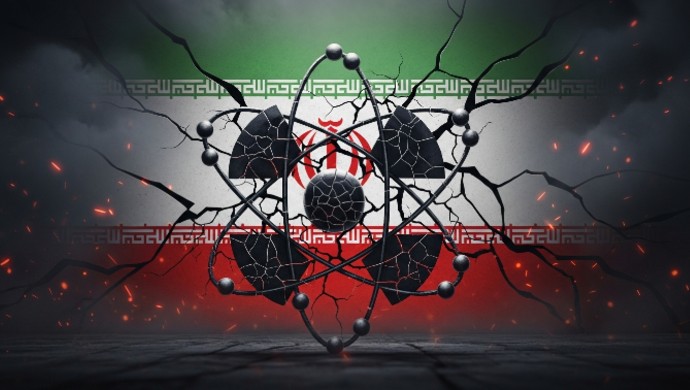

In a move that exposes its profound weakness and internal fractures, the Iranian regime has suspended all cooperation with the International Atomic Energy Agency (IAEA). While Tehran attempts to frame this as an act of defiance, it is nothing more than a desperate gambit by a cornered and crumbling regime to conceal the truth about its damaged nuclear program and create false leverage for future negotiations.
This dangerous policy, initiated with a law passed by the regime’s parliament on June 24 and swiftly signed by the new president, Masoud Pezeshkian, is a reckless gamble that is already backfiring, exposing the regime’s duplicity to the international community.
The regime’s conflicting narrative vs. the hard facts
Tehran is actively trying to muddy the waters with contradictory statements, but the facts on the ground paint a clear picture of total obstruction. On July 12, Foreign Minister Abbas Araghchi claimed to foreign ambassadors that cooperation was not “cut off” but would simply take a “new form,” adding, “We are not satisfied with the IAEA’s performance.”
However, this thinly veiled deception was exposed just three days earlier, on July 9, when a member of the parliament’s National Security Commission, Abolfazl Zohrevand, confirmed, “The last IAEA inspector… left Iran through the land border of Armenia in recent days.” On that same day, the regime’s own state-run media, including Fars News Agency and Tasnim News Agency, ran headlines declaring that the “suspension of Iran-IAEA cooperation officially kicked off.”
The real motivation: fear and concealment, not power
The regime’s sudden move is not a sign of strength but a calculated act of weakness. Facing crippling international pressure, the mullahs lack the capacity for a direct confrontation with the United States and Europe. Instead, they have targeted the IAEA as the “weaker link” in their manufactured crisis.
A key driver behind this decision is the regime’s desperate need to hide the extensive damage inflicted on its nuclear sites at Fordo, Natanz, and Isfahan during recent attacks. By expelling inspectors, Tehran hopes to prevent the world from seeing the true state of its crippled program. This is a familiar time-wasting tactic that the regime has used time and again in the past two decades.
Internal divisions and fear of consequences
This reckless policy is so dangerous that it has sparked fear and division even within the regime’s own ranks. In a telling sign of its internal turmoil, Tehran has suspended cooperation with the IAEA but has not withdrawn from the Non-Proliferation Treaty (NPT). This contradiction showcases the regime’s classic duplicity: projecting toughness for its domestic audience while leaving a backdoor open for potential negotiations with the U.S.
The alarm is palpable. On July 8, the regime’s so-called “reformist” faction issued a rare public warning, stating its “deep concern” over the decision and its “hasty implementation” by Pezeshkian. The front cautioned that “in the country’s current critical situation, its results are contrary to national interests” and that it could trigger “dangerous and costly consequences for the system,” including the activation of the snapback mechanism.
A high-stakes gamble that will backfire
IAEA Director-General Rafael Grossi warned, Tehran’s decision to expel inspectors reduces transparency and increases risks for international security. By shutting the door on the world’s nuclear watchdog, the Khamenei regime is not demonstrating power; it is broadcasting its desperation and proving, once again, that it is an untrustworthy actor that poses a grave threat to global peace. This high-risk gamble, born from a position of weakness, may well be a point of no return.