

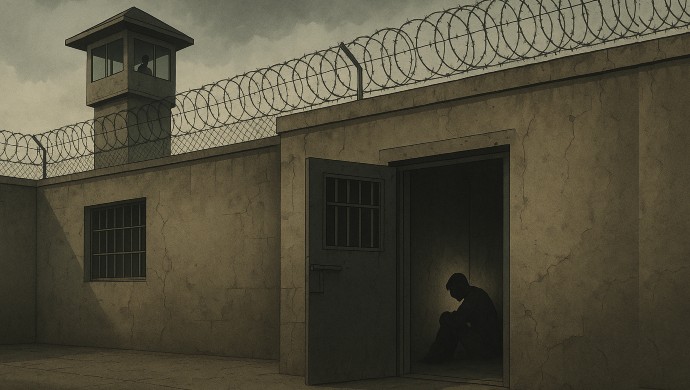

While the world watches the Iranian regime’s execution machine working in overdrive, a more insidious method of elimination is being deployed in the dungeons of the clerical regime. Beyond the gallows and the firing squads, the theocracy is now systematically weaponizing medicine, deliberately denying life-saving care to political prisoners in a horrifying policy of “slow-killing.”
This is not an administrative failure or a series of tragic oversights; it is a calculated campaign of state-sanctioned murder, designed to eliminate dissenters without the public outcry of a formal execution. This cruel tactic, however, is not a sign of strength. It is the desperate act of a failing regime terrified of the organized resistance that continues to gain ground among the Iranian people.
The faces of a cruel policy
The evidence of this criminal policy is stark and immediate. The lives of numerous political prisoners right now hang in the balance. In Fashafuyeh (Greater Tehran) Prison, Mohammad Ali Akbari Monfared, 58, is paralyzed in both legs and suffers from multiple severe health conditions. After surgery for a blood clot, doctors have determined his leg must be amputated. Yet, with boundless cruelty, he has been chained to his hospital bed while criminal intelligence agents actively block his release, which is mandated even under the regime’s own laws.
This is not an isolated case. In Shiraz, 35-year-old robotics engineer Hoda Mehreganfar faces the risk of a ruptured cyst and life-threatening infection while prison authorities obstruct her transfer to a hospital. In Tehran’s notorious Evin Prison, Shiva Esmaeili was denied access to a doctor for weeks while suffering from severe back pain. When her transfer was finally approved, guards callously turned her away, using the pretext that her bank card lacked sufficient funds and refusing to even let her call her family for help.
The regime’s cruelty extends to entire families associated with the resistance. Shiva Esmaeili’s son, Mehdi Vafaei Sani, was recently lured into a trap and transferred to a solitary cell, where he is being denied medication for his gastrointestinal diseases. His cousin, Mohammad Javad Vafaei, is on death row on charges of membership in the PMOI. Meanwhile, Fatemeh Ziaee, a 68-year-old political prisoner from the 1980s with advanced Multiple Sclerosis, is also being deprived of medical care, proving this is a long-standing and barbaric practice.
When neglect becomes state-sanctioned murder
The horrifying fates awaiting these prisoners are not hypothetical. On September 25, 2025, political prisoner Somayeh Rashidi died in the notorious Qarchak Prison. Her death was a direct result of the regime’s criminal denial of medical care for her epilepsy. Prison authorities were fully aware of her deteriorating condition, yet the prison doctor—in reality, a torturer—callously dismissed her life-threatening seizures as “feigning illness.” Her prison cell was turned into a death chamber.
Somayeh’s death is not an anomaly; it is the direct outcome of this systematic policy of murder. Her case is part of a horrifying pattern. Just days before her death, two other female prisoners died under nearly identical circumstances. On September 19, Jamileh Azizi died after her heart attack symptoms were ignored. One week earlier, Maryam Shahraki died after being given a few pills for severe chest pain and sent back to her ward. These are not coincidences. This is a deliberate strategy to silently eliminate opponents while maintaining a façade of deniability.
The broader war: crushing the PMOI and the flame of resistance
This policy of medical torture is not random; it is one front in the regime’s all-out war on the People’s Mojahedin Organization of Iran (PMOI/MEK) and organized dissent. The theocracy is gripped by a profound fear of a restive society and the growing influence of the organized Resistance, especially among Iran’s youth. By sentencing young activists to death, it hopes to intimidate a generation from joining the cause of freedom.
The case of Ehsan Faridi, a 22-year-old university student, is a stark example. After being arrested for “propaganda against the system,” he was released on bail, only to be re-arrested 40 days later. His charge was then deliberately escalated to the capital offense of “corruption on earth,” a vaguely defined crime used to execute opponents. His sham trial was based solely on coerced confessions. Ehsan’s case is not isolated. He is one of at least 17 PMOI supporters on death row. This is in addition to the executions of PMOI members Behrouz Ehsani and Mehdi Hassani in June.
Seyed Mohammad Javad Vafaei Sani
is among at least 15 PMOI/MEK supporters on death row and at imminent risk in Iran:
– Seyed Abolhassan Montazer
– Vahid Bani Amarian
– Seyed Mohammad Javad Vafaei Sani
– Seyed Mohammad Taghavi Sang Dehi
– Akbar (Shahrokh) Daneshvar
– Babak Alipour… https://t.co/VUZ2fobSj0 pic.twitter.com/7eCo7xTMrB— Ehsan Eghbal Eslami (@Ehsaneghbale) October 4, 2025
A call to action against a failing regime
The regime’s escalating brutality—from public executions to silent medical murder—is the ultimate proof of its weakness. Its goal is to douse the flame of resistance within the population, but it is failing. The courage of these political prisoners in the face of torture and death only serves to inspire the Iranian people and strengthen their resolve.
The international community cannot remain silent. Inaction is a green light for Tehran to spill more innocent blood. In a statement, Iranian Resistance urgently called on the United Nations Human Rights Council, the High Commissioner for Human Rights, and all defenders of human rights to take immediate and concrete action to secure the release of ailing political prisoners. It is time for an international fact-finding mission to visit Iran’s prisons and meet with prisoners. The bloodstained leaders of this regime must be held accountable for their crimes against humanity.