


While global attention often shifts, the clerical regime in Iran is waging a silent, brutal war behind the walls of its dungeons, systematically targeting political dissidents and female prisoners. Reeling from the massive nationwide uprisings of December 2025 to January 2026, the mullahs are escalating their domestic crackdown.
Far from a display of authority, the recent wave of draconian prison sentences, psychological abuse, and the systemic torture of uprising detainees is a desperate reaction by a deeply fractured regime terrified of its own people and the organized Resistance.
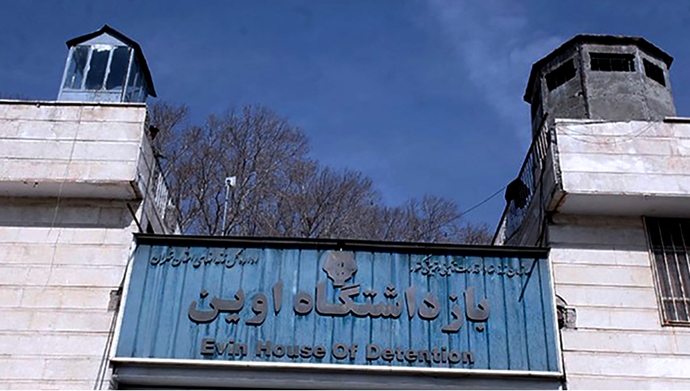
Intensified pressure on female political prisoners in Evin
The regime frequently uses isolation to break the spirit of female political prisoners. In Evin Prison, authorities have recently intensified pressure by cutting off the telephone access of several prominent female detainees. This includes Shiva Esmaeili (60, sentenced to 10.5 years), Marzieh Farsi (59, sentenced to 6 years), Forough Taghipour (32, sentenced to 6 years), Zahra Safaei (63, sentenced to 5 years), Elaheh Fouladi (sentenced to 5 years), Golrokh Iraee (sentenced to 6 years), and Sakineh Parvaneh (sentenced to 6 years).
For many of these women, this is not their first imprisonment. Safaei, for instance, is imprisoned for the third time, having spent eight years in prison during the 1980s for supporting the PMOI. Furthermore, the regime has fabricated new judicial cases against Esmaeili and Fouladi simply because they protested the death of Somayeh Rashidi, a prisoner who died under torture in Qarchak Prison in September 2025.
Disastrous conditions for uprising detainees and disappearances
The cruelty of the mullahs extends to the thousands detained during recent protests, deliberately subjecting them to inhumane conditions and medical neglect.
In Wards 35 and 37 of Unit 3 in Ghezel Hesar Prison, detainees from the January 2026 uprising are deprived of basic rights and minimal facilities. Many suffer from severe, untreated injuries sustained during the protests, including broken hands, feet, facial bones, and teeth.
Ward 37 houses approximately 200 prisoners in extreme heat without any cooling system. Running water is cut off for most of the day, and prison henchmen extort the inmates, forcing them to pay out of their own pockets for water delivered by tankers.
Alongside these deplorable conditions, the regime is carrying out enforced disappearances. Milad Sajjadian, 32, a former political prisoner who previously served three years for supporting the PMOI, was recently arrested in Shiraz. After a seven-day hunger strike protesting his arrest, he was hospitalized, moved to Adelabad Prison, and subsequently transferred to an unknown location, leaving his fate completely unknown.
A broader pattern of judicial repression and psychological terror
The isolation of women in Evin and the abuse in Ghezel Hesar are not isolated incidents; they are part of a broader, nationwide strategy of state-sponsored terror relying heavily on judicial repression and psychological abuse.
Recently, political prisoner Bijan Kazemi, 45, was handed a staggering 37.5-year prison sentence by the notorious Judge Abolqasem Salavati in Branch 15 of Tehran’s Revolutionary Court. This followed 16 months of arbitrary detention, interrogation, and severe torture. Kazemi was accused of providing weapons to the assailants who eliminated senior judiciary executioners Ali Razini and Mohammad Moghiseh in January 2025.
The regime is also weaponizing psychiatric facilities to torment dissidents. Mojtaba Taghavi, 58, was forcibly transferred from prison to the Aminabad psychiatric hospital after authorities disrupted his essential medications. Taghavi was arrested and sentenced to over six years in prison solely for maintaining contact with his brother, Mohammad Taghavi, a PMOI member whom the regime executed on March 30, 2026.
Outside prison walls, the regime cruelly targets the relatives of executed dissidents to prevent mourning ceremonies from igniting public anger. This hostage-taking tactic highlights their profound fear of societal backlash. On April 18, 2026, authorities arrested Akram and Azam Daneshvarkar solely for trying to retrieve the body of their executed brother, PMOI member Akbar Daneshvarkar. Similarly, prior to the execution of Babak Alipour on March 31, 2026, authorities detained his elderly mother, sister, and brother to ruthlessly deny them a final farewell.
The international community’s responsibility
The escalating wave of heavy sentences, psychological terror, family hostage-taking, and the specific targeting of female PMOI supporters are not the actions of a confident government.
They highlight a regime deeply terrified of its own population and the growing influence of the PMOI Resistance Units. In response to these egregious violations, the National Council of Resistance of Iran (NCRI) has renewed its call to the international community, including the United Nations Human Rights Council and the UN Special Rapporteur on Iran. It is imperative that international human rights bodies move past mere verbal condemnation.
Concrete actions must be taken, including dispatching an international fact-finding mission to visit Iranian prisons, meet with political prisoners—particularly the resilient women in Evin and the uprising detainees in Ghezel Hesar—and demand the immediate release of all sick and arbitrarily detained individuals.