

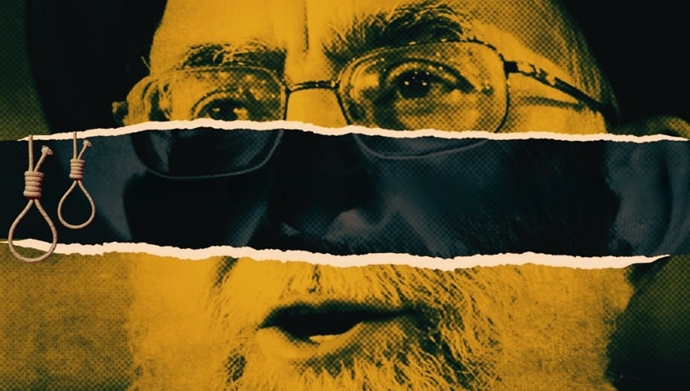

On Thursday, October 25, state television aired remarks Supreme Leader Ali Khamenei made three weeks prior to a group of regime supporters. He expressed concern over the dangerous conditions currently facing the regime in the region, comparing it to the Iran-Iraq war. He stated: “Nearly 10,000 people from this province alone were martyred. Twice or three times that number were wounded. They did their duty back then. Now, we need these young people as much as we did during the war. Today, we need them!”
He added, “Back then, it was an obvious, visible war; today, it’s a hybrid war with physical, software, psychological, and weaponized aspects. The enemy’s plots are more complex, and this matters; just being present on the military battlefield and making missiles is no longer enough.”
If Khamenei were not concerned about declining morale among his forces, he would likely have stated that the regime’s situation is even more fragile than during the eight-year war, given its regional crises, international isolation, explosive domestic discontent, and internal challenges. In fact, within three months of Khamenei’s new president taking office, adversaries are already demanding Javad Zarif’s dismissal and even threatening prosecution.
Morale has declined so much among the regime’s forces that Khamenei has tasked not only his Friday prayer leaders but also the heads of the Islamic Revolutionary Guard Corps (IRGC) with boosting spirits.
While the regime is deeply mired in conflict, IRGC Commander Hossein Salami, in a statement unintentionally reflecting the regime’s own condition, said, “The enemy is committing suicide. When a power intends to collapse, it usually creates the conditions for its own downfall.”
He then began making exaggerated boasts to rally regime loyalists in attendance, stating, “If ground operations are set in motion, could they avoid the scale of our 1982 Beit-ol-Moqaddas operation? … They believe these launchers, whether THAAD or Arrow missiles, will save a regime from a major battle, but they are certainly mistaken, just as in ‘True Promise 2,’ when the Arrows failed.”
A few days earlier, former IRGC Commander Mohammad Ali Jafari also tried to reassure the IRGC and Basij members, saying, “They claim they’ll come after Iran following Hezbollah. That’s nonsense.”
Jafari added, “I can assure you with absolute certainty that they will not take any significant action. Whatever they attempt will be a failed effort. They definitely cannot mount an attack comparable to ‘True Promise 2.’”
These reassurances from the former IRGC commander that no serious attack is forthcoming reveal the flip side of the boasts and deflections by the current IRGC commander’s remarks. Both have stepped up to lift spirits, with their comments reflecting the weakened morale among IRGC and Basij forces caught in the quagmire of Khamenei’s conflicts. More importantly, they are emphasizing external conflicts to hide the regime’s true fear and weakness: a fed-up population backed by an independent and organized resistance movement that is waiting in the wings to overthrow this regime and establish freedom and democracy.