


Masoud Pezeshkian, the president of the Iranian regime, has presented the budget bill for the Persian year 1405 (March 2026–March 2027) to the Majlis (parliament). While the regime attempts to frame this as standard fiscal planning, a closer look reveals what is effectively a “great looting” of workers, employees, and retirees. The government’s intent was declared weeks in advance by its spokesperson, Fatemeh Mohajerani, who brazenly stated that to control inflation, “we will not have a large salary increase,” claiming that any raise above 20 percent would be “inflationary.”
This budget serves as an official declaration of the reduction of wages and a catastrophe for the Iranian people. While the government offers hollow apologies for the “economic pressure,” it simultaneously implements policies that guarantee the further impoverishment of the nation to serve the interests of the ruling elite.
A mathematics of starvation
The regime’s proposed 20 percent salary increase for government employees and workers stands in stark contrast to the economic reality on the ground. According to the regime’s own official—and often minimized—statistics from December 2025, general inflation has reached 41 percent. More alarmingly, the inflation rate for food items, which constitutes the primary expenditure for working-class families, is between 66 and 70 percent.
Simple arithmetic exposes the cruelty of this budget: a 20 percent wage hike covers less than half of the general annual inflation and is more than three times lower than the inflation rate for food. This gap represents a direct collapse in purchasing power, pushing various strata of society deeper below the poverty line.
The unbridgeable gap between wages and survival
Under the new budget bill submitted on December 23, 2025, the minimum monthly base salary for the coming year is set at approximately 156 million rials. For retirees, the floor is even lower, at roughly 140 million rials.
However, experts and even state-affiliated media acknowledge that the poverty line has now skyrocketed to over 550 million rials. With the average salary hovering around 170 million rials, the income of an average Iranian worker is now less than one-third of the amount required to stay out of poverty. As Mohammad Mehdi Shahriari, a member of the Majlis, admitted, current salaries “do not even cover the cost of dry bread.” The livelihood basket—the minimum cost for a family’s basic survival—is estimated to reach 380 million rials for the upcoming year.
The hidden tax of a kleptocracy
The discrepancy between fixed wages and skyrocketing prices is not an accident; it is a mechanism of theft. While workers put in the same hours and produce the same value, their purchasing power evaporates. This lost value acts as a “hidden tax,” transferring wealth from the bottom of society to the pockets of the regime and the institutions controlled by regime supreme Leader Ali Khamenei.
A clear indicator of this manipulation is the currency rate used for calculations. Wages for the upcoming year were determined based on a US dollar exchange rate of 850,000 rials. However, the dollar has already reached 1.31 million rials on the open market. This confirms that wages lose their value before they are even deposited into workers’ accounts.
A society on the brink
The consequences of this “looting budget” are visible on the empty tables of the Iranian people. Basic staples like dairy and meat are being eliminated from workers’ diets due to soaring prices. Reports indicate that milk and dairy products are being returned from stores to factories because people simply cannot afford them, leading to the export of subsidized milk as industrial powdered milk to neighboring countries.
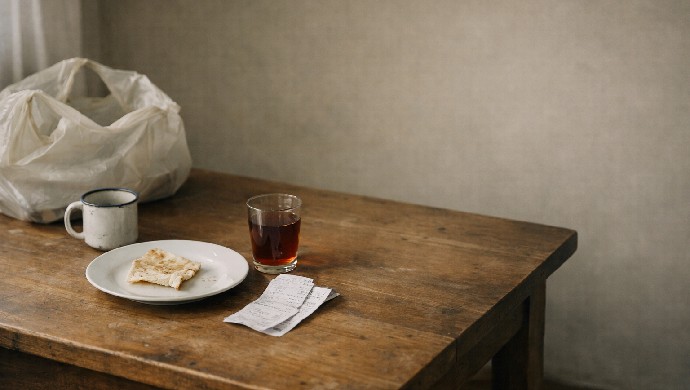
Regime officials warn that the population living in poverty could reach 55 million people. As the state-run ILNA news agency admitted on December 21, 2025, “The reality is that workers no longer have a table.”
As long as this regime remains in power, this cycle of nominal wage increases followed by a catastrophic drop in real purchasing power will continue. The only path to ending this systematic plunder and ensuring social justice is the establishment of a free Iran, devoid of the oppression of both the mullahs and the Shah.