

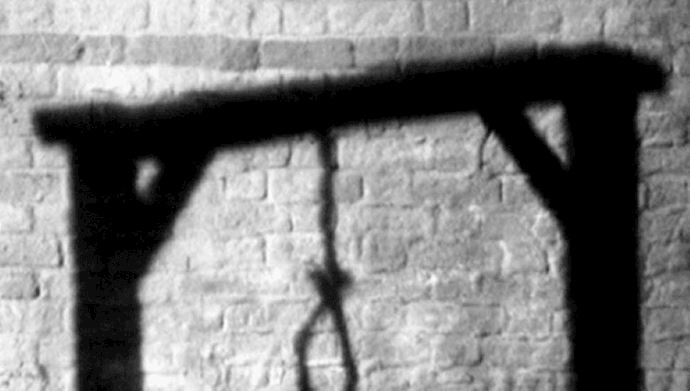

Execution, under any pretext or justification—whether religious or rational—is a brutal and condemnable punishment. It is state-sanctioned, barbaric killing carried out in the name of law against citizens. A regime that thrives on executions has no place among civilized nations or in the modern human community.
Today, the people of Iran and the world despise the executioners and those who order executions, and they eagerly welcome any efforts to depose them from power.
Khomeini’s “only mistake”
One of the defining features of the mullahs’ regime is its “world record in executions.” For regime Supreme-leader Ali Khamenei, execution is the core and essence of his rule—perhaps it would be more accurate to say that it is his lifeline.
Even when executions in Iran are framed as punishments for drug trafficking or civil crimes, their origin and nature are political. The goal is to instill fear, subdue society, and prevent uprisings against the regime.
Regime founder Ruhollah Khomeini once admitted that his mistake was that he “did not act revolutionary enough.”
In his book (Sahifeh-ye Khomeini vol. 9, p 282), Khomenei wrote, “If from the beginning, when we overthrew the corrupt regime and destroyed this utterly corrupt barrier, we had acted revolutionarily, we would have broken the pens of all the newspapers, shut down all the corrupt magazines and press, put their leaders on trial, banned all the corrupt parties, given their leaders what they deserved, set up gallows in the big squares, and wiped out the corrupt and wicked. These troubles would not have arisen.”
Execution as the regime’s survival strategy
Khamenei, who came to power after Khomeini, built the foundation of his rule on the massacre of 30,000 political prisoners. Over more than four decades of the rule of these two illegitimate rulers, execution has encompassed all Iranian society.
The “No to Executions” campaign
The “No to Executions Tuesdays” campaign inside Iranian prisons, in coordination with the Iranian Resistance’s campaign to end the impunity of regime leaders for genocide and crimes against humanity, has opened a new chapter.
At the conference “Iran: No to Executions – A Call for Justice,” Mrs. Maryam Rajavi, the President-elect of the National Council of resistance of Iran (NCRI) called on governments to condition their diplomatic and trade relations with the corrupt clerical regime on the cessation of executions and torture. She urged them to hold Khamenei and other officials responsible for genocide and crimes against humanity accountable through international judicial mechanisms and to issue international arrest warrants for them.
If executions are Khamenei’s strategy for survival, the “No to Executions” campaign is part of the Iranian resistance’s strategy for toppling the clerics ruling Iran. Freedom, justice, and human rights will undoubtedly prevail over repression, tyranny, and crimes against humanity.