

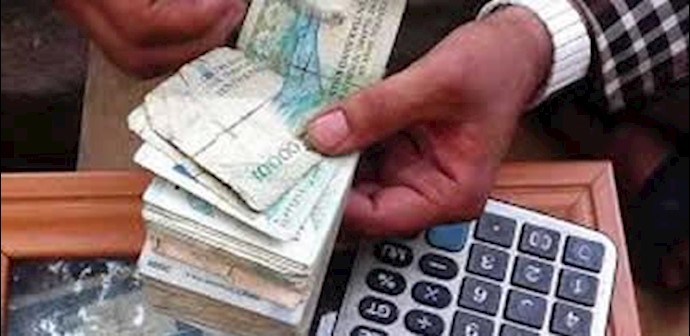

In recent months, the issue of tax exemptions has become a focal point of contention within the Iranian regime. President Ebrahim Raisi’s 2024 budget includes a plan to raise approximately 2,500 trillion rials through the issuance of government bonds. However, a significant member of the Majlis (parliament), Ali Khezrian, has pointed out the limitations and controversies surrounding this strategy. “Given that over 2,500 trillion rials of the 2024 budget is to be funded through government bonds, 350 trillion rials were issued last week. However, dear colleagues, in the capital market, the amount of purchases was zero,” he stated. Alongside the issuance of bonds, the debate on tax exemptions has evolved into a serious challenge for the government.
Khezrian highlighted the discrepancies in tax exemptions. “These exemptions should be applied only to the extent that the effective tax rate does not fall below 15%. Dear colleagues, gentlemen, and ladies, with the current report from the Economic Commission, at least 400 trillion rials of government revenue is being eliminated,” he said.
It appears that many companies, enterprises, and billionaire institutions have become controversial due to their tax exemptions. Many of these institutions are affiliated with the Islamic Revolutionary Guard Corps (IRGC), which currently controls significant segments of Iran’s economy. From steel industries to petrochemicals and other veiled economic activities, the IRGC has a substantial economic influence. Additionally, individuals within the government have amassed vast fortunes.
Occasionally, state media disclose these facts, often as a result of infighting among government factions. Notable cases include the financial scandals involving Dabesh Tea and the steel industries, as well as embezzlement by figures such as Kazem Sedighi and Ali Rezaei, who are backed by powerful organizations. Khezrian remarked, “Do not raise the tax exemptions so high that no one in this country pays taxes anymore.” His concern does not extend to the general populace, who recently protested against tax hikes, including jewelers who went on strike for several days.
Khezrian’s revelations shed light on those benefiting from tax exemptions, or who are subject to a minimum tax rate of 15%. These exemptions for government-affiliated entities highlight the nepotism and corruption prevalent in Iran’s governance.
“Look at who is behind this scene: Mobarakeh Steel Company in Isfahan had an effective tax rate of 6% in 2020 because the number of producers increased. Persian Gulf Petrochemical Company had a 6% rate, National Copper Industries Company had 5%, Saadi Gol Gohar Mining Company had 8%, and Chadormalu Mining and Industrial Company had 9%. If these entities do not pay taxes, we must take it from the workers,” Khezrian emphasized.
Khezrian further clarified, “In cases where the profit exceeds 750 billion rials for individuals and 7.5 trillion rials for legal entities, these exemptions should be applied only to the extent that the effective tax rate does not fall below 15%.”
Given that over 60% of Iran’s population lives in poverty, it is clear that ordinary citizens do not possess the capital equivalent to 750 billion rials. The beneficiaries of these exemptions are undoubtedly the corrupt government officials and institutions under the control of the IRGC, whose assets exceed 7.5 trillion rials.
This Majlis member criticized the powerful and wealthy factions within Khamenei’s kleptocratic regime, stating, “If these entities do not pay taxes, it will lead to budget imbalances. Budget imbalances will result in inflation, and the law is set up to favor the capitalists in this country.”
In a nation struggling with a collapsing economy, the burden of taxation has been placed on the shoulders of the ordinary people, who can barely meet their basic needs. Meanwhile, those with substantial wealth—mostly regime-linked entities and individuals—enjoy significant tax exemptions or pay very little.