

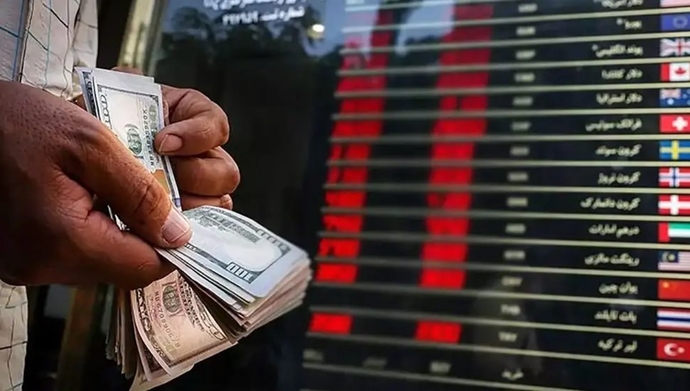

For millions of Iranian households, the country’s economic crisis is no longer an abstract discussion about inflation, exchange rates or economic growth. It is measured in food removed from shopping baskets, medical treatment postponed, rent that consumes most of a salary and wages that lose value almost as soon as they are paid.
Recent figures show how severe the collapse in purchasing power has become.
Official data cited by state media show that consumer prices in September were nearly 90 percent higher than a year earlier, while food and beverage prices had risen 121.8 percent. The average monthly wage was worth roughly $92 at the free-market exchange rate, compared with an estimated minimum monthly cost of around $336 for a three-person working-class household.
The gap is no longer marginal. For many workers, a salary cannot cover even basic monthly expenses.
Simultaneous Protests by Iran Air Retirees and Khosheh Saba Workers Across Iran https://t.co/Kvlsrs07zi
— People’s Mojahedin Organization of Iran (PMOI/MEK) (@Mojahedineng) October 27, 2026
The International Monetary Fund projects another sharp contraction in Iran’s economy in 2026 alongside extremely high inflation. The consequences can already be seen in declining consumption, rising unemployment and the exhaustion of household savings.
Employment itself increasingly provides little protection against poverty.
The pressure is already visible in the streets. Between October 24 and 26, retirees from the telecommunications, steel and Social Security sectors protested in Tehran, Isfahan, Tabriz, Kermanshah, Sanandaj, Ilam, Borujerd, Shush, Rasht, Ahvaz and other cities over inflation, inadequate pensions and deteriorating living conditions. In Tehran, steel retirees gathered outside the Ministry of Cooperatives, Labor and Social Welfare, while telecommunications retirees in several cities demanded long-delayed benefits and protested the erosion of their incomes. Protesters increasingly framed their grievances not simply as demands for higher pay, but as a broader indictment of economic management, corruption and the widening gap between state resources and ordinary living standards.
The question of where the money goes
Sanctions, international isolation and war have unquestionably inflicted serious damage on Iran’s economy. Oil exports, foreign investment, access to banking systems and imports have all been affected. But sanctions alone no longer explain how many Iranians understand their hardship.
Iran possesses some of the world’s largest oil and natural-gas reserves. Yet large sections of the population are watching their purchasing power collapse while substantial resources continue to flow to military institutions, security organizations and regional operations.
Recent analysis by the International Institute for Strategic Studies shows that Iran’s military spending extends beyond the formal defense budget, with military institutions benefiting from oil revenues and other financial channels.
The precise scale of Iran’s military and regional spending is difficult to calculate because much of it remains opaque. But the political perception inside Iran is increasingly clear.
During recent demonstrations, retirees have chanted: “Where are the oil dollars? We bear the inflation.”
Iran’s protests reveal a growing struggle for the right to a dignified life https://t.co/gUYI5Tmd7f
— People’s Mojahedin Organization of Iran (PMOI/MEK) (@Mojahedineng) October 21, 2026
Others have shouted slogans blaming corruption, embezzlement and domestic officials rather than accepting the government’s explanation that foreign enemies are primarily responsible for economic hardship.
This means the crisis is increasingly being understood not only as a shortage of resources, but as a question of how those resources are allocated.
From economic grievance to political anger
Iran has seen this pattern repeatedly. Economic grievances helped trigger nationwide protests in 2017 and 2018. A sudden increase in fuel prices contributed to the November 2019 uprising. More recently, inflation, currency depreciation and deteriorating living conditions have again pushed workers, pensioners, merchants and other groups into the streets.
This is what makes the current purchasing-power crisis particularly dangerous for the regime. Households can temporarily cope with inflation by buying cheaper food, postponing purchases or using their savings. But these strategies eventually reach their limits.
Savings disappear. Rent cannot be postponed indefinitely. Families cannot continuously cut food, health care and education.
The Iranian people see military institutions receiving privileged resources. They see opaque economic foundations and state-connected organizations controlling significant parts of the economy. They see money directed toward regional military priorities while wages and pensions steadily lose value.
The increasingly important question is therefore not simply whether Iran possesses enough wealth. It is who controls that wealth and what the state chooses to do with it.
Iran’s authorities retain an extensive security apparatus and have repeatedly demonstrated their willingness to suppress protests. But repression cannot restore purchasing power. And it cannot easily answer the question increasingly heard in Iran’s streets: if the country is so rich in resources, why are ordinary Iranians becoming poorer?