

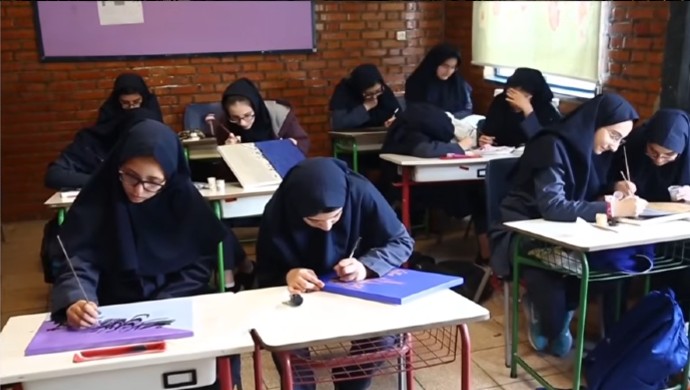

As Iran opened its schools for the 2026–2027 academic year, approximately 16.5 million students were expected to attend, but the country’s education system faced a glaring problem: it lacked tens of thousands of teachers. The regime’s education minister Alireza Kazemi acknowledged a deficit of about 90,000 teachers, leaving schools to cope with shortages in classrooms across the country.
An October 15 report in the state-run Ettelaat newspaper attributed the persistent shortage to inadequate planning—an indictment of the regime’s education policy after nearly five decades in power.
A crisis more than a decade in the making
Citing a researcher at Iran’s Institute for Education Studies, Ettelaat acknowledged that the shortage has persisted for at least a decade. Yet successive administrations have failed to recruit and retain enough qualified personnel.
Even the extent of the deficit is disputed. While Kazemi puts it at 90,000, the Islamshahr Teachers’ Association has estimated the shortage at between 100,000 and 130,000 for the current academic year.
For students, these figures translate into overcrowded classrooms, disrupted instruction, and unequal access to qualified educators. The continued shortage raises an unavoidable question: how can a government that has known about the problem for ten years still lack a sustainable solution?
Economic hardship and repression drive teachers away
One reason lies in the conditions imposed on teachers themselves. In late September and early October, videos and documents showing educators resigning spread across social media. Teachers’ representatives linked the resignations to inadequate pay, deteriorating working conditions, and the authorities’ neglect of education. Officials disputed claims of a nationwide resignation wave, but the underlying economic pressure is difficult to dismiss.
Education expert Mohammad-Reza Niknejad estimated that a teacher with 15 years of experience earns about 25 million tomans a month, compared with living costs of 60–75 million tomans.
Economic hardship is compounded by political repression. Following the January 2026 protests, at least 60 teachers and trade-union activists had faced arrest, imprisonment, or judicial action by July 28. The authorities are thus struggling to retain teachers while punishing some who demand change.
A year earlier, Kazemi had signed an agreement with State Security Force commander Ahmadreza Radan expanding police involvement in the education system, including educational materials and activities.
At the signing ceremony, Kazemi publicly described himself as Radan’s soldier and placed the ministry at the police commander’s service. Teachers’ organizations warned against transforming schools into security-controlled environments.
While public schools lack teachers, the authorities are expanding police involvement in school life. Instead of empowering educators, the regime is extending ideological supervision and social control into classrooms.
Stopgap staffing cannot repair the damage
Faced with the shortage, the Education Ministry has proposed covering gaps through approximately 2.5 million additional hours of instruction by serving teachers, retirees, and contract instructors. Such arrangements may keep classes operating, but they do not solve the shortage of properly trained personnel.
The October 15 Ettelaat report warned that the ministry’s measures could result in teachers being assigned subjects outside their expertise and instructors entering classrooms without adequate preparation.
A researcher cited by the newspaper called for fundamental changes in recruitment, hiring, and retention, alongside fairer distribution of teachers nationwide. These are structural reforms, not emergency fixes. Without them, the burden of the shortage falls on students and on already overstretched teachers, particularly in areas with fewer educational resources.
A failure that reaches beyond the classroom
Iran’s teacher shortage reflects more than administrative incompetence. Years of inadequate economic support, political interference, and punitive treatment of educators have eroded the foundations of public education. The consequences reach millions of children whose opportunities depend on whether a qualified teacher is available when they enter the classroom.
Temporary staffing arrangements leave the causes untouched. For Iranian families, the question is whether an education system governed by these political priorities can safeguard the next generation’s future.