

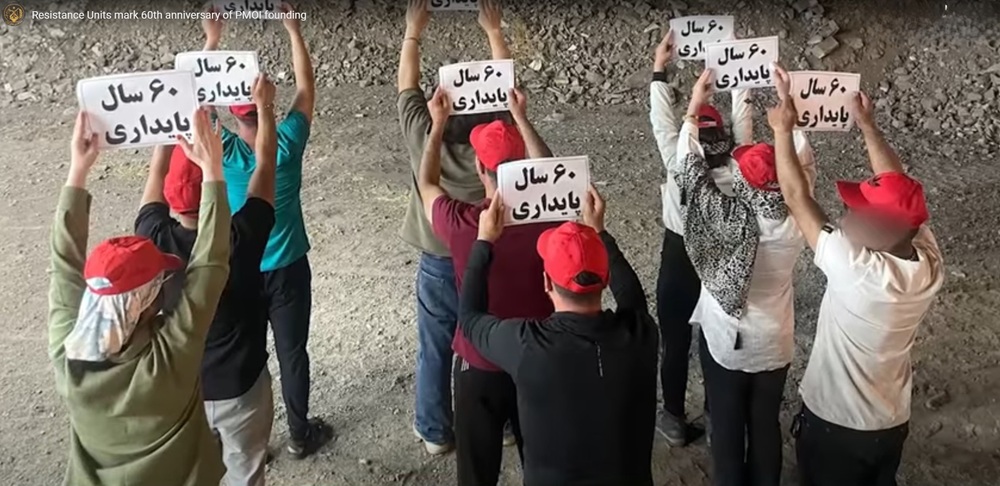

At the Free Iran 2026 Summit held in Paris this June, a powerful consensus emerged among international politicians, former heads of state, and military leaders: the key to a free Iran lies not in foreign intervention or appeasement, but inside the country itself. Diverse global leaders universally acknowledged the vital role of the PMOI (MEK) Resistance Units as the primary catalyst for democratic change.
In her keynote address, NCRI President-elect Maryam Rajavi defined the undeniable reality on the ground. The Resistance Units, she noted, are made up of courageous youth dedicating everything to freedom and “constitute the most important organized force within the uprisings.”
The regime’s ultimate fear in a time of weakness
The ruling theocracy is weaker and more desperate than ever before. Following the nationwide uprisings of January 2026 and the death of Ali Khamenei, the regime is at a political dead end. His son has proven incapable of filling the vacuum, facing rejection even from nearly half the members of the Assembly of Experts. As Mrs. Rajavi noted, the regime “sees peace as the hangman’s noose, yet it can find no salvation in the fires of war.”
Scenes from two days of the glorious Free Iran 2026 gathering and campaign, commemorating June 20, the day of Iran’s martyrs and political prisoners, and the beginning of the Iranian people’s nationwide resistance to establish a democratic republic pic.twitter.com/Knxac0f6jH
— Maryam Rajavi (@Maryam_Rajavi) June 21, 2026
Recognizing this fragility, global leaders at the summit pointed out that the regime’s recent surge in violence is not a show of strength, but of profound terror. Former U.S. Ambassador Carla Sands highlighted that the recent execution of eight PMOI members, with 12 more placed on death row, is “precisely because of the regime’s fear of this Resistance.” Confident governments do not rule through the gallows. As former Prime Minister of Iceland Geir Haarde observed, the targeted hanging of PMOI members is “the ultimate confession of fear.”
Defiance over surrender in prisons and streets
The regime’s attempts to silence the Iranian youth through imprisonment and executions have spectacularly failed. Mrs. Rajavi highlighted the unparalleled bravery of Vahid Bani-Amerian and his heroic unit, who were executed in April 2026. Refusing to denounce the PMOI to save his life, he proudly told his executioners: “We do not bargain with you over our ideals, our beliefs, or our lives.”
Now look at the generation that has joined the ranks of the Resistance Units in Iran.
Look at the young rebels who stand tall before the regime's sham courts and proudly declare that they have risen to overthrow the dictatorship.Look at Vahid Bani-Amerian and his heroic unit,… pic.twitter.com/etDBC0YVes
— Maryam Rajavi (@Maryam_Rajavi) June 21, 2026
This defiance echoes throughout Iran’s prisons. Former Colombian Senator Ingrid Betancourt recalled the March 31, 2026, executions of political prisoners Babak Alipour and Pouya Ghobadi. Pouya declared, “I reject the mullahs, and I reject the shahs,” while Babak pledged to “fight and resist until the end.” Instead of despair, they left behind messages of strength, proving that the regime is terrified of a generation that refuses to surrender. Despite bullets, torture, and executions, the Resistance Units have “shown the world that fear can change sides,” as Belgian MP Kathleen Depoorter stated.
An organized force across 31 provinces
Spontaneous protests alone cannot dislodge a heavily armed dictatorship. Mrs. Rajavi asserted that change requires a force capable of fighting under the harshest repression, noting that the Resistance Units have “ignited the engines of resistance across Iran.”
Military and political experts agree. Gen. Tod Wolters confirmed that the Resistance Units are “evident in all 31 provinces,” serving as the ultimate “strategic asset” for achieving a free and prosperous Iran. The convergence of this structured network with the explosive discontent of Iranian society creates the regime’s doomsday scenario. Former U.S. National Security Advisor Gen. James L. Jones summarized this reality: “When organized resistance convenes and converges with widespread discontent, a pathway to democratic transfer emerges very clearly and very quickly.”
Through 45 years of blood-soaked struggle, the organized resistance has provided the definitive answer to the Iranian crisis. As former European Council President Charles Michel noted, the Resistance Units “carry this hope and commitment for freedom.” The international community must abandon the illusion of appeasement, support Mrs. Rajavi’s Ten-Point Plan, and recognize the PMOI Resistance Units as the unstoppable force driving Iran toward a democratic republic.