

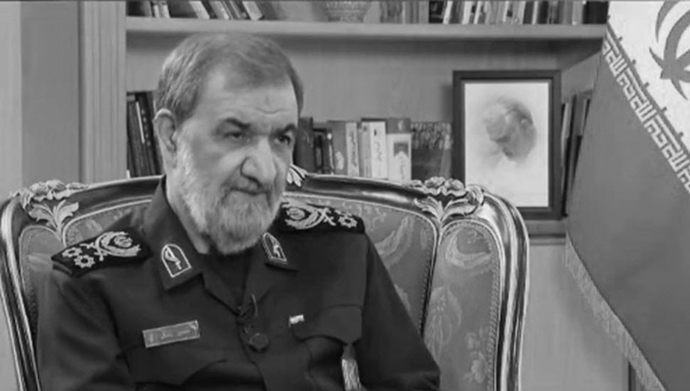

In a sharply escalatory address reflecting deepening strategic desperation in Tehran, Mohsen Rezaei, Secretary of the regime’s Supreme National Security Council and a veteran commander of the Islamic Revolutionary Guard Corps (IRGC), has openly called for Iran to construct nuclear weapons.
Declaring the atomic bomb “cheaper and far more effective” than conventional military assets, Rezaei also issued sweeping threats to sever all oil shipments across the Persian Gulf, target regional states cooperating with U.S. sanctions, and enforce strict, unconditional obedience behind the Supreme Leader across all branches of government.
Open Advocacy for Nuclear Armament
Dismissing international non-proliferation frameworks following strikes on Iranian nuclear infrastructure, Rezaei stated: “Why shouldn’t we go ahead and build a bomb so that no one can attack us?”
He asserted that recent developments have exposed the futility of the Non-Proliferation Treaty (NPT) and International Atomic Energy Agency (IAEA) mechanisms, claiming: “They have realized that having a nuclear bomb is far cheaper and more effective than hundreds of F-35 fighter jets and enormous military expenditures.”
The remarks mark an overt admission of Tehran’s intent to weaponize its atomic program as an ultimate survival mechanism and deterrence tool.
Blackmail Against Regional States and Energy Chokepoints
Rezaei expanded his threats to neighboring countries and global energy markets, warning that any nation aligning with international economic sanctions will be designated an “enemy” of the regime:
- Persian Gulf Oil Blockade: “If they proceed with this, not a single drop of oil will leave either the Strait of Hormuz or the Persian Gulf.”
- Targeting U.S. and Regional Assets: Rezaei claimed IRGC units are “fully prepared” to strike American and regional corporate, oil, and commercial installations.
- Conditional Maritime Passage: He emphasized that the Strait of Hormuz would remain closed until the United States fully acquiesces to Tehran’s demands, warning Washington against deploying any additional military forces to the region.
Mandating Subordination to the Supreme Leader and Doctrine Shift
Domestically, Rezaei underscored the regime’s internal consolidation, stressing that President Masoud Pezeshkian and all branch heads must fall completely in line behind the Supreme Leader, declaring: “Unity is fundamentally impossible without absolute obedience to the Leader.”
He further signaled an aggressive pivot in Tehran’s operational and diplomatic approach, stating that the regime will no longer “sit at negotiating tables like polite children.” Rezaei indicated that impending structural transformations will extend beyond military leadership reshuffles to encompass the administration of warfare, foreign policy, and domestic political control.
Saber-Rattling Amid Severe Internal Vulnerability
Rezaei’s nuclear extortion and maritime threats come as the regime faces crippling economic paralysis, marked by the total collapse of oil export revenues, a hyper-inflating currency, and sweeping international financial isolation. Bereft of conventional economic remedies, the ruling establishment is increasingly resorting to regional brinkmanship and internal coercion in a bid to project strength, conceal its acute systemic vulnerability, and ward off the growing threat of renewed nationwide anti-regime unrest.