

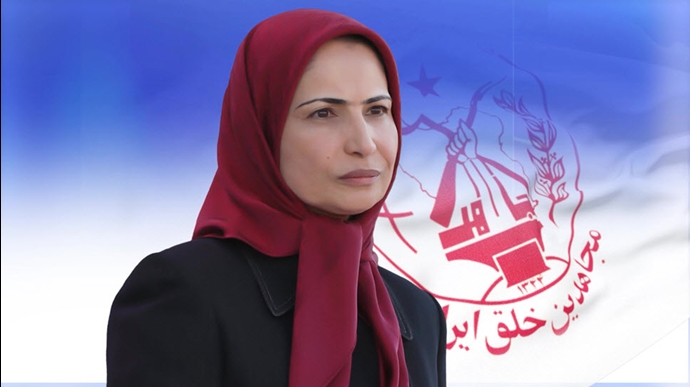

May 25 marks the 54th anniversary of the martyrdom of the founders of the People’s Mojahedin Organization of Iran (PMOI/MEK): Mohammad Hanifnejad, Saeed Mohsen, and Asghar Badizadegan, along with two Central Committee members, Mahmoud Asgarizadeh and Rasoul Meshkinfam. In honor of this historic day, PMOI Secretary General Zahra Merrikhi issued a profound message reflecting on the legacy of these visionary leaders. Ms. Merrikhi described the anniversary of their martyrdom as “a heavy, and of course, meaningful and lasting moment in the 120-year history of the struggle after the Constitutional Revolution, and an inspiring moment for the Mojahedin who originated from there.”
For the PMOI, May 25 is not merely a day of remembrance, but an occasion to reaffirm their core principles. In her message, Ms. Merrikhi emphasized that this day is meant for the Mojahedin to renew their vows with Hanifnejad and his companions, pledging “to not take a step except on the path of honesty and sacrifice,” and to ultimately bring the revolutionary ideals of the founders to victory.
The ultimate price for freedom: Standing up to the Shah’s SAVAK
The journey of the PMOI founders culminated in a supreme act of selflessness when confronted by the brutal apparatus of the Shah’s dictatorship. Following their arrest, the SAVAK, the Shah’s secret police, subjected the founders to severe torture, attempting to force them to repent and renounce their struggle for freedom in exchange for their lives. They steadfastly refused.
On May 25, 1972, knowing that paying the ultimate price was necessary to keep the movement alive, Hanifnejad’s unbreakable faith echoed through the halls of the notorious Evin prison. He knocked on his cell door and called out to his torturers: “I am ready! Why don’t you take me?” Ms. Merrikhi highlighted this execution by the Shah’s regime as a “horrific event in contemporary history,” noting that the slain founders represented the absolute “essence of a people’s suffering and the essence of the most advanced revolutionary experiences at the tip of the spear of the patriotic and revolutionary struggle.”
Ideological breakthroughs: The true science of struggle
Mohammad Hanifnejad was a great revolutionary whose ideological breakthroughs charted a new course for Iran’s opposition. He established professional struggle as a scientific and organized effort. Crucially, during a time when fundamentalist mullahs sought to divide society by drawing lines between believers and non-believers, Hanifnejad shattered this regressive concept. He introduced a new intellectual horizon, establishing that the true and primary demarcation line lies solely between the oppressor and the oppressed, or the exploiter and the exploited.
Ms. Merrikhi’s message reinforced this vital ideological shift. She noted that categorizing political forces as merely religious or non-religious is an indicator of “historical backwardness” that only serves the exploiting classes and oppressive rulers. This false division, she stressed, is highly desired by the ruling mullahs and in the political arena, it has historically “served the mullahs and the Shah.” Instead, Hanifnejad introduced Islam as an “emancipatory belief” that strictly negates all forms of exploitation, paving the way for a united front of freedom-loving people.
Passing the torch: A continuous line of resistance
The selfless sacrifice of the PMOI founders ensured the survival of the organization and nurtured a steadfast generation that entirely rejected the logic of self-preservation and political opportunism. This unwavering commitment was powerfully demonstrated during the 1988 massacre of political prisoners, where PMOI members proudly mocked their executioners, shouting: “I am a Mojahed! I am a Mojahed! Come and take me too!”
This continuous line of resistance remains vibrant today. In her message, Ms. Merrikhi honored recent martyrs of the movement, highlighting the seamless transfer of the founders’ ideals. She referenced Akbar Daneshvarkar, a proud PMOI member who was executed in April 2026. Addressing two of his comrades, Behrouz Ehsani and Mehdi Hassani, who were hanged in August 2025, Daneshvarkar wrote: “My good comrades, you know the flag that was in the hands of Mohammad Hanifnejad and passed hand to hand to you, has not fallen to the ground and is now in my hands.” Echoing this powerful sentiment, Ms. Merrikhi stated: “We too repeat the renewed vow of Akbar and their unit of martyrs, to deliver Hanif’s flag to the eager hands of the rising generation of today’s Iran.”
The guiding light of “neither Shah nor mullahs”
Over the past 54 years, the movement birthed by Hanifnejad and his companions has only grown stronger. Ms. Merrikhi reflected on the complex and perilous path that the Iranian Resistance has traversed, emphasizing that Hanifnejad’s message was brought to its zenith over the last 54 years by Iranian Resistance Leader Massoud Rajavi, a feat made possible and realized over the last 41 years alongside Maryam Rajavi.
The sacrifice of the founders has left the PMOI with a heavy but embraced responsibility. As Ms. Merrikhi concluded, the organization is fully committed to confronting the “ultimate battle and the ultimate test” for the freedom of the Iranian people and homeland. Guided by the unyielding principle of “neither Shah nor mullahs,” the PMOI stands as the genuine hope for Iran’s liberation, confident that “it can and must be done.”
Full text of the message from PMOI Secretary General Zahra Merrikhi
The anniversary of the martyrdom of the PMOI founders is a heavy, and of course, meaningful and lasting moment in the 120-year history of the struggle after the Constitutional Revolution, and an inspiring moment for the Mojahedin who originated from there.
May 25 is a day for us Mojahedin to renew our vows with our great founder Mohammad Hanif and his companions Saeed Mohsen, Asghar Badizadegan, Mahmoud Asgarizadeh, and Rasul Meshkinfam.
We renew our vow to not take a step except on the path of honesty and sacrifice, which they pioneered, inspired by the eternal messenger of freedom, Imam Hussein.
And we renew our vow to bring the revolutionary ideal of the martyred Hanif to victory.
Last August, two PMOI members, Behrouz Ehsani and Mehdi Hassani, were hanged. Akbar Daneshvarkar, a proud Mojahed who was hanged this March, wrote to them: “My good comrades, you know the flag that was in the hands of Mohammad Hanifnejad and passed hand to hand to you, has not fallen to the ground and is now in my hands.”
We too repeat the renewed vow of Akbar and their unit of martyrs, to deliver Hanif’s flag to the eager hands of the rising generation of today’s Iran.
Fifty-four years have passed since the martyrdom of our founders. But throughout this time, they, and especially the great Hanif, have been continuously present in all the battles of the Mojahedin and in all their ideological struggles to open the path to victory and freedom. With the seeds sown by Hanif and what he founded, and then the leadership of Massoud and Maryam Rajavi, building the lofty edifice of struggle and resistance.
The theoretical achievements of the Organization in its founding years, compiled in books and discussions such as Epistemology, Evolution, The Path of the Prophets, and The Dynamism of the Quran, were fresh and creative ideas that blossomed in future decades.
With Hanifnejad, the Mojahedin of that era learned that struggle is a science that must be learned and enriched in practice. Now it is the commitment of all PMOI members to transfer the science of struggle to the new generations. A commitment that naturally includes introducing the great symbols of the 120-year history, especially the great Hanif. Because more than any theoretical discussion, human beings are influenced by real models and practical symbols, and learn from them what path and values to choose.
The great Hanif, more than anything—whether in his life and struggle or at the peak of his perfection on the day of his martyrdom—highlighted the values of sacrifice and honesty.
He was always striving for a deep understanding of Iran’s history and society. He continuously studied the new knowledge needed to advance the struggle, always learning and teaching the same.
He introduced Islam as an emancipatory belief and said this is an ideal that negates exploitation.
He rejected inconsistent and unpersevering participation in the struggle and emphasized being professional in the struggle.
He lived simply and was committed to discipline, organized work, and observing rules.
He was sincere and unified with his comrades. When he had criticism for someone, he criticized with sincerity and frankness and did not compromise with anyone.
He learned from any defeat that occurred and said we must turn it into victory.
Whenever a mistake happened, he sought to understand its consequences so it could be countered.
Loyalty to promises, commitments, rules, and the red lines of being a revolutionary were among the values he promoted.
He was an example and a model of how a human being can be a source of hope when surrounded by all kinds of darkness and obstacles.
And he believed deeply in the path he had taken and the vow he had made with God and the people.
The great crime of the Shah’s regime and its dreaded SAVAK, which spilled the blood of the PMOI founders, is a horrific event in contemporary history. Because they were the essence of a people’s suffering and the essence of the most advanced revolutionary experiences at the tip of the spear of the patriotic and revolutionary struggle.
A little over five years before their martyrdom, the great Mossadegh had passed away in solitude in Ahmadabad. And before him, a generation of honest leaders who were the fruit of the Constitutional Revolution—from Sattar Khan and Baqer Khan to Mirza Kuchak Khan, Khiabani, Pessian, Modarres, and Arani—had been eliminated due to the betrayals and crimes of the ruling oppressors. At the beginning of the 1970s, it was the turn of the leaders and founders of the PMOI and the People’s Fedai Guerrillas.
Yes, the 120-year history is full of suffering, blood, and torture. The freedom of a people is not achieved for free. But it was with this very price and the pathfinding of these very symbols and leaders that Iranian society made tremendous progress. Every true progress or leap has been the result of the self-sacrifice and heart’s blood of these selfless leaders.
Specifically, by founding the PMOI, Hanifnejad established a new thought, a fresh intellectual horizon in Iran, the cornerstone of which is giving primacy to the demarcation between the exploiter and the exploited, and the oppressor and the oppressed.
With this indicator, categorizing forces and parties into religious and non-religious is indicative of historical backwardness and serves the exploiting classes and oppressive rulers. The specific ideology, creed, and school of thought of each force and movement in the people’s front is preserved in its own place, but the religious and non-religious, and believer and non-believer demarcation, which the great Hanif shattered, is highly desired by the ruling mullahs and the non-ruling dogmatists of any group or faction, and in the political arena, it has served the mullahs and the Shah.
Now, we Mojahedin, when we look at the glorious path that the founders of the Organization opened 61 years ago; when we consider the enormous price the revolutionary movement paid with the martyrdom of these great leaders; when we think of the complex and dangerous path that Massoud Rajavi traversed over the past 54 years to bring Hanif’s message to its zenith, and 41 years of which became possible and realized with Maryam Rajavi; yes, we realize the heavy responsibility we have ahead of us in the ultimate battle and test for the freedom of the people and the homeland with the guiding light of “neither Shah nor mullahs.” May we, one by one, become worthy and capable of shouldering this great and historical trust. It can and must be done.
Zahra Merrikhi
May 2026