

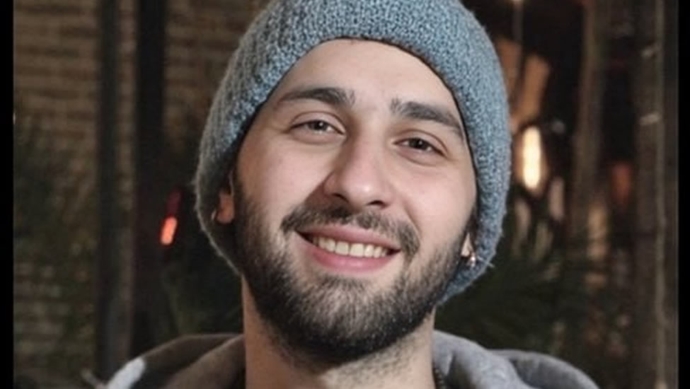

At dawn on Monday, April 6, 2026, the Iranian regime committed yet another heinous crime by executing 23-year-old Ali Fahim, a courageous youth who had participated in the massive December 2025–January 2026 nationwide uprisings.
Fahim’s death marks the 10th political execution carried out by the regime’s machinery of death in the past week, signaling a drastic escalation in state-sanctioned murder. Reeling from the monumental uprisings that recently brought the clerical establishment to its knees, the paralyzed regime is systematically using executions to spread terror among the public and stave off an inevitable future revolt.
Breaking:
This morning, Iran's regime executed Ali Fahim, another youth who had taken part in recent uprisings.
The regime's Mizan News Agency (affiliated with the judiciary) claimed that Fahim had taken part in an "operation against banned military facilities" to seize… https://t.co/2WGHhGzcE7 pic.twitter.com/rIoa0rKBQx
— People's Mojahedin Organization of Iran (PMOI/MEK) (@Mojahedineng) April 6, 2026
Fabricated charges and inadvertent confessions of vulnerability
The Judiciary’s news agency, Mizan, labeled the 23-year-old protester an “enemy element” and stated he was executed for his alleged “participation in an attack on a prohibited military location to capture the armory and steal military weapons” during the January uprisings. The IRGC Quds Force-affiliated Tasnim News Agency similarly claimed Fahim and others were acting on behalf of the US, Israel, and hostile groups to breach a classified military site, widely identified in the case as the Kaveh Basij base. Tasnim went as far as claiming that the actions of these protesters provided an excuse for a potential military invasion by the US and Israel.
Highlighting the sheer lack of due process, Mizan’s only “evidence” against this youth was his failure to carry a mobile phone during the protests, which the regime absurdly claimed “shows his alertness and orientation regarding presence in the operational scenes of riots and disturbances.” Furthermore, no information was published regarding his interrogation, forced confessions, or access to a lawyer. Despite the fabricated charges, these reports unwittingly admitted to the power of the defiant youth.
Admitting to the growing resistance of Iran’s restive society against the apparatus of repression, the Judiciary conceded that during the uprisings, “hostile elements took to the streets and, as a result of using firearms, explosives, and incendiary materials, killed security defenders and caused massive damage.”
A broader campaign of terror against dissidents
Ali Fahim is the fourth young protester executed from this specific fabricated case. His execution follows the hangings of 18-year-old Amirhossein Hatami on April 2, and 19-year-old Mohammad-Amin Biglari alongside 31-year-old Shahin Vahedparast on April 5.
Breaking:
In another act of utter brutality, Iran's regime has executed Mohammad Amin Biglari and Shahin Vahedparast, two protesters from the January 2026 uprising.
The regime's judiciary accused them of attacking a weapons depot in Tehran and setting fire to regime facilities.… pic.twitter.com/gjXovloIsp
— People's Mojahedin Organization of Iran (PMOI/MEK) (@Mojahedineng) April 5, 2026
These brave youths were sentenced to death by the notorious executioner Judge Abolqasem Salavati in Branch 15 of the Tehran Revolutionary Court. Prior to their executions, the youths were transferred to solitary confinement in Ghezel Hesar Prison on March 31. Immediate alarm must be raised for another young protester tied to the Kaveh Basij base case, Abolfazl Salehi Siavashani, who remains in grave danger of the gallows.
This brutality caps off a bloody week in which the regime also executed six members of the People’s Mojahedin Organization of Iran (PMOI/MEK). Mohammad Taghavi, 59, and Ali Akbar Daneshvarkar, 59, were sent to the gallows on March 30, followed by Babak Alipour, 34, and Pouya Ghobadi, 33, on March 31. Vahid Bani Amerian, 33, and Abolhassan Montazer, 66, were executed on April 4.
A crime against humanity in the making
The criminal execution Iran’s courageous youth is yet another sign of the regime’s desperation in the face of public anger and its fear of a growing uprising aimed at its overthrow.
Far from intimidating the public, this unaccountable bloodletting will only fuel the fire of resistance. As Mrs. Rajavi emphasized, “Iran’s freedom fighters and defiant youth will rise to confront this injustice and will bring an end to religious dictatorship in Iran once and for all.”
The regime is currently using the fog of war and domestic chaos following the February 28 death of supreme leader Ali Khamenei to quietly purge political prisoners and dissidents. The international community can no longer remain passive observers. The Iranian Resistance calls on the United Nations Security Council to adopt urgent, binding decisions and take concrete, punitive actions against the regime’s leaders to halt this continuous machinery of death and save the lives of prisoners currently on death row.