


On February 28, 2026, as the Middle East plunged into a renewed military confrontation and foreign strikes targeted the Iranian regime’s military infrastructure, the National Council of Resistance of Iran (NCRI) initiated a major political offensive by announcing a Provisional Government. This transitional body is designed to transfer sovereignty back to the Iranian people and establish a democratic republic. The political foundation of this Provisional Government is NCRI President-elect Maryam Rajavi’s Ten-Point Plan, which mandates the dissolution of the regime’s suppressive apparatus, including the Islamic Revolutionary Guard Corps (IRGC), the complete rejection of absolute clerical rule (velayat-e faqih), the abolition of the death penalty, and the establishment of a non-nuclear Iran dedicated to gender equality.
It is worth noting that any expression of support for the NCRI or its principal member, the People’s Mojahedin Organization of Iran (PMOI/MEK), from within Iran is an act of profound bravery. Doing so routinely subjects individuals to brutal torture, prolonged solitary confinement, and a near-certain death sentence. Yet, despite the regime placing its security apparatus on high alert, political prisoners across the country are smuggling out open letters to endorse the NCRI’s plan, risking their lives to declare that Iran’s future will be built from within.
The beginning of the storm
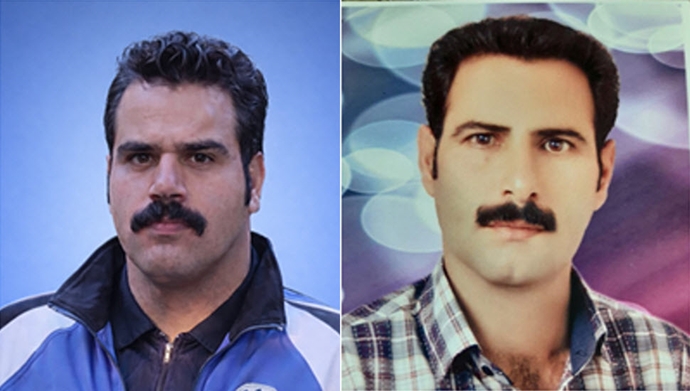
In March 2026, political prisoners Mehdi and Mohammad Khodakarami, held in the Central and Parsilon prisons of Khorramabad, released a letter declaring their unwavering support for the NCRI’s Provisional Government. Defying the horrific conditions of their incarceration, they wrote: “From behind prison bars, with hearts full of faith and certainty, we announce that although the head of the snake is gone, this is not the end; it is the beginning of the storm of the Iranian people, the beginning of the war of destiny—a war as old as 100 years against the two dictatorships of the Shah and the Sheikh.”
The Khodakarami brothers represent a resolute rejection of both the current clerical regime and any return to a monarchical dictatorship. In their message, they urged the people of Khorramabad and Lorestan to honor the martyrs of recent uprisings and to thwart “dependent opportunists” who hide behind the “Shah’s son” to hijack the revolution. Crediting their resilience over the past three years of torture to the teachings of Resistance leaders Massoud and Maryam Rajavi, they stated: “Our demand and that of our people in these fateful historical circumstances is very clear: the overthrow of the ruling religious fascism by the Liberation Army and the heroic Resistance Units.”
A new generation that mocks the gallows
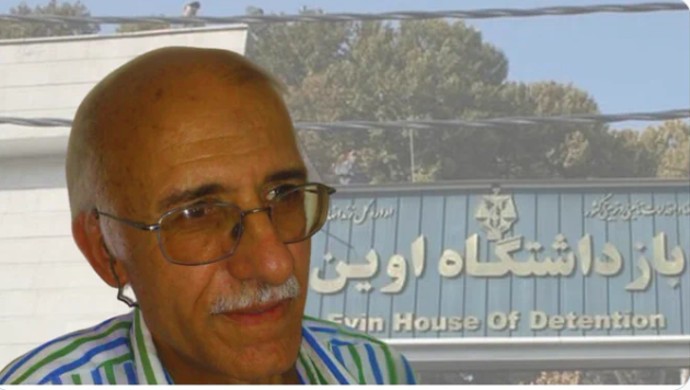
This fearless resolve is echoed in another message smuggled out of Ghezel Hesar Prison in March 2026 by veteran political prisoner Ali Moezzi. He heralded the NCRI’s announcement as the dawn of a new era that will permanently end a century of dictatorship. Reflecting on his years behind bars, Moezzi recounted the historical continuity of the PMOI’s struggle, remembering martyrs from the 1980s—such as Morteza Emami, who was immediately executed for refusing to speak a single word to his interrogators—to heroes of the 2010s like PMOI martyr Gholamreza Khosravi and Kurdish youths Zanyar and Loghman Moradi.
Crucially, Moezzi highlighted that the regime’s execution machinery has entirely lost its power to intimidate the new generation. He pointed to the post-2022 phenomenon of PMOI Resistance Units filling the prisons—heroes like martyred PMOI members Mehdi Hassani and Behrouz Ehsani—who consider solitary confinement, torture, and execution to be worthless. Recounting the interrogation of a young Resistance Unit member facing a death sentence, Moezzi shared this defiant exchange: “Are you remorseful? / No, I am not remorseful at all, I am proud! / What will you do if you are released? / Even if I die and come back to life a hundred times, I will continue this same path!”
This courage spills over into the public sphere. Moezzi narrated a recent incident where a young Resistance Unit member, sentenced to execution for torching IRGC and Basij centers, was transferred to a hospital. Upon learning of his identity, civilian patients and hospital staff gathered around him in overwhelming support. When asked what he was fighting for, the young prisoner replied, “Freedom for the people and a democratic republic. We want neither the monarchy nor the velayat-e faqih.” He then chanted loudly in the hospital: “Death to the oppressor, be it the Shah or the Supreme Leader!”
Iran’s future belongs to its people
Message from Maryam Rajavi, President-elect of the National Council of Resistance of Iran for the transitional period to the Iranian people
Our homeland has passed through many turbulent periods. It will pass through this moment as well. But within the people’s front, we must… pic.twitter.com/AfyS3VR9aL— Maryam Rajavi (@Maryam_Rajavi) February 28, 2026
The voices emanating from Iran’s darkest dungeons perfectly align with the broader strategy of the organized resistance: real change in Iran will not come from external military strikes, but from the Iranian people and their Resistance Units. As Maryam Rajavi stated during the recent military strikes, “Iran is not its regime. Iran is its people. No future for Iran can be realized from the outside; it can only be built by the Iranian people themselves.”
The unwavering courage of prisoners like the Khodakarami brothers and Ali Moezzi shows the world that the Iranian people have already chosen their democratic alternative, and they are willing to pay the ultimate price to secure it.