

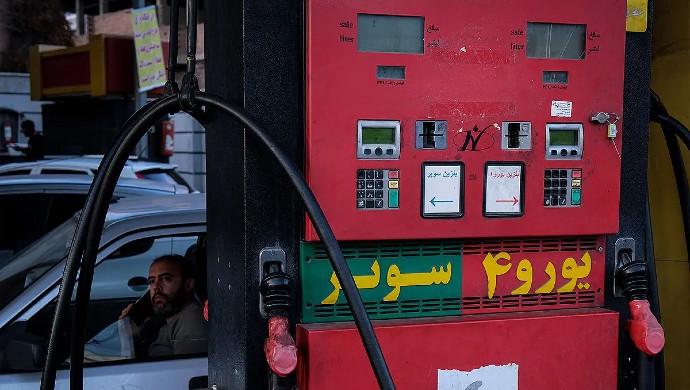

In a desperate bid to cover a catastrophic budget deficit, the Iranian regime has officially launched a draconian three-tier gasoline pricing scheme. As of midnight on Saturday, December 13, the administration of Masoud Pezeshkian began implementing a policy that directly targets the livelihoods of millions of Iranians already crushed under the weight of inflation.
According to the new directive, gasoline is now rationed into three price brackets: a subsidized quota of 60 liters per month at 15,000 rials per liter, a second tier of 100 liters at 30,000 rials, and a punitive “free market” rate of 50,000 rials per liter for any consumption beyond these limits. Regime officials openly admit that this decision was driven by the government’s bankruptcy and an unprecedented budget deficit, forcing Supreme Leader Ali Khamenei to claw at the empty tables of the Iranian people.
Chaos and paralysis at the top
The implementation of this plan exposes deep fissures and paralysis within the regime’s hierarchy. The price hike was originally scheduled for December 6 but was postponed at the last minute due to the regime’s terrifying fear of a public backlash. State media described the delay as a sign of a “lack of unified economic command” and “contradictory narratives” among executive bodies.
While the regime’s spokesperson, Fatemeh Mohajerani, tried to downplay the crisis by claiming that “80 percent of people” would be satisfied with the 160-liter combined quota, internal data contradicts her. The director of the smart fuel system revealed that over three million people own more than one vehicle and will be immediately forced to pay the 50,000-rial rate, proving the administration’s claims to be sheer propaganda.
The ghost of November 2019
The regime’s hesitation stems from a deep-seated trauma regarding the November 2019 uprising, when a similar fuel price hike ignited a nationwide firestorm that shook the pillars of the dictatorship. Even members of the regime’s own parliament warned of the consequences. Reza Sepahvand, a member of the Majlis, explicitly asked how the government could raise prices when incomes are stagnant, warning it would create “social consequences like the year 2019.”
State-affiliated experts have also admitted that the regime is entering a dangerous minefield. Khamenei faces a deadlock: he is forced to raise prices to fund his machinery of suppression and corruption, yet he knows that doing so crosses a red line for a volatile society.
Plundering the people to pay for corruption
The regime attempts to justify the price hike by blaming high domestic consumption and smuggling. However, the reality lies in the regime’s own industrial incompetence and corruption. Domestic vehicles, produced by state-backed monopolies, consume roughly 11 liters of fuel per 100 kilometers, compared to the global standard of 5 to 8 liters. The Iranian people are paying the price for fifty years of failure to produce competitive, fuel-efficient vehicles.
Furthermore, the treasury has been emptied not by subsidies for the poor, but by the astronomical costs of the regime’s missile programs, nuclear projects, and regional proxy wars. Even regime insiders admit that the new “third rate” for gasoline will not significantly reduce consumption but is merely a tool to generate revenue for the government.
By entering this “dangerous minefield,” Khamenei has signaled that the regime’s economic reality has reached the point of collapse. With society already at a boiling point, this new pressure on the people’s livelihood could be the spark that ignites an explosion far greater than the regime anticipates.