

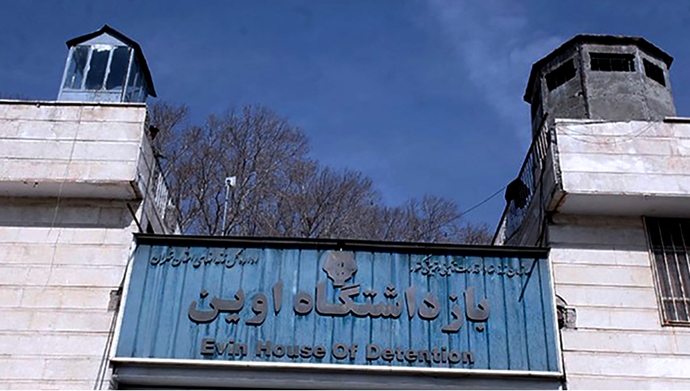

While the world’s attention is fixed on the escalating military conflict between the Iranian regime and Israel, a darker, internal war is being waged by the clerical dictatorship against its own defenseless people. Inside the walls of Iran’s notorious prisons, the regime is exploiting the fog of war to intensify its repression, silence dissent, and eliminate political opponents. The recent attacks in Tehran have provided a chilling pretext for a new wave of state-sanctioned violence, creating an urgent need for international intervention before a new massacre unfolds.
The conflict’s forgotten frontline is inside prisons like Evin, where an Israeli strike on June 23 served as a trigger for the regime’s brutal agenda. According to reports from inside Iran, the attack damaged the prison’s administrative buildings, the interrogation offices of the infamous Ward 209, and the women’s ward. In the ensuing chaos, windows were shattered, injuring inmates, and prison authorities sealed all doors to the halls and wards, trapping prisoners inside with no way out. The regime is not protecting its prisoners; it is ensuring they have no escape from the violence, whether from external strikes or its own guards.
A pretext for murder: The Dizel-Abad massacre
The regime’s sinister intentions were laid bare on June 16 in Kermanshah’s Dizel-Abad prison. After a nearby airstrike shattered the prison’s windows, terrified inmates protested, pleading to be moved to a secure location. The regime’s response was not protection, but a hail of live ammunition. Anti-riot Special Units were deployed to brutally suppress the protest, deliberately firing on unarmed prisoners. At least 10 inmates were killed and over 30 were wounded in what can only be described as a cold-blooded massacre.
This atrocity demonstrates that the regime views the war as an opportunity. As a spokesperson for the PMOI stated in the wake of the attack, “When the regime cannot provide and guarantee the security of the prisoners, it must release them even temporarily.” Instead, the authorities chose murder, cynically planning to blame the deaths on shrapnel to cover up their crime.
Echoes of 1988: Forced disappearances and a strategy of extermination
This is not random chaos; it is a calculated strategy of elimination that carries terrifying echoes of the 1988 massacre. Following the Evin strike, guards began moving political prisoners out of Ward 209 to unknown locations. This follows a clear pattern of abducting political prisoners, such as the case of elite student Ali Younesi, who was beaten and dragged from his ward by security officials on June 18 and transferred to an undisclosed location.
This tactic of moving prisoners under the guise of “protection” is identical to the playbook used by the regime in the spring of 1988. Then, authorities transferred PMOI supporters from Dizel-Abad prison to Gohardasht prison, claiming it was for their safety in wartime. Months later, following Khomeini’s fatwa, those same prisoners were systematically executed. The regime is once again using the war as a shield to isolate and “disappear” political prisoners, setting the stage for another crime against humanity.
An urgent call to prevent another massacre
The international community cannot afford to be a passive observer as the Iranian regime prepares to commit another mass atrocity against political prisoners. The warning signs are clear and unambiguous. Silence in the face of such blatant brutality is complicity. The world must act now to save lives.
The United Nations must heed the urgent calls from the Iranian Resistance. The International Red Cross and the Special Rapporteur must take immediate action to protect the lives of prisoners throughout Iran in the state of war between Israel and Iran. It is imperative to demand urgent action by the UN High Commissioner for Human Rights, the UN Human Rights Council, and the UN Special Rapporteur to safeguard and to ensure the release of all political prisoners. The time for condemnations has passed. The world must intervene before it is too late.