


In her Nowruz speech, Mrs. Maryam Rajavi, the President-elect of the National Council of Resistance of Iran, emphasized the urgency of invoking the UN “snapback” mechanism against the Iranian regime’s nuclear weapons program, stating: “In the face of the regime’s malign activities, the international community must no longer delay the activation of the snapback mechanism. This regime is a threat to global peace and security and must be placed under Chapter VII of the United Nations Charter. The ultimate solution to the mullahs’ terrorism, warmongering, and nuclear weapons program is the regime’s overthrow—a task that is the responsibility of the Iranian people through resistance, uprising, and the Army of Freedom.”
Ten years ago, during the time of the nuclear deal known as the JCPOA (July 14, 2015), Maryam Rajavi had also warned: “circumventing the six UN Security Council resolutions and an unsigned agreement, which lacks the requirements of an official international treaty, would neither block the mullahs’ pathways to deception nor their access to a nuclear bomb.” Another important point, Mrs. Rajavi noted, is that “the money poured into the regime’s coffers must be placed under strict United Nations monitoring to ensure that it addresses the Iranian people’s urgent needs, especially the unpaid meager salaries of workers, teachers, and nurses, and is used to provide food and medicine to citizens. Otherwise, Khamenei will use these funds to further the regime’s policy of export of terrorism and fundamentalism in Syria, Yemen and Lebanon as well as to fill the coffers of the Islamic Revolutionary Guards Corps.”
Now, looking back over the past decade, each of the above warnings by the Iranian Resistance has proven accurate. Bypassing UN Security Council resolutions and channeling billions of dollars into the coffers of Iran’s ruling theocratic fascism has been used to fund terrorism, war, and the suppression of the Iranian people—emboldening the regime in its anti-Iranian and anti-human policies.
Regime supreme leader Ali Khamenei, who has constantly tried to survive by exploiting divisions within the international community, showed his anger after new European moves. In a meeting with regime officials on March 8, 2025, he lashed out at European countries, saying: “Did you uphold your commitments in the JCPOA? From the very beginning, you didn’t. After the U.S. withdrew, you promised to make up for it, then reneged on that. Then you said something else and broke that second promise too.”
On Friday, March 14, 2025, the foreign ministers of the G7 countries—including the United States, United Kingdom, Japan, Italy, Germany, France, and Canada—along with the High Representative of the European Union, issued a joint statement at the conclusion of their summit in Charlevoix, Canada. In their statement, the G7 countries emphasized that the Iranian “is the principal source of regional instability and must never be allowed to develop and acquire a nuclear weapon.”
Prior to that, on Wednesday, March 12, 2025, the United Nations Security Council held a closed-door session with all 15 members present to discuss the Iranian regime’s nuclear program. During the meeting, the UK representative emphasized that triggering the snapback mechanism against the regime is under serious consideration.
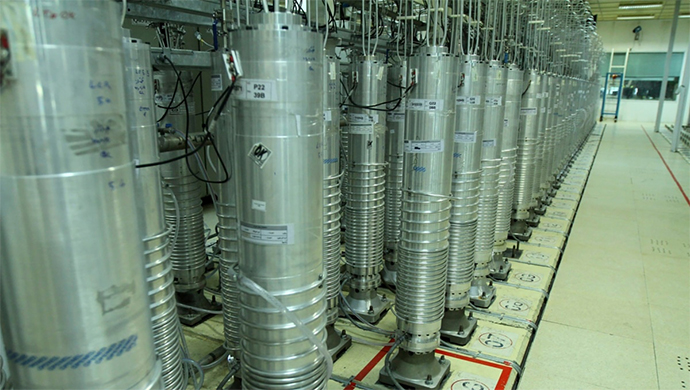
The Security Council meeting was held as the latest report by the Director General of the International Atomic Energy Agency (IAEA) to the Board of Governors stated that Iran is the only non-nuclear-armed country in the world producing highly enriched uranium, and that this level of enrichment has no credible peaceful justification.
Although the review of the snapback mechanism at the UN Security Council and the G7 foreign ministers’ statement has been delayed, the looming nightmare of the return of the six UN Security Council resolutions against the regime has shaken the desperate Supreme Leader and his rule. This clearly demonstrates how essential it is to adopt a firm policy against Iran’s regime and to expedite the implementation of the snapback mechanism.