

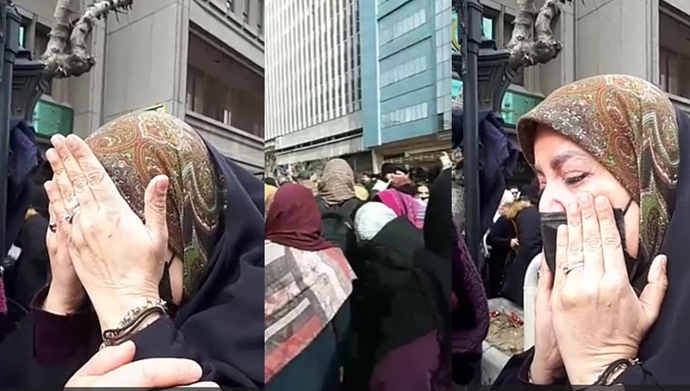

On January 20, Iran witnessed a surge in protests sweeping across various provinces and cities. From Tehran to Gilan, and from Khuzestan to Isfahan, thousands of retirees, workers, and patients took to the streets to voice their discontent over the regime’s policies and disregard for their fundamental rights. These protests underscore the growing public anger against corruption and mismanagement in governmental institutions, as millions of Iranians endure crushing poverty and deprivation.
Security forces attack the peaceful protest of retired educators in Tehran.#IranProtestspic.twitter.com/f9iXxTqYLk
— People's Mojahedin Organization of Iran (PMOI/MEK) (@Mojahedineng) January 20, 2025
In Tehran, protests outside the Ministry of Education were met with brutal suppression by security forces. Authorities used pepper spray to disperse retired teachers protesting the delay of their entitlements for over 17 months. This attack left several teachers injured in their eyes and throats, sparking widespread outrage and chants such as “Shame on you!” against the security forces. This incident symbolizes the Iranian regime’s violent approach to silencing calls for justice.
Elsewhere in Tehran, retired telecom employees gathered outside the company’s offices to protest the policies of the “Execution of Khomeini’s Order Headquarters” and the “Cooperation Foundation of the IRGC.” The protesters demanded their stolen pension rights and condemned the regime’s exploitation of their resources. This gathering reflects the extent of public frustration, even in the capital, where retirees face dire economic conditions.
January 20—Tehran, Iran
Retirees of the Telecommunication Company of Iran (TCI) resume rallies to protest corrupt management decisions and demand higher pensions and other basic needs.
"Incompetent manager, resign!" protesters chant.#IranProtestspic.twitter.com/MvSkpHmAsK— People's Mojahedin Organization of Iran (PMOI/MEK) (@Mojahedineng) January 20, 2025
In provinces such as Gilan, Lorestan, Tehran, Kermanshah, and Ilam, retired telecom employees staged simultaneous protests denouncing the plundering of their rights by the “Execution of Khomeini’s Order Headquarters” and the IRGC’s Cooperation Foundation. Meanwhile, in Tehran, spinal muscular atrophy (SMA) patients and their families protested outside the Ministry of Health, demanding essential treatments that the government has failed to provide.
In Rezvanshahr, Gilan province, Chooka company workers continued their rallies, demanding the payment of delayed salaries and protesting the administration’s unjust practices. Protesters expressed their frustration with officials’ neglect of their suffering, as they endure harsh living conditions.
January 20—Tehran, Iran
Families of SMA patients rally in front of the health ministry to protest the shortage of vital medicine.#IranProtestspic.twitter.com/PTvFFcFQz0— People's Mojahedin Organization of Iran (PMOI/MEK) (@Mojahedineng) January 20, 2025
In Ahvaz, retired telecom employees took to the streets to protest regime corruption and low pensions. Protesters accused the regime of blatantly looting their rights and demanded an end to military control over economic enterprises.
In Isfahan and Kermanshah, retirees rallied against mismanagement and corruption that threatens their pensions. These protests signify the growing wave of public anger in major cities.
January 20—Kermanshah, western Iran
Retirees of the Telecommunication Company of Iran (TCI) continue protests as authorities refrain from addressing their demands.#IranProtestspic.twitter.com/MUspP1FfB2— People's Mojahedin Organization of Iran (PMOI/MEK) (@Mojahedineng) January 20, 2025
The Iranian regime, which spends billions of dollars funding terrorism and destabilizing the region—from supporting Hezbollah in Lebanon to the Houthis in Yemen, and formerly the Assad regime in Syria, and its nuclear ambitions—leaves its people languishing in poverty. Two-thirds of the population live below the poverty line, while protesters face daily brutal crackdowns. These protests may foreshadow a larger uprising against a regime that relies solely on tools of oppression and injustice. The Iranian people demand a dignified life and rightful freedoms, while the regime meets these demands with bullets and batons, suggesting that its downfall is merely a matter of time.