

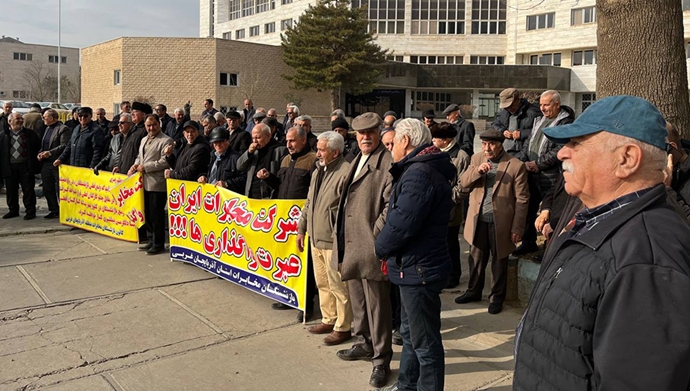

On January 6, 2025, widespread protests broke out in several Iranian cities involving retired teachers, telecommunications retirees, and laid-off industrial workers. The demonstrators voiced their anger over unpaid retirement benefits, delays in disbursing allowances, and widespread corruption. These coordinated protests reflect the growing frustration among Iran’s working and retired classes.
January 6—Ahvaz, southwest Iran
Retirees of the Telecommunication Company of Iran (TCI) continue protests as authorities refrain from addressing their demands.#IranProtestspic.twitter.com/xHdVWgYOxY— People's Mojahedin Organization of Iran (PMOI/MEK) (@Mojahedineng) January 6, 2025
In Tehran, retired teachers staged a sit-in demanding higher pensions and the payment of overdue retirement bonuses, some of which have been pending for 16 months. The protesters called on the government to take immediate action to address their dire financial conditions, emphasizing the disparity between their long years of service and their current living conditions.
Retirees from Iran’s telecommunications company continued their protests in multiple cities, including Tehran, Shiraz, Isfahan, Sanandaj, Ilam, Bijar, Kermanshah, and Urmia. Demonstrators demanded increased pensions, timely payments of dues, and an end to what they described as corrupt practices within the company.
January 6—Tehran, Iran
Recently retired teachers and educators rally to protest low pensions and unpaid retirement bonuses despite the passage of 16 months.#IranProtests pic.twitter.com/neazsCTZqn— People's Mojahedin Organization of Iran (PMOI/MEK) (@Mojahedineng) January 6, 2025
In Tehran, protesters chanted slogans like “Unite against tyranny” and “Speak out against injustice.” In Ilam, demonstrators raised banners stating, “A little less embezzlement solves our problems,” reflecting their frustration with systemic corruption and the government’s inaction.
In Urmia, protesters expressed discontent with the privatization of the company, accusing the new management of exacerbating their financial hardships. Similar sentiments were echoed in Bijar, Sanandaj, and Kermanshah, where weekly gatherings have become a regular occurrence to demand basic rights.
January 6—Ilam, western Iran
Retirees of Telecommunication Company of Iran resume weekly protest rallies, demanding higher pensions and other basic rights.
Protesters chant, "A bit less embezzlement and our problems will be solved."#IranProtests pic.twitter.com/3IV7Qe8T5o— People's Mojahedin Organization of Iran (PMOI/MEK) (@Mojahedineng) January 6, 2025
Laid-off workers from Ilam’s Arghavan Gostar Petrochemical Company gathered outside the Persian Gulf Holding Company headquarters in Tehran. The workers, many from local communities near the industrial complex, expressed anger over being forced into unemployment despite their years of contribution to the project.
The workers described their dismissal as a grave injustice, particularly given their critical role in building the complex. They called on authorities to reverse the layoffs and ensure their economic and professional rights. One protester stated, “Our situation is unbearable. We demand immediate action to restore our jobs and dignity.”
January 6—Tehran, Iran
Dismissed workers of Ilam's Arghavan Gostar Petrochemical company rally in front of the offices of the Persian Gulf Holding, demanding policy changes that will ensure employment for locals.#IranProtestspic.twitter.com/wGXrqVj7n0— People's Mojahedin Organization of Iran (PMOI/MEK) (@Mojahedineng) January 6, 2025
Protesters in Shiraz focused on financial hardships caused by delayed pension payments, calling for urgent intervention to alleviate their struggles.
In Isfahan, demonstrations were held outside the central telecommunications office on Chaharbagh Bala Street, where retirees demanded the payment of overdue benefits.
In Shahr-e Kord, retirees gathered to protest similar issues, urging authorities to address their neglected financial needs.
January 6—Sanandaj, western Iran
Retirees of the Telecommunication Company of Iran (TCI) resume protest rallies, demanding higher pensions and other basic needs.#IranProtests pic.twitter.com/zJQJ6Fcd4D— People's Mojahedin Organization of Iran (PMOI/MEK) (@Mojahedineng) January 6, 2025
These widespread protests highlight the economic difficulties faced by retirees and workers in Iran. Their demands for higher pensions, prompt payment of dues, and an end to corruption underscore unresolved structural issues in the Iranian government. Many protesters pointed to the stark contrast between the country’s vast natural resources and the deteriorating financial conditions of its citizens.
Under Supreme Leader Ali Khamenei and his Revolutionary Guards’ control over national wealth, the hard-earned labor of ordinary citizens is siphoned off to finance luxurious lifestyles, nuclear and missile projects, and futile regional wars. This systemic plundering has left tens of millions of Iranians struggling with hunger and homelessness.
The scale of this exploitation prompted Ibrahim Zarei, a member of the regime’s parliament, to openly question on December 24: “Why aren’t the revenues from oil product exports directly deposited into the Ministry of Finance’s accounts without intermediaries?” He further criticized: “Since 2023, 31% of the resources allocated for subsidies have not been collected. Why is that? Where have these resources gone?”