

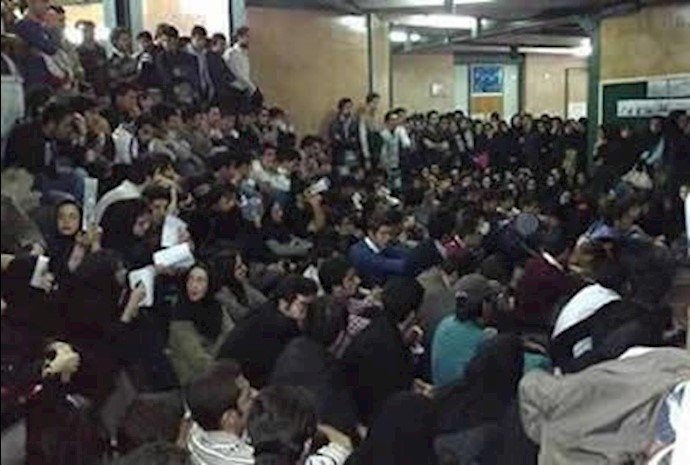

Following Iran’s 1979 revolution, the country began witnessing an increasing brain drain trend and this phenomenon has escalated drastically over the decades. In recent years, experts and analysts have repeatedly warned that this is due to the strict laws imposed on the Iranian people by the mullahs’ regime, including severe restrictions on social and political freedoms, regime officials constantly insulting the country’s citizens, the incompetence of regime officials, and the unfavorable economic circumstances.
In 2022, EU member states approved 169,068 asylum applications, indicating a 22 percent increase in comparison to 2021. According to an official report issued by the European Commission Statistics Office, 384,245 eligible asylum seekers were supported by EU member states last year, showing an increase of almost 40% in comparison to 2021. According to this report, 44 percent of the people supported by EU member states in 2022 received refugee status and the remainder were covered by secondary protections and humanitarian aid provided by these countries. Germany had the largest share with 41 percent.
Massoud Bischiyan, a member of the Iranian regime’s Majlis (parliament), said that the country is facing the problem a dire dilemma involving the migration of university professors due to their low salaries. University professors are paid a meager $300 a month in Iran, while foreign governments will pay the same professor $10,000 per month if they immigrate to their country. As a result, many Iranian professors have requested to leave the country, according to the semi-official Eghtesad (Economy) Online website.
The regime’s Arman newspaper, another semi-official outlet in Iran, wrote the following in February 2021: “The brain drain in the last few years has caused 300 times more damage to Iran’s economy than the Iran-Iraq war.” According to a senior World Bank expert the brain drain is resulting in massive losses to Iran’s economy, equaling to twice the country’s oil revenue.
According to Safdar Hosseinabadi, Secretary-General of the Association of Top Talents of Iran, quoted by the state-run Rokna News Agency on January 23, 2022, out of the 86 International Science Olympiad medalists from Iran, 82 or 83 have left the country to live elsewhere.
Research by Stanford University in April 2020 found that the proportion of Iranian emigrants, both permanent and temporary, had almost tripled in 2018 compared to 1979, with many of these emigrants being well-educated. A Gallup survey conducted between 2015 and 2017 showed that a quarter of Iranian intellectuals and experts would leave the country if given the chance.
Foreign governments are often eager to welcome Iranian expatriates, and many students who go abroad for further education choose not to return home because they find better job prospects and more personal freedoms overseas.
Baqer Larijani, President of Iran’s 11th Scientific Olympiad of Medical Students, said in November 2019 that between 150,000 and 180,000 educated specialists leave Iran each year, and that there is an urgent need to find ways to utilize this valuable human capital within the country.
According to the state-run Youth Journalists Club, Iran is ranked second in the world in terms of brain drain. The International Monetary Fund (IMF) highlighted in a 1999 study that brain drain can have negative economic consequences for developing countries, as investment in education may not lead to faster economic growth if highly educated individuals leave the country.
Despite this, the Iranian regime seems more focused on pursuing regional terrorism and a clandestine nuclear weapons program than utilizing the country’s human capital for economic development. Bahram Salavati, Director of the Iranian Immigration Observatory, said in an interview with the state-run Tasnim News Agency on October 13, 2021, that there is no clear and organized plan to make use of Iran’s significant human capital.
In Iran, talented individuals often lack government support and are at risk of being detained or imprisoned if they express dissent or freedom of thought. This is in stark contrast to many other countries that recognize the importance of individual talent for economic growth and development.