

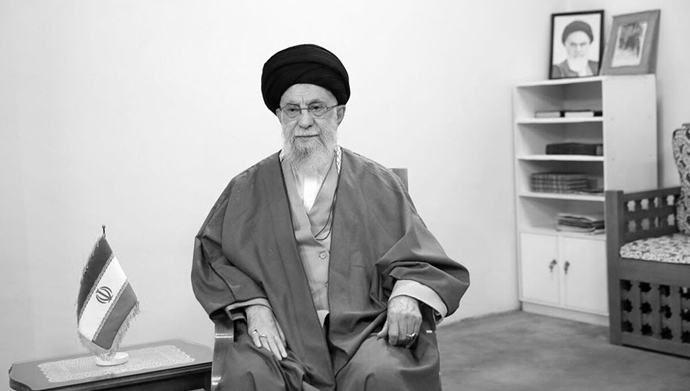

The deadly defeats of Iran’s regime in the Persian Calendar year 1403 (March 2024–March 2025) have been so clear, frequent, and incurable that regime supreme leader Ali Khamenei was forced to begin both his Nowruz (Persian New Year) message and speech by addressing them.
In his Nowruz message, Khamenei made a meaningful comparison: “The year 1403 was an eventful year. The incidents that occurred repeatedly this year were similar to those of the year 1360 and brought hardship and suffering for us.”
The “eventful” year 1360 (1981) began on June 20 when regime founder Ruhollah Khomeini brutally crushed a peaceful demonstration of 500,000 people, executing scores of young girls and boys, and permanently lost his regime’s legitimacy. That year, People’s Mojahedin Organization of Iran (PMOI/MEK) members and activists broke the myth of the bloodthirsty regime on September 27, with the slogan “Khomeini your end has come,” marking a turning point in the revolutionary resistance to overthrow the entirety of the mullahs’ regime.
Now too, Khamenei, trapped in a deadlock of decline and collapse, senses the smell of regime overthrow wherever he turns. Thus, recalling the “events” of 1981 and comparing them with the regime’s continuous defeats in 2024, he says: “At the beginning of the year, the martyrdom of the late Mr. Raisi occurred. Before that, the martyrdom of some of our advisors in Damascus took place. After that, various incidents happened in Tehran and then in Lebanon. These were bitter events.”
What Khamenei completely omits from his list of bitter events is the major incident of the fall of Bashar al-Assad in Syria. His failure to mention it is due to two reasons: first, it is a toxic, humiliating event; and second, Khamenei himself had placed the highest political emphasis and investment on the Assad regime.
But the reality is that with the fall of the Assad regime—who for 45 years supported and aided the Iranian regime in committing major crimes in Iran and across the region—the very foundations of the regime’s regional hegemony were shaken, and Khamenei’s regional ambitions and astronomical investments turned to smoke and ashes. Even the regime’s own officials and media began to openly question his strategy.
On December 9, under the headline “The End of Assad, A Beginning for Us,” Ham-Mihan newspaper wrote, “First and foremost, let’s clearly and explicitly answer: Where did we go wrong and how much did it cost us?” On the same day, Shargh newspaper wrote, “Support for Bashar Assad over the past decade came at financial, political, human, and reputational costs, and the rapid and total collapse of the Assad regime requires extensive multi-faceted analysis.” And Entekhab newspaper quoted MP Mohammad Manan Raisi as saying, “After offering around 6,000 ‘Defenders of the Shrine’ and spending billions, we handed Syria over to Takfiris in just one week,” and asking: “If this isn’t divine wrath, then what is?”
Khamenei also ignored the first major defeat of 1403, which he concealed amid the death of the “Butcher” Raisi and his proxies—that is, the widespread boycott of the sham elections for the Majlis (parliament) and Assembly of Experts. It was a massive embarrassment, which even regime insiders called the most lackluster election in the regime’s history.
The deliberate omission of the rage and uprising of Iran’s fed-up people during protest gatherings and the wave of anti-repression activities by Resistance Units is also entirely understandable. These are the result of the regime’s deadly failures in 2024 and point to a deadly abyss that Khamenei cannot even dare to imagine.