

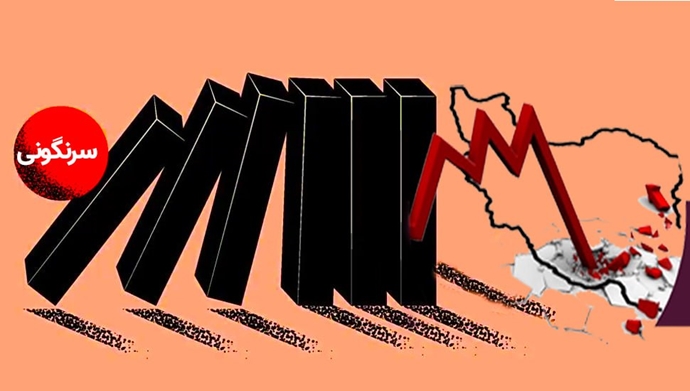

As Iran marks Nowruz 1404, it faces a critical juncture, marked by severe political instability and escalating challenges to the mullahs’ regime ruling the country. The past Persian year, 1403, witnessed profound setbacks for the Iranian regime, deeply undermining its political legitimacy, economic stability, and regional influence. The regime, reliant on coercion, ideological control, and regional interference, encountered unprecedented crises, signaling a significant erosion of its authority both domestically and internationally.
Widening Gap Between the Regime and Iranian Society
The year began under the lingering shadow of the revolutionary uprisings of 1401, which had already dealt significant blows to the regime’s authority. Regime Supreme Leader Ali Khamenei’s earlier strategy, epitomized by his 2019 “Second Step of the Revolution” manifesto, promoted a systematic effort to purge the political and administrative structure of any voices perceived as insufficiently loyal to the ideological foundations of the theocracy. This so-called ideological “purification” aimed to consolidate power by removing non-loyal elements from key institutions, ensuring that only hardliners shaped state policy. Rather than strengthening the regime’s hold on power, this aggressive centralization exacerbated social divisions, deepened public alienation, and fueled further unrest. Protests continued to erupt sporadically throughout the year, demonstrating the people’s unwavering desire for freedom and democracy.
Electoral Debacle and Failed “Purification” Policy
The regime’s legitimacy crisis culminated spectacularly during the parliamentary and Assembly of Experts elections on March 11, 2024. This electoral process, intended to confirm the regime’s strategy of ideological “purity,” instead functioned as a de facto referendum on the regime in its entirety. Participation in Tehran plummeted to a historically unprecedented 7%, even according to inflated regime statistics. The near-total boycott signaled not merely discontent with specific factions or personalities but a sweeping rejection of the clerical regime and all of its internal factions. It reflected a national consensus that no strand of the existing political establishment—whether so-called moderates or hardliners—holds legitimacy in the eyes of the Iranian people. The internal strife between conservative factions like Jebhe-ye Paydari, led by Saeed Jalili and Sadegh Mahsouli, and the IRGC-backed faction led by Mohammad Bagher Ghalibaf, further shattered any semblance of internal unity, compounding the regime’s crisis.
Death of Ebrahim Raisi: A Blow to Stability
A pivotal event shaking the regime’s fragile balance occurred with the sudden death of President Ebrahim Raisi in a plane crash. Raisi, widely known as the “Butcher of Tehran” for his key role in the 1988 massacre of more than 30,000 political prisoners, was a symbol of the regime’s brutality and a loyal executor of Khamenei’s hardline policies. Beyond his operational significance, Raisi was also rumored to be the favored successor to the ailing Supreme Leader, positioning him as a cornerstone of the regime’s future continuity. His sudden absence disrupted the regime’s coherence, triggering chaotic presidential elections marred by historically low participation—below 40% even by official accounts, an embarrassment Khamenei had once decried when occurring elsewhere.
The election of Masoud Pezeshkian on August 22, 2024, intended as a stabilizing measure, instead underscored the regime’s stagnation and duplicity. Though Pezeshkian branded himself as a moderate during the campaign, his immediate declaration of loyalty to Khamenei’s strategic agenda exposed the façade. His policies and appointments aligned seamlessly with the Supreme Leader’s hardline direction, confirming that his presidency was a continuation—not a deviation—of the regime’s repressive trajectory. This further alienated an already disillusioned public about the possibility of even the slightest shift in governance.
Failed Regional Adventurism and Military Setbacks
Facing domestic unrest, Khamenei resorted to aggressive external maneuvers to divert public attention. The conflict in Gaza, which the regime was banking on with the hopes of consolidating its regional power, instead spiraled into catastrophic defeat. Heavy casualties, international backlash, and targeted retaliation against Iranian regime proxies undermined Tehran’s regional strategy.
Significant losses dealt severe blows to Tehran’s influence. Hezbollah leader Hassan Nasrallah was killed in an Israeli airstrike in October 2024, dramatically weakening the regime’s deterrent capabilities in the region. The elimination of Hamas political chief Ismail Haniyeh in Tehran highlighted serious vulnerabilities even within Iran’s borders.
Moreover, the collapse of Bashar al-Assad’s regime in Syria, a strategic ally of Iran’s regime, profoundly damaged Tehran’s regional ambitions, creating a domino effect of geopolitical failures. Without Assad, Tehran lost a critical node in its proxy network, reducing its capacity for regional interference significantly.
Collapse of Tehran’s “Strategic Depth”
Tehran’s losses extended beyond Syria, rippling through its network of proxies across the region. In Lebanon, Hezbollah’s power dramatically waned after Nasrallah’s death, exacerbated by a strategic Lebanese government decision banning Tehran-Beirut flights. This move severed crucial logistical and financial lifelines previously sustained by Iranian patronage, significantly reducing Hezbollah’s operational capacity.
In Iraq, Tehran-backed militias, notably Hashd al-Shaabi, faced increasing internal backlash and declining Iranian support, undermining the Iranian regime’s influence in Baghdad. Public opinion turned against Iranian interference, associating Tehran with corruption and instability rather than security and unity.
Economic Meltdown and Social Crisis
Meanwhile, inside Iran, economic devastation deepened dramatically throughout 1403. Inflation skyrocketed unchecked, driving the Iranian currency to near-collapse with the US dollar nearing an unprecedented rate of 1 million rials. Poverty, unemployment, and social despair escalated sharply, fueling widespread discontent. Regime policies prioritized financing regional proxies and domestic repression at the expense of public welfare, intensifying public anger and alienation.
The worsening economic crisis manifested starkly in everyday life: Iranians experienced shrinking incomes, unaffordable basic goods, chronic shortages of essential commodities, and unprecedented poverty levels. Social issues, including increased homelessness, addiction, mental health crises, and suicides, reflected deep-seated despair, prompting intensified public outcry and mobilization against the regime.
Increased Internal Repression as a Defensive Response
Facing intensifying crises, the regime dramatically escalated domestic repression to maintain control. Executions surged alarmingly, aimed explicitly at intimidating protesters and dissidents. In parallel, the regime staged a sham trial against the People’s Mojahedin Organization of Iran (PMOI/MEK), attempting to criminalize the main opposition force in absentia—an effort widely condemned by international human rights advocates as politically motivated and devoid of legal legitimacy. International plots targeting Iranian opposition abroad, including failed assassination attempts against prominent supporters of the Iranian opposition, revealed regime paranoia regarding internal resistance networks.
Despite this intensified repression, resistance within Iran persisted robustly. PMOI Resistance Units continued mobilizing widespread grassroots dissent, demonstrating remarkable resilience amid severe suppression.
A Turning Point for Iran
Collectively, these developments throughout 1403 represented a historic weakening of the Iranian clerical dictatorship. The regime’s setbacks transcended isolated incidents, reflecting fundamental strategic failures and severe legitimacy erosion.
Iran’s societal rejection of regime politics became profoundly evident through unprecedented electoral boycotts and sustained protests. Popular rejection was not simply against specific policies or leaders but against the very foundations of clerical rule. The regime’s desperate attempts to redirect public anger outward through regional warfare instead resulted in international isolation, military defeats, and further domestic disenchantment.
As Iran enters 1404, the nation faces a critical juncture. The year 1403 vividly underscored a regime on the defensive, struggling against an empowered, defiant society increasingly united in demanding fundamental change—not cosmetic reforms but comprehensive transformation and democracy.
Nowruz 1404 thus symbolizes not merely seasonal renewal but perhaps the dawn of an era in which the Iranian people finally reclaim their destiny, decisively rejecting clerical authoritarianism in favor of genuine freedom, democracy, and self-determination.