

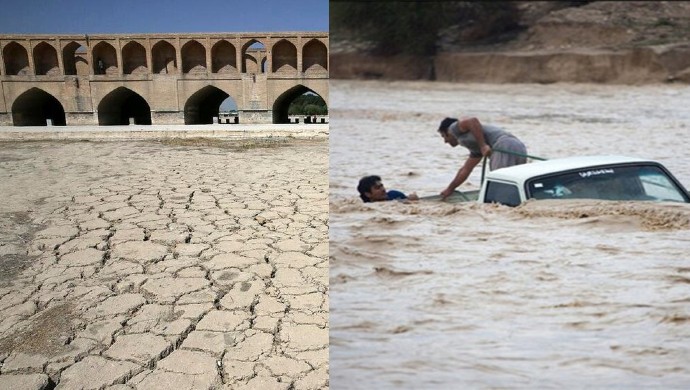

In late December 2025, a tragic contradiction once again exposed the inherent criminality of the mullahs’ regime in Iran. While heavy rainfall should have been a blessing for a nation suffering from chronic drought, it turned into a curse due to decades of systemic mismanagement and plunder. While vast swathes of the country’s south were being swallowed by floodwaters, the regime’s highest officials were simultaneously warning of critical water shortages and rationing. This is not a natural disaster; it is the result of a predatory dictatorship that prioritizes funding its machinery of suppression and terrorism over the most basic infrastructure needs of the Iranian people.
The toll of the December floods
From mid-to-late December, destructive floods ravaged southern and southeastern Iran. State-affiliated media admitted that at least eight people lost their lives, and 431 cities and villages suffered damage. In Fars province alone, 1,767 residential units were damaged, and 20,000 hectares of wheat farms were destroyed. The devastation to the agricultural sector in the month of Azar (ending December 21) is estimated at over 110 trillion rials.
Field reports paint a grim picture of negligence. In Bashagard, Qeshm, and Kerman, floods cut off roads, electricity, and communications. In some areas, residents were left completely isolated as power lines toppled and internet access was severed, preventing news of the disaster from reaching the outside world.
“We are in a water crisis”
In a display of administrative incompetence, just as these waters were destroying homes, the regime’s president, Masoud Pezeshkian, appeared in parliament on December 23 to admit the situation is dire. “We have a water crisis, and the situation will get worse,” Pezeshkian confessed, acknowledging that most provinces, without exception, face water issues. He noted that the regime spent the summer in fear that Tehran would run dry by autumn.
Simultaneously, the regime’s Minister of Energy, Abbas Aliabadi, stated that the capital is “not in a good situation” regarding water reserves. He confirmed that water pressure has been reduced to manage consumption and that without significant rainfall, night-time water cuts would continue.
A preventable catastrophe
The regime attempts to blame nature, yet their own experts reveal the truth. The head of the state-run Energy Associations Union admitted on December 22 that the volume of rainfall in just the recent week—if properly stored—could have supplied the water needs of 600 million people for a year. Instead, because the regime refuses to invest in watershed management or dredging dams, this precious resource flows into the Persian Gulf or destroys villages.
The simultaneous drowning and thirst of the Iranian people is a direct consequence of the diversion of national wealth. Funds that should be used to build infrastructure and manage water resources are instead funneled into the coffers of the IRGC and the Supreme Leader’s office. These entities prioritize expensive, ill-conceived water transfer projects that benefit their own contracting mafias, while ignoring low-cost solutions like watershed management. As long as Iran’s budget is consumed by nuclear ambitions, missile programs, and regional warmongering, the cycle of floods and droughts will continue to devastate the population. And this is a cycle that will continue as long as the corrupt regime of the mullahs remains in power.