

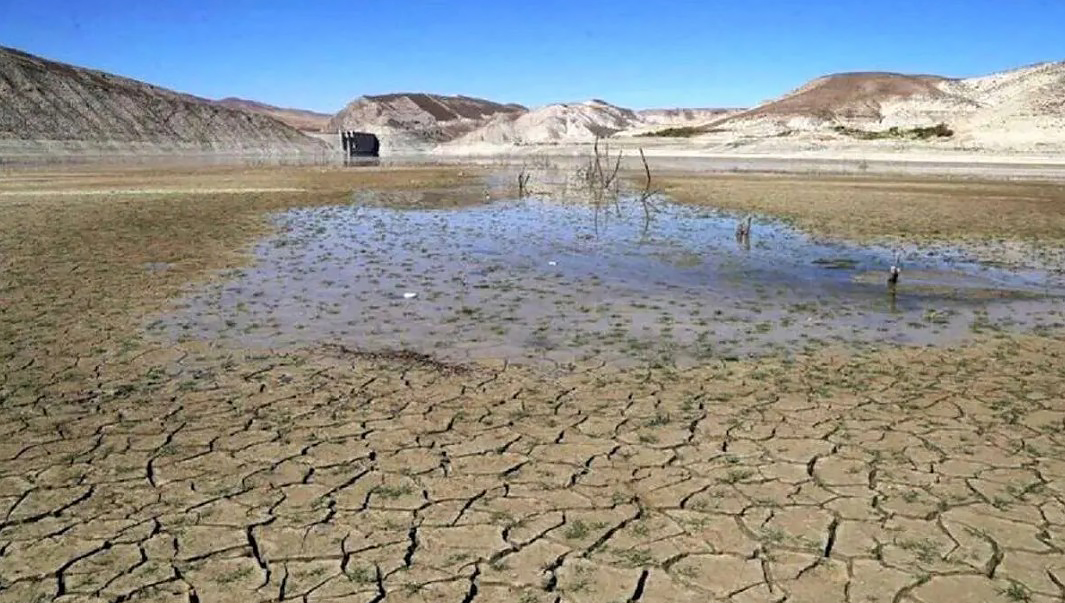

On Tuesday, November 18, 2025, the anger of the Iranian people boiled over in Yasuj, the capital of Kohgiluyeh and Boyer-Ahmad province. Protesting against the regime’s predatory dam construction projects, residents gathered outside the governor’s office chanting a slogan that signals a new level of confrontation: “Either logic or the Berno [gun]!” and “We fight, we die, we take back Dena.”
November 18—Yasuj, southwest Iran
People of Kohgiluyeh & Boyer-Ahmad rallied outside the governor’s office, denouncing the illegal Khersan-3 and Mandegan dams and their severe environmental damage.
“Shame on officials,” protesters chant.#IranProtests pic.twitter.com/sdHmqna09R— People's Mojahedin Organization of Iran (PMOI/MEK) (@Mojahedineng) November 18, 2025
These are not merely environmental grievances; they are a direct challenge to the looting of Iran’s natural resources by the Islamic Revolutionary Guard Corps (IRGC) and the “Water Mafia” affiliated with the office of the Supreme Leader Ali Khamenei. While the regime attempts to blame climate change, the people of Yasuj have identified the true culprit, chanting, “Our incompetent official is a disgrace.”
The predatory nature of the IRGC’s water projects
The protests specifically target the construction of the “Khersan 3” and “Mandegan” dams, projects designed to enrich IRGC contractors while turning the region’s ecosystem to ash. Regime insiders have been forced to admit the illegality of these projects. A water expert revealed that the Mandegan dam began construction without a single permit or an executive budget row in the Ministry of Energy’s committees.
Furthermore, in a blatant act of theft, the regime has clandestinely doubled the water allocation for Isfahan from the Khersan source—jumping from 250 million to nearly 500 million cubic meters—through secret pipelines. This move was described even by state-affiliated experts as a “clear violation,” yet the project continues because it benefits the regime’s elite.
A history of destruction: From Khersan to Gotvand
The human cost of this looting is staggering. The Khersan 3 project threatens to submerge 124 kilometers of land, displacing over 10,000 people in the Sadat Mahmudi region who have nowhere to go. It will also destroy a historical site containing over 50,000 artifacts worth an estimated $500 million—a figure that exceeds the cost of the dam itself.
This destruction follows the pattern of the IRGC’s previous catastrophic projects, such as the Gotvand dam. According to the Middle East Forum, the Gotvand dam turned the Karun River into a “permanent saltwater factory,” killing 400,000 palm trees due to salinity. The regime is not managing water; it is systematically destroying 3,000 years of Iranian water management for short-term profit.
Tehran on the brink: Evacuation warnings and superstition
While the provinces protest, the capital faces total collapse. The IRGC-affiliated Fars News Agency reported a fourfold increase in dams holding less than 5 percent capacity in just 20 days. In Tehran, water reserves are at their lowest point in 60 years. The Latyan dam is at only 8 percent capacity, and the Amirkabir dam holds just 12 percent.
The crisis is so severe that regime President Masoud Pezeshkian recently warned that if the drought continues, the government might be forced to evacuate Tehran and move residents to the south by mid-December. Yet, instead of scientific solutions, the regime’s mullahs have resorted to superstitious “rain prayers” and blaming the drought on women defying the mandatory hijab laws. Conservative clerics have absurdly linked the water shortage to “blatant debauchery on the streets,” while citizens mockingly ask why “atheist countries” in Europe have plenty of rain.
International consensus on “Water Bankruptcy”
International observers have confirmed that Iran has entered a state of “water bankruptcy” due to the regime’s mismanagement. A report by the Middle East Forum, cited by the Washington Times on November 13, accuses the IRGC of creating a “Water Mafia” to profit from environmental destruction. The report predicts that if current trends continue, the regime’s policies could lead to 1.35 million excess deaths and 18 million internal refugees in the coming decade.
As the protesters in Yasuj made clear with their slogans, the Iranian people no longer view this as a natural disaster, but as a political catastrophe caused by a corrupt dictatorship. The choice, as they chanted, is now between logic—which the regime lacks—and resistance.