

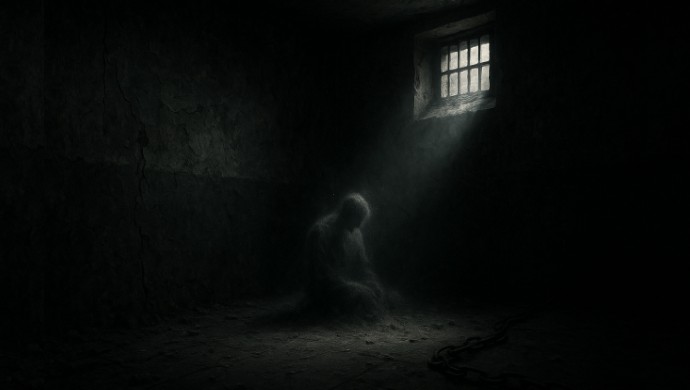

The condition of women in Iran cannot be understood solely through discriminatory laws or compulsory social restrictions. For many women who challenge the authorities—whether through political activism, civil society engagement, or participation in protests—the final stage of repression begins after arrest, behind prison walls.
Iran regime’s prisons have increasingly become places where gender discrimination intersects with political persecution. Human rights organizations have documented patterns of forced labor, prolonged solitary confinement, denial of medical care, psychological abuse, torture, and threats of execution directed at women prisoners. These practices are not isolated incidents but reflect a broader system in which prisons serve as instruments of political control and gender-based repression.
Prison as the Final Stage of Systematic Discrimination
Women in Iran have long faced legal and institutional barriers affecting their participation in public life, personal freedoms, and political activity. Over recent years, particularly following nationwide protest movements, hundreds of women have been arrested for their activism or for participating in demonstrations.
For many, imprisonment represents not simply the loss of liberty but the continuation—and intensification—of policies that began long before their detention. Restrictions imposed in society are reproduced inside prisons with greater severity, where detainees are largely beyond public scrutiny.
Forced Labor Under Coercive Conditions
One of the most troubling aspects of women’s imprisonment in Iran is the widespread use of prison labor.
Women held in facilities including Vakilabad Prison in Mashhad have reportedly been required to work in prison workshops and production units under coercive conditions while receiving little or no meaningful compensation.
Human rights advocates argue that prisoners have little genuine choice but to participate, making the labor fundamentally involuntary. International experts, including United Nations human rights mechanisms, have warned that exploitative prison labor conducted under coercive conditions may constitute a form of modern slavery and, depending on the circumstances, could amount to crimes under international law.
Medical Care Used as a Tool of Pressure
Beyond forced labor, the deliberate denial of healthcare has become one of the most frequently documented methods of exerting pressure on women prisoners.
Political detainees in prisons including Qarchak, Evin, and Ghezel Hesar have repeatedly been denied timely access to physicians, specialist treatment, medication, and hospital transfers. In numerous cases, delayed medical intervention has resulted in severe and sometimes irreversible health consequences.
Human rights organizations have consistently argued that medical neglect is not merely the consequence of inadequate prison facilities but is frequently employed as an additional form of punishment against political prisoners.
Inhumane Conditions of Detention
The physical conditions inside several women’s prisons have drawn sustained criticism.
Qarchak Prison, long regarded as one of Iran’s harshest detention facilities for women, has been repeatedly criticized for overcrowding, poor sanitation, inadequate ventilation, shortages of clean drinking water, and severely limited access to healthcare.
Similar concerns have emerged regarding Vakilabad Prison in Mashhad, where approximately thirty women—most arrested during the January 2026 crackdown—are reportedly being held in the underground section known as the “Aramesh” ward.
The unit has been described as consisting of cramped basement cells with low ceilings, poor ventilation, no access to natural daylight, overcrowded sleeping arrangements, and inadequate medical services. Such conditions have raised serious concerns about both prisoners’ physical health and psychological well-being.
Torture Following the Sirjan Protests
The treatment of women arrested after the protests in Sirjan illustrates the broader pattern of repression.
Following the January 2026 demonstrations, approximately 400 people were detained, including dozens of women. Many of the female detainees endured weeks of intensive interrogations accompanied by psychological pressure, physical abuse, and torture before eventually being released on exceptionally high bail.
They continue to face prosecution and the possibility of lengthy prison sentences.
Escalating Pressure on Political Prisoners
Conditions have also deteriorated for women imprisoned in Tehran’s Evin Prison.
Authorities have imposed new restrictions on communications, preventing several political prisoners—including Shiva Esmaili, Marzieh Farsi, Forough Taghipour, Zahra Safaei, Golrokh Iraee, Sakineh Parvaneh, and Elaheh Fouladi—from contacting their families by telephone.
Many of these women are supporters of the People’s Mojahedin Organization of Iran (PMOI/MEK) and have spent years in prison because of their political affiliation.
Human rights defenders have repeatedly emphasized that cutting prisoners off from their families constitutes a deliberate method of psychological pressure intended to deepen isolation and weaken prisoners’ morale.
Similar concerns persist in Ghezel Hesar Prison, where overcrowded cells, limited access to water during periods of extreme heat, and inadequate medical care continue to affect detainees.
Political Affiliation and the Risk of Execution
Perhaps the most alarming aspect of the current situation is the severity of charges brought against women associated with opposition movements.
According to human rights documentation, mere membership in or support for the People’s Mojahedin Organization of Iran has increasingly been treated as sufficient grounds for some of the harshest judicial penalties, including death sentences.
The case of 68-year-old engineer Zahra Tabari illustrates this trend. She has reportedly been sentenced to death for a second time on charges related to her continued support for the PMOI, raising renewed concerns about the use of capital punishment against political prisoners.
The Prison System Reflects a Broader Policy
The treatment of women in Iran’s prisons cannot be separated from the wider political and social environment in which women face legal discrimination, restrictions on personal freedoms, and repression of activism.
Inside prison, these dynamics become more visible and more severe. Human rights advocates argue that the prison system reflects an institutional approach in which gender discrimination and political repression reinforce one another, leaving female political prisoners particularly vulnerable to abuse.
Despite these conditions, women have remained at the forefront of Iran’s fight against the regime’s tyranny. Their continued activism—both inside and outside prison—demonstrates that imprisonment has not extinguished demands for equality, human dignity, and fundamental freedoms.
The experiences of Iran’s women prisoners therefore represent more than individual human rights violations. They expose the intersection of gender-based discrimination and political repression within the regime, while highlighting the resilience of those who continue to challenge both.