

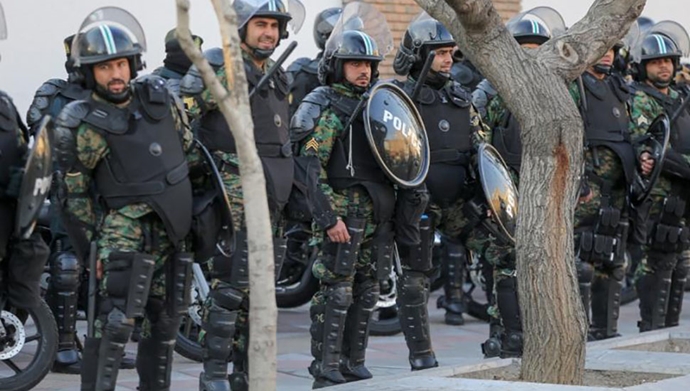

Following the abrupt implementation of a three-tier gasoline price hike by the government of Masoud Pezeshkian, the Iranian regime has placed its security apparatus on maximum alert. Terrified of a recurrence of the nationwide November 2019 uprising, Supreme Leader Ali Khamenei has effectively turned the capital into a military garrison.
According to information obtained by the Social Headquarters of the People’s Mojahedin Organization of Iran (PMOI/MEK) inside the country, the regime has deployed tens of thousands of suppressive forces across Tehran since Saturday, December 13. The intelligence reveals a regime in a state of panic, prioritizing the suppression of its own citizens over any external threat.
Economic bankruptcy triggers security panic
The security mobilization coincides with the regime’s desperate attempt to cover a catastrophic budget deficit. As of midnight on December 13, 2025, gasoline is now rationed into three price brackets: a subsidized quota at 15,000 rials per liter, a second tier at 30,000 rials, and a punitive “free market” rate of 50,000 rials per liter.
The regime originally planned to hike prices on December 6 but delayed the move due to a terrifying fear of public backlash. State media described the delay as a sign of “lack of unified economic command” and paralysis at the top. Now that the plan is in motion, the regime knows it is entering a dangerous minefield, forcing Khamenei to rely on brute force to maintain control.
42,500 troops deployed in Tehran
The PMOI’s network reports that the number of security personnel controlling Tehran has been surged to 42,500. This force includes 23,000 members of the State Security Force (SSF) and 19,500 members of the Islamic Revolutionary Guard Corps (IRGC) and the paramilitary Basij.
The primary axis of this heavy security presence stretches from Khamenei’s headquarters in District 11 to the Mehrabad Airport in District 9. This deployment indicates the regime’s specific fear of losing control over vital government centers and transportation hubs.
Internal suppression prioritized over external war
In a telling directive to IRGC commanders in Tehran and other provinces, regime leadership emphasized that the “main issue” facing the system is internal uprisings. Commanders were explicitly told that even in the event of a foreign war, the priority remains the suppression of domestic protests.
To enforce this, IRGC intelligence has deployed plainclothes agents throughout Tehran to monitor movements. From 18:00 to 24:00, armed checkpoints manned by 15-person teams are active in all districts to intimidate the public and intercept potential gatherings.
Bribing mercenaries and preparing for urban warfare
The regime is also resorting to bribery to ensure the loyalty of its demoralized forces. The IRGC in Tehran has promised Basij members a reward of 20 million rials for every instance of suppression and conflict they participate in.
Furthermore, Imam Ali security battalions and Imam Hussein combat battalions have been summoned for tactical drills focused on anti-riot measures. These units have been equipped with new motorcycles and weapons. Their training specifically focuses on identifying protest “leaders” and using paintball guns to mark protesters for subsequent arrest.
Guarding the fuel pumps
Fearing that gas stations will once again become focal points of rage as they were in 2019, the regime has stationed Basij forces alongside police at fuel stations, offering them extra wages for guard duty. Intelligence agents in plainclothes are also tasked with patrolling these areas and sending periodic photo and video reports to their superiors to confirm the status of the stations.
The IRGC has issued internal orders to secure oil depots, particularly in the northwest and northeast of Tehran. However, the regime’s repressive measures will only delay an inevitable confrontation with a population that is fed up with tyranny and corruption and is yearning for regime change.