


For decades, the international community has been paralyzed by a false choice when confronting the clerical regime in Iran: engage in a devastating foreign war or pursue a fruitless policy of appeasement. This stalemate has allowed tyranny to fester, threatening global peace and subjecting the Iranian people to untold suffering. But at the Free Iran World Summit 2025 in Rome, a powerful consensus emerged around a genuine path forward—a “Third Option” that champions regime change led by the Iranian people and their organized Resistance.
This solution, long the cornerstone of the National Council of Resistance of Iran (NCRI), is now gaining unprecedented international traction. As dignitaries from across the globe gathered in the Italian capital, they affirmed that the only legitimate and lasting solution must come from within Iran. As NCRI President-elect Maryam Rajavi declared, encapsulating over two decades of the Resistance’s core message: “Appeasement? No! War? No! Is this regime reformable? No! Then what is the solution? The solution is regime change—by the Iranian people and their organized resistance.”
Today, our country stands on the threshold of a profound transformation.
This change is being shaped by the people of Iran and their resistance—a nationwide movement that, through the highest sacrifices, including 100,000 martyrs, and with a clear roadmap and vision, heralds the… pic.twitter.com/T2l0rLMY6q— Maryam Rajavi (@Maryam_Rajavi) July 31, 2025
The end of appeasement
The policy of appeasement has not only failed to moderate the regime; it has emboldened it. As speaker after speaker in Rome noted, dialogue and concessions have been met with increased domestic repression, export of terrorism, and a relentless pursuit of nuclear weapons. Former European Council President Charles Michel, drawing from direct experience, offered a stark warning to Western leaders who might still hold out hope for diplomacy with the current rulers in Tehran. “Lesson number one: do not appease the aggressor, because the policy of appeasement does not work and will never work,” he stated.
This sentiment was echoed by former French minister Michèle Alliot-Marie, who reminded the audience of the regime’s long history of broken promises, particularly regarding its nuclear program, which makes it an untrustworthy partner for any agreement. Former Italian Prime Minister Matteo Renzi added a crucial observation from his own meeting with the Supreme Leader years ago. He noted that the Ayatollah is no longer scary, but “afraid,” fully aware that his time is over. This fear, which fuels the regime’s brutality, makes any policy of appeasement not just ineffective, but dangerously misguided.
.@matteorenzi: Last year proved freedom in #Iran cannot come from foreign war or appeasement. “No to war, no to appeasement, yes to regime change by the people and their Resistance”—this is the only way, even if it is the hardest way.#IranThirdOption
https://t.co/ZUBoKkf9l1— NCRI-FAC (@iran_policy) July 31, 2025
The limits of war
While recent military strikes on the regime’s nuclear facilities have exposed its weakness, the speakers in Rome were clear that foreign military intervention is not a sustainable solution. As Michèle Alliot-Marie asserted, “No external military intervention can solve an internal political problem. And therefore, military intervention must be ruled out.” The primary war, as Mrs. Rajavi noted, has always been the one waged by the regime against its own people.
This internal war intensifies whenever the regime feels external pressure. The recent executions of PMOI members Behrouz Ehsani and Mehdi Hassani are a tragic testament to this reality. In a chilling development, the IRGC-affiliated Fars News published an editorial on July 7, 2025, praising the 1988 massacre of 30,000 political prisoners and openly calling for it to be repeated. This proves that the regime’s default response to any threat is to turn its violence inward, terrorizing the very population it claims to govern. As former UK Foreign Secretary James Cleverly stated, “A leadership imposed upon a nation cannot be a truly sustainable solution for that nation. This is a mistake that has been made in the past and must not be repeated. The leadership of a nation must come from its people.”
.@JamesCleverly: I admire the courage of #Iranian women and young people risking persecution and even death for what others worldwide take for granted—a voice, respect, and equality. Their fight for freedom is truly inspirational.
https://t.co/5ja0i6oc5M— NCRI-FAC (@iran_policy) July 31, 2025
The democratic alternative
The “Third Option” is not an abstract hope; it is a credible, organized, and viable alternative embodied by the NCRI. As Charles Michel powerfully stated, the regime’s relentless attacks on the Resistance reveal its greatest fear. “They can keep saying you are not organized… but their relentless obsession to oppress and target you shows the exact opposite. You are organized, you are credible, and you strongly represent the people of Iran, their hope, and their future.”
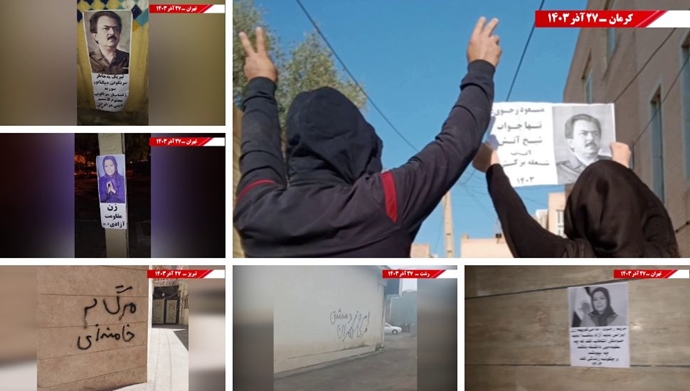
This alternative is grounded in a clear vision for a future Iran, articulated in Mrs. Rajavi’s Ten-Point Plan—a blueprint for a democratic, secular, and non-nuclear republic with gender equality and justice for all. It is a movement powered by brave Resistance Units inside Iran, young men and women who risk everything to break the wall of repression and prepare the ground for change. This internal network gives the Resistance a legitimacy that no external force or exiled pretender to a defunct throne can claim.
.@CharlesMichel: Madam @Maryam_Rajavi, you lead by example. Your leadership, resilience, determination, and sincerity inspire us all. I commend you, your team, and the incredible commitment of the people of Ashraf 3.#NCRIAlternative
https://t.co/ycSwVknCUs— NCRI-FAC (@iran_policy) July 31, 2025
The world must choose the right side of history
The Rome summit sent an unmistakable message: the international community must break free from its paralysis and support the Iranian people’s struggle. This means taking concrete action, starting with the terrorist designation of the Islamic Revolutionary Guard Corps (IRGC), the regime’s main tool of domestic oppression and foreign terrorism. But more importantly, it is time to recognize the Iranian people’s right to resist against and overthrow the corrupt regime that has been repressing them for more than four decades.
With the regime at its weakest and most fragile point in history, the moment for decisive moral and political clarity is now. The world must stand with the people of Iran and their organized Resistance. As Mrs. Rajavi made clear in her concluding remarks, the demand is not for intervention, but for non-interference on behalf of the dictators. “This Resistance has never asked for money or weapons. It simply says: Do not stand with the religious dictatorship—instead, recognize the right to resist for freedom, as affirmed in the preamble of the Universal Declaration of Human Rights.”