


The Iranian regime, facing a populace increasingly weary of its oppressive rule, is demonstrably intensifying its crackdown on political dissent. This escalation is starkly evident in the alarming rise of death sentences and the systematic, cruel deprivation of basic rights, including essential medical care, for political prisoners. However, far from crushing the will of those unjustly incarcerated, these brutal tactics are being met with an equally powerful and unbreakable spirit of resistance from within the regime’s own dungeons.
Escalating repression through the judiciary’s weaponization of death sentences
The regime’s judiciary has become a key instrument in this heightened repression, handing down death sentences with alarming frequency, particularly against those affiliated with the opposition. A recent and egregious example is the case of Amin Farahavar, a political prisoner and a known supporter of the People’s Mojahedin Organization of Iran (PMOI/MEK).
On Thursday, May 1, 2025, the Revolutionary Court in Rasht, presided over by the notorious judge Ahmad Darvish-Goftar, sentenced Farahavar to death. The 37-year-old poet, who wrote under the pseudonym Payman, was convicted on the regime’s fabricated charge of “moharebeh” (waging war against God) in a sham trial conducted without the presence of his lawyer. Farahavar had been arrested in August 2024 in Rasht and, following a period of interrogation by the Intelligence department, was transferred to the Misagh Ward of Lakan Prison. His previous arrests and imprisonment for political activities underscore the regime’s relentless persecution of dissenting voices.
The systematic denial of basic rights: a tool of slow killing
Beyond the ultimate cruelty of death sentences, the Iranian regime employs the systematic denial of basic human rights as another weapon against political prisoners, effectively turning their incarceration into a slow, agonizing ordeal. This is particularly evident in the deliberate withholding of essential medical care.
Amin Farahavar, for instance, suffers from severe complications following gallbladder surgery and endures intense pain. Reports indicate that he experienced internal bleeding during his interrogation, yet he has been consistently denied access to necessary medical treatment. This deliberate neglect constitutes a grave violation of human rights and a clear attempt to physically and psychologically break him.
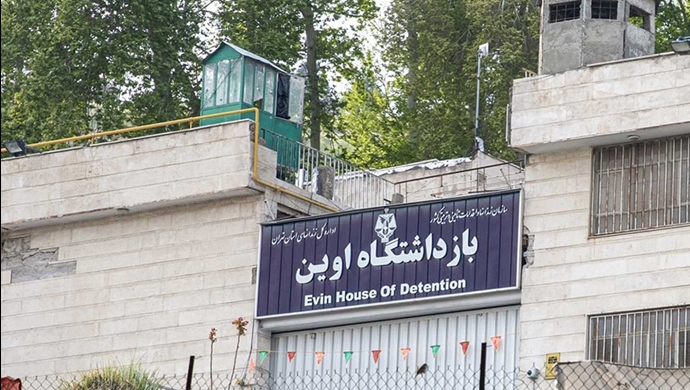
This cruel tactic is not isolated. Miryousef Younesi, a 70-year-old political prisoner with a long history of supporting the PMOI, is another victim of this inhumane policy. Mr. Younesi, who has been incarcerated in Evin Prison since December 2022, suffers from both diabetes and deafness.
Despite his age and serious health conditions, he is consistently denied access to specialist doctors, necessary medication, and essential medical care. The regime’s cruelty was further highlighted on Tuesday, May 6th, when he was forcibly transferred to a ward for common criminals, a move designed to increase his suffering and isolation. During this sudden and violent transfer, he was not even allowed to take his medication with him.
The regime’s disregard for due process and legal rights extends to the blatant violation of its own laws when it serves its repressive agenda. Miryousef Younesi was forcibly separated from his son, Ali Younesi, a 25-year-old award-winning student from Sharif University of Technology, who is also a political prisoner.
Intelligence agents informed them that they were under orders to be held in separate prisons and could not be in the same ward. Ali Younesi, arrested in April 2020, was sentenced to 16 years in prison. According to the regime’s own laws, his sentence, along with that of another brilliant student, Amir Hossein Moradi, should have been reduced to six years and eight months after five years of imprisonment, leading to their release. However, the regime’s judiciary has deliberately refused to free them, further demonstrating its vindictive nature.
The unbreakable spirit of resistance echoes from within prison walls
Despite these harsh measures, the spirit of resistance among political prisoners remains unbroken; indeed, it appears to be growing stronger. On the afternoon of Wednesday, May 7th, a day after Miryousef Younesi’s brutal transfer, political prisoners in Ward 4 of Evin Prison undertook a courageous revolutionary act.
Risking severe repercussions, they rose in protest during their air-out time against the “abduction-like” removal of Mr. Younesi. In response to this arbitrary action, the political prisoners in Ward 4 staged a sit-in protest in front of the office of the prison guard and the notorious head of the ward, demanding Miryousef’s return.
Their defiance was vocal and unambiguous, with chants directly challenging the ruling dictatorship: “Death to the dictator,” “Political prisoner is awake, despises the dictator,” “Threats of abduction no longer work,” and significantly, “The executionist government is unaware of the wrath of the People’s Army.” This last slogan clearly links their struggle to the organized resistance movement outside the prison walls. They further declared their resolve, chanting, “We swear by the blood of our comrades, we stand firm until the end,” and “Dictatorship, crimes, death to the mullahs’ rule.”
Miryousef Younesi himself embodies this unwavering commitment. His support for the PMOI dates back to the era of the monarchical dictatorship, during which he spent 14 years in prison. His current imprisonment since December 2022 is yet another chapter in his lifelong struggle for a free Iran.
The regime’s fear of the resistance
The Iranian regime’s increasing brutality is not a sign of strength, but rather of its profound fear of the organized resistance, particularly the PMOI, and the growing discontent among the Iranian people. The resilience and courage displayed by political prisoners like Amin Farahavar and Miryousef Younesi, and the collective defiance shown in Evin Prison, demonstrate that the PMOI’s ideals of freedom and democracy resonate deeply within Iran, even in the darkest corners of its prisons.
The escalating repression is a desperate attempt by a cornered regime to cling to power. However, as the courageous actions of Iran’s political prisoners demonstrate, the spirit of resistance is alive and well. Their unwavering determination, even in the face of death sentences and deliberate deprivation, signals that the Iranian people’s quest for freedom cannot be extinguished and that the days of the clerical regime are numbered. The international community must stand in solidarity with these brave individuals and hold the Iranian regime accountable for its crimes.