

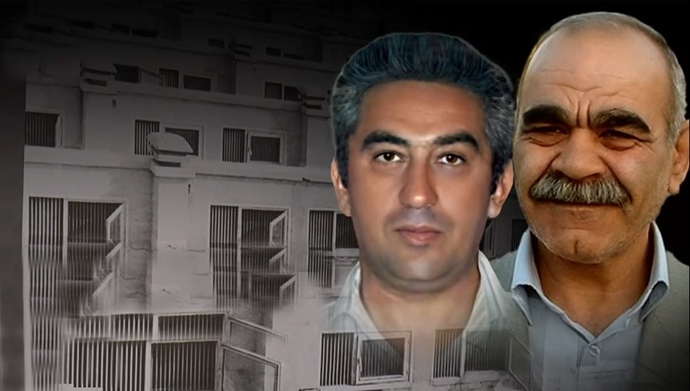

January 24 marks the anniversary of the martyrdom of Jafar Kazemi and Mohammad Ali Haj-Aghaei, two PMOI supporters who were executed in 2011 by Iran’s regime. They were among the thousands whose execution was carried out under the decree of cleric Mohammad Moghiseh, the criminal judge who was killed a few days ago.
Mohammad Ali Haj-Aghaei, who was also imprisoned from 1983 to 1988, wrote in one of his final letters to the then-UN Secretary-General in January 2011:
“I am Mohammad Ali Haj-Aghaei. I have been sentenced to death by the judge of Branch 28 of the Revolutionary Court in Tehran. Judge Moghiseh is the same interrogator and torturer who, during the 1980s, subjected me and my friends to severe torture and interrogation. Now, he has issued death sentences not only for me but also for several of my friends…”
In another part of the letter, he wrote: “I write this letter not for myself, as I am neither the first nor will I be the last, but for a nation that is exposed to this injustice. I hope that my death will bring them life, my captivity will bring them freedom, the oppression against me will bring them justice, and the insecurity of my family will bring them security.”
According to the office of the so-called Revolutionary Prosecutor, the crimes of Mohammad Ali Haj-Aghaei and Jafar Kazemi, as published in state media, were as follows:
– Traveling to Camp Ashraf (home to members of the PMOI)
– Posting messages from the “leader of the group” in mosques
– Filming and writing slogans on walls in support of the PMOI
– Distributing images and placards related to the PMOI
– Taking photos and videos of protests
– Chanting slogans in favor of the PMOI
– Providing financial assistance and distributing PMOI newspapers
– Recruiting and collecting financial aid for the PMOI
– Engaging in promotion in favor of the PMOI
– Posting pictures of PMOI martyrs on walls in Iran’s cities
– Filming and photographing protest rallies in Enghelab Street and Azadi Square in Tehran
Mohammad Ali Haj-Aghaei, in one of the messages he sent from prison, recalled his first encounter with Moghiseh (also known as Nasserian), where Moghiseh told him: “I’ve seen your case. It smells like Ashraf. I’ll personally hang you…”
Moghiseh also told Jafar Kazemi: “You escaped us in 1988, but this time, we won’t let you survive.”
Moghiseh, who had known Jafar Kazemi and Mohammad Ali Haj-Aghaei from their time in prison during the 1980s, tried to break them with various physical and psychological pressures. However, faced with their steadfast resistance, he himself was defeated and issued their death sentences.
After the issuance and confirmation of their sentences on May 1, 2010, the prosecutor and senior judiciary officials of the regime told them amidst interrogations and threats that their death sentences would be immediately revoked if they admitted to being Israeli spies or taking money from the U.S. to incite unrest. However, the firm and heroic responses of these martyrs thwarted the regime’s plot.
Finally, on January 24, 2011, coinciding with Arba’een (the 40th day of mourning for Imam Hussein), Jafar Kazemi and Mohammad Ali Haj-Aghaei, survivors of the 1988 massacre, were executed. These PMOI supporters, who carried the message of Ashraf’s resistance to the 2009 uprising, became trailblazers and eternal icons through their maximum sacrifice and offensive resistance.