


Under the mullahs’ rule, Iran’s vital infrastructure and the livelihoods of the people are being destroyed at an accelerating pace. This has led to the near cessation of the nation’s daily functions. The predatory political system seeks to push people’s lives and livelihoods to the margins, all to sustain the regime. However, these burdens are so overwhelming that they even choke the regime’s political machinery itself.
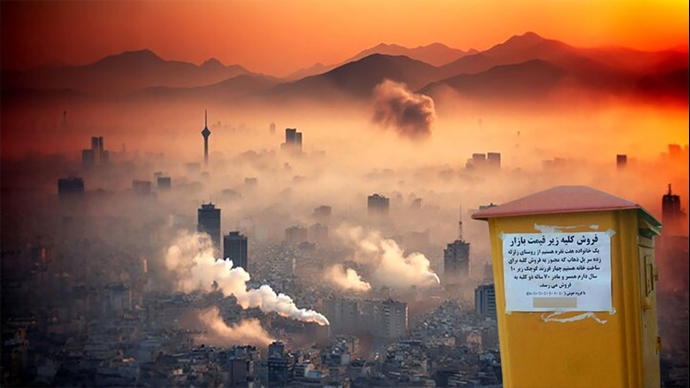
The effects of plundering and destroying essential infrastructure have reached people’s lungs and their ability to breathe. Air pollution caused the closure of 22 cities on January 11-12. Meanwhile, the destruction of energy systems has led to continuous power outages during the cold winter, disrupting employment and income.
The regime’s internal and regional political crises underpin all environmental, energy, education, economic, and livelihood crises. A land as vast as Iran, along with its people, is being sacrificed to maintain the mullah’s regime. Regime president Masoud Pezeshkian confesses daily to having “no plan” and merely follows the Supreme Leader’s commands, which lead to the destruction of energy and vital infrastructure.
Such a politico-religious structure continually produces new victims for the regime, effectively extinguishing hope and any chance of improving the people’s living and livelihood conditions.
On January 11, Arman news website reported, “In 2023, the head of the Center for Tobacco Prevention and Control Research announced that the starting age for tobacco use in the country was 13. Yesterday, the deputy health director of Beheshti University in Tehran stated that the starting age for smoking has now dropped to nine.”
As usual, this regime-affiliated media outlet avoids addressing the systemic causes of these abnormalities within the regime. However, readers can infer the root of the regime’s role from the implicit question: What events in Iran have caused the average starting age for smoking to drop by four years in just one year?
Once again, the regime’s role is deliberately hidden, but the crime is so blatant that the media is compelled to cite an abstract source for this condition:
“The lack of joy and ways for children and teenagers to channel their energy has led them to turn to cigarettes and, later, drugs like marijuana.” (Ibid)
The regime relentlessly crushes lives in Iran’s impoverished regions. By leveraging religious and ethnic discrimination and extorting resources, it fuels the regime’s survival. The clerical regime’s crimes against people’s basic needs even extend to suffocating access to clean water.
On January 11, Arman news wrote, “In the Baluchestan region, a single glass of clean water is as valuable as gold. Sistan and Baluchestan are on the brink of apocalyptic conditions… In the Sistan region, having just a few days of dust-free air in a year is considered a dream… Even when it rains, floods take away everything they have.”
The hellish conditions inflicted by the Islamic Revolution Guard Corps (IRGC) and regime institutions cannot be fully described in just two lines. The catastrophe is even more heart-spraining, particularly against women, and profoundly inhumane.
“A woman from a village near Chabahar says: ‘Having enough water for a single day to bathe and drink has become a dream for us. Each woman in the family brings water for herself, and children are brought along to help. My child no longer has the strength to go to school. The elderly are truly wretched.'” (Ibid)
The exploitative policies driven by the regime not only destroy the lives of the people but also exacerbate their agony and obliterate children’s futures:
“Another woman from the village says: ‘A water supply comes to our village once every 21 days, costing 5-7 million rials per tanker. We cannot afford this. Sometimes the water is dirty, but we have no choice. Both my husband and I have kidney stones, and some nights the pain keeps us awake. The children suffer from diarrhea. My daughter and son can’t attend school. For families, water is a priority, not education. A container of water weighs 18 kg, causing back and neck pain to be common among women in our and surrounding villages. Some women have become paralyzed. Four months ago, a 25-year-old woman lost her kidney. Her father has been searching for charities and insurance for six months because they say 6 billion rials are needed for a kidney transplant.'” (Ibid)
At the core of these reports lies the regime’s political approach, which directly generates such tragedies. The solution to all these crises, evident in every city and marginalized area, lies in solidarity and mutual aid among the people to uproot the malignant, corrupt, and governance of the mullahs’ regime.