

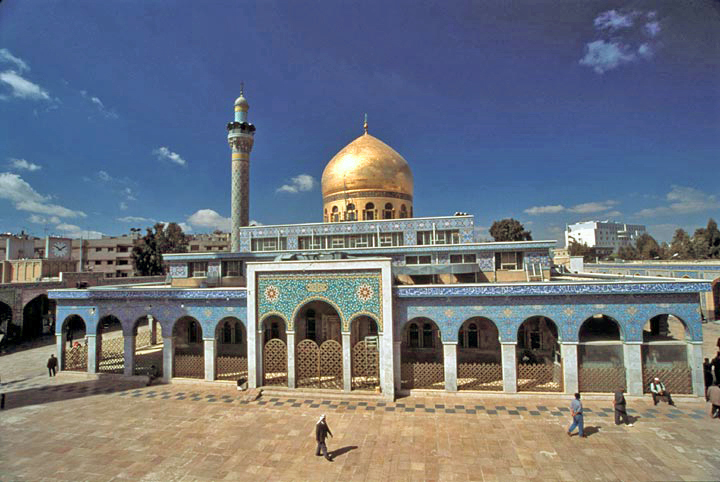


The reopening of the shrines of Sayyida Zaynab and Ruqayya in Damascus, which coincided with massive celebrations by the Syrian people on the first Friday after the fall of the Assad dictatorship, made headlines. This development dealt a significant blow to the Iranian regime and invalidated the pretext of “defending the shrine” used to justify sending troops and waging war in Syria.
On December 12, Agence France-Presse reported on the reopening of the shrine of Sayyida Zaynab stating that the shrine, which had been a stronghold for the Iranian regime, is now under the control of the rebels. “The shrine remains open and all employees have returned,” AFP quoted the shrine’s director as saying.
On the same day, Syrian television aired footage of the shrine’s reopening, emphasizing that the closure had been temporary and due to security concerns. Sheikh Ayman Zeitoun, one of the officials of the Sayyida Zaynab shrine, said: “This site and all sacred places will remain intact, and the followers of Ahlul Bayt are safe. After the temporary closure of Sayyida Zaynab’s shrine, the doors have been reopened to visitors.”
He added: “We have reopened the shrine, and its closure was due to security necessities to ensure nothing would be damaged. Today, we opened the shrine, and we can all enter and see that the shrine has not suffered any harm or damage. We thank the revolutionary leaders who themselves safeguarded and supported this matter. They protected the sacred sites appropriately, and we are deeply grateful to them.”
This news was hastily reflected in the regime’s media. Tabnak, affiliated with former IRGC commander Mohsen Rezaee, published a video of the “Shrine of Sayyida Zaynab” and wrote: “New footage from the shrine of Lady Zaynab has been released, showing that the courtyard of Sayyida Zaynab is open and people are coming and going.”
This comes as the regime, in his pursuit of its policy of exporting extremism and maintaining the Syrian government, repeatedly used the pretext of “defending the shrine” over the years, spending tens of billions of dollars from the Iranian people’s funds and causing the deaths of thousands of dispatched forces.
The repeated claim of “defending the shrine” over these years occurred while many of regime’s forces were killed hundreds of kilometers away from the shrine (located in Damascus) in other provinces of Syria. Many of them participated in the massacre of Syrian women and children in Aleppo province and the devastation of this historic city. Hossein Hamedani, a senior commander of the Islamic Revolutionary Guard Corps (IRGC), was killed in the battles of Aleppo. The regime’s reference to defending the shrine in its propaganda became a subject of public ridicule.
In 2016, regime supreme leader Ali Khamenei stated: “Anyone who goes to Iraq or Syria to stand against these Takfiris in defense of the shrines of Ahlul Bayt is actually defending their own cities” (Khamenei’s official website, June 25, 2016).
Now, the reopening of Sayyida Zaynab’s shrine and the observance of the sanctity and rights of its visitors after Assad’s downfall have turned Khamenei’s claims into a major defeat for his closest mercenaries and IRGC forces, amplifying the impact of Assad’s fall on his leadership. As the regime-affiliated newspaper Etemad wrote on December 15: “The broadcasting approach of IRIB [state TV] and the remarks of its invited experts during these days indicate that the network, perhaps as much as Syrian media, is confused. The statements of figures invited as experts, marked by the severe contradictions in their analysis and, more importantly, in the grand strategies regarding Assad’s fall, confirm this confusion.”
The same source, a day earlier, quoted a regime parliament member as saying, “If, after sacrificing approximately 6,000 shrine defenders and spending tens of billions of rials, we handed over Syria to the Takfiris within just one week, what is this if not divine wrath?!”