

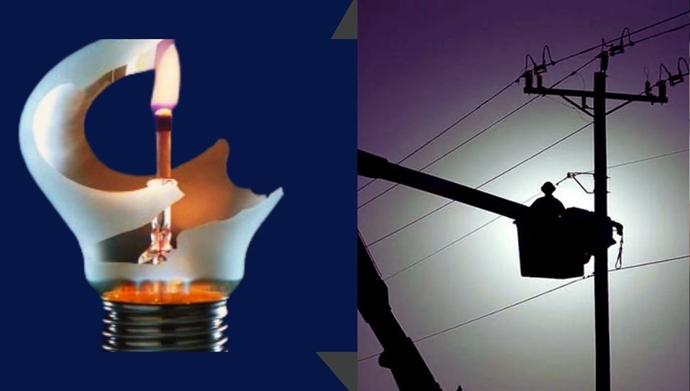

In a time when air pollution from heavy fuel oil (mazut) combustion in Iran makes breathing difficult and each breath leads toward illness and death, power blackouts appear as an unavoidable option. This forced choice between “bad” and “worse” prompting reflection on the totalitarian nature of Iran’s regime and the duplicity of its so-called reformists.
The choice between “bad” and “worse” is a grand deception; for by choosing “bad,” we create the opportunity for things to worsen. In Iran, reformist factions have constantly highlighted the “worse” option to make “bad” seem reasonable. In today’s crisis, the state-proposed solution of power cuts appears preferable to breathing toxic air.
The Electricity Turmoil
In mid-autumn, the regime announced scheduled cuts to household electricity in both urban and rural areas at certain times each day. This blackout currently lasts two hours daily and is justified as a measure to prevent the burning of mazut at power plants in Arak, Karaj, and Isfahan.
However, this claim sparked controversy; it appears that the true reason for the power cuts is not environmental concerns, but rather a significant reduction in fuel reserves at power plants. The Ministry of Energy announced that the diesel delivered to power plants has decreased by about 30% compared to the previous year, and 60% of fuel tanks at power plants are empty. Over 90% of the nation’s electricity is generated by thermal power plants, with only about 1% generated by renewable energy sources. Diminished fuel supplies and low efficiency of power plants have put the country in a serious bind. It’s estimated that the electricity shortfall will reach 18,000 megawatts in 2024, requiring an investment of at least 20 billion dollars to resolve. This shortage of electricity and natural gas is occurring despite Iran holding the world’s second-largest natural gas reserves and fourth-largest oil reserves, yet discussions about the lack of energy sector investment remain unending.
On November 12, the state-run Etemad newspaper wrote: “According to the Ministry of Energy, 60% of fuel reserves at power plants are empty, and the government has effectively used power cuts to justify its air pollution control efforts in the public eye. However, experts have warned that solving the air pollution crisis requires structural changes in governance and major policy reforms, and stopping mazut burning without alternative infrastructures will remain nothing more than a slogan.”
The “Bad” and the “Worse” in Two Successive Governments
The past 43 years show that the foundation of this authoritarian rule was laid with lies, corruption, and deception. With time, its corruption, plunder, and brutality have only increased, with each successive government proving worse than the one before.
On November 10, Euronews reported that Iran’s regime as the holder of the world’s second-largest natural gas reserves has once again resorted to cutting electricity for residential customers after three years. Under Ebrahim Raisi’s administration, the government preferred to cut power to industries to prevent public dissatisfaction, but it is now forced to impose residential blackouts as well.